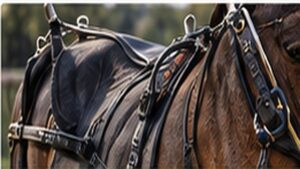
Showjumping equipment has two jobs: it must allow the horse and rider to communicate accurately, and it must do so without compromising welfare, balance or safety. The best equipment is not necessarily the most elaborate. It is equipment that fits the horse and rider, is appropriate to the job, is correctly adjusted, remains in sound condition and is permitted under the rules of the competition concerned.
For riders competing in Great Britain, the relevant rulebook depends on the class and organiser. British Showjumping rules apply to affiliated national competition, while unaffiliated shows may publish their own requirements. FEI rules apply at international level. Rules can change during a season, so a competition schedule and the current governing-body guidance should always take precedence over a general equipment guide. British Showjumping’s 2026 equipment clarification document, for example, includes specific provisions on bits, hackamores, nosebands, boots, spurs, stirrups, hoods and training aids, with amendments effective from 1 April 2026 in some cases.
What a showjumping setup needs to achieve
Showjumping places particular demands on equipment. The horse must be able to lengthen and shorten its stride, lift the shoulders, bascule over a fence, land without restriction and turn efficiently. The rider needs a stable lower leg, an independent seat and sufficient freedom through the hip, knee and ankle to follow the horse’s movement. Equipment that appears to increase control may instead interfere with these requirements if it is poorly fitted or used to compensate for training, pain or an unsuitable saddle.
Equipment selection should therefore be assessed in this order:
- Horse and rider fit: the saddle, bridle and protective equipment must fit the individual rather than simply match a nominal size.
- Function: each item should have a clear purpose. More straps, stronger bits or tighter nosebands are not automatically improvements.
- Welfare: pressure should be distributed appropriately, with no sharp edges, pinching, rubbing or obstruction of breathing, swallowing or movement.
- Rule compliance: permitted at home does not necessarily mean permitted in a practice arena or competition.
- Condition: leather, stitching, elastic, fastenings, plastics and protective foams all deteriorate through use, sweat, dirt, heat and impact.
The saddle
A showjumping saddle normally has a forward-cut flap, a relatively open knee roll and a seat designed to support a shorter stirrup length than a dressage saddle. The precise balance varies considerably. Some saddles have a deeper seat and prominent blocks to support riders who prefer a secure, close-contact feel; others are flatter and allow more freedom for riders with a strong, forward jumping position.
Fit and balance
The saddle must suit both horse and rider. For the horse, important considerations include tree width and shape, panel contact, clearance at the withers and spine, stability during take-off and landing, and freedom for the shoulder. A saddle can be the correct nominal width yet still be unsuitable if its tree shape, panel profile or balance does not match the horse’s back.
For the rider, the seat should permit the pelvis to remain neutral without forcing the rider behind the movement or onto the horse’s shoulders. Knee blocks should support rather than trap the leg. The stirrup bar position, flap length and block placement all affect the rider’s alignment. A saddle that encourages the lower leg to swing back or the upper body to collapse may create a training problem even if it feels secure in walk.
Jumping saddles are often used with a numnah or saddle pad. The pad should not be relied upon to correct a fundamentally poor fit. Thick or shaped pads may alter the saddle’s balance and can reduce available clearance. Pads should be clean, dry and free of hard debris, with the spine channel clear where the saddle design requires it.
Materials and construction
Traditional saddles are generally made from leather over a tree with synthetic or leather panels. Leather can provide durability and a close contact feel, but it requires cleaning and conditioning and may be damaged by excessive oil or unsuitable products. Synthetic saddles are often lighter and easier to clean, although construction quality, panel materials and the manufacturer’s fitting system vary widely.
Inspect the stitching around the girth straps, billets, stirrup bars and knee blocks. Check that the tree is not damaged, the panels are even and the girth straps are not stretched, cracked or pulling away from the saddle. A saddle that has been involved in a fall should be checked before being returned to use.
Girths and girthing arrangements
A jumping girth is commonly shaped or contoured to provide clearance behind the horse’s elbows and to help prevent the saddle moving forwards. Some have a central protective panel or a forward curve. The correct choice depends on the horse’s conformation, girth groove and saddle, not on appearance alone.
The girth should be tightened progressively, checking that it lies flat and that buckles do not press into the horse. Elastic ends can improve comfort and make tightening easier, but excessive elasticity can permit saddle movement if the girth is not correctly fitted. A girth cover may reduce rubbing, but it should not conceal a recurring fit problem. The girth and billets should be checked before mounting and again after warming up, because the horse’s ribcage and posture can change with movement.
Bridles, headpieces and reins
A jumping bridle commonly consists of a headpiece, cheekpieces, browband, throatlash, noseband and reins. Anatomically shaped headpieces may distribute pressure away from sensitive areas behind the ears, but the design must still be correctly fitted. There is no universal evidence that every “anatomical” shape suits every horse; the relevant question is whether the particular bridle avoids pressure, rubbing and restriction.
The browband should not pull the headpiece forwards or press against the ears. The throatlash should be secure without being tight. The cheekpieces must maintain the intended bit position without pulling the bit upwards or downwards. Reins should provide a reliable grip and appropriate length. Rubber, webbing, laced and leather reins each offer different handling characteristics; the priority is that the rider can maintain a consistent contact without the reins becoming slippery or excessively bulky.
Bits: action, fit and limitations
Bits work through pressure and leverage applied to structures including the tongue, bars, lips, poll and, depending on the design, the chin groove. A snaffle does not mean “mild” in every circumstance, and a curb or gag does not automatically mean “severe”; mouthpiece shape, cheekpiece design, rein attachment, contact, hands and the horse’s response all affect the practical action.
Common jumping bits include loose-ring and eggbutt snaffles, hanging-cheek designs, full cheeks, pelhams, gags and combination bits. Mouthpieces may be single-jointed, double-jointed, mullen or ported. Materials include stainless steel, synthetic polymers, rubber and copper-containing alloys. Material may affect taste, flexibility, weight and durability, but it does not remove the need for correct fit and appropriate use.
The bit should be the correct width, with no sharp edges or damaged surfaces. A bit that is too narrow can pinch; one that is too wide may move excessively. The mouthpiece should not be positioned so high that it causes persistent wrinkles or so low that it risks contact with the teeth or excessive movement. The horse’s mouth conformation, tongue space, bars and dental status are relevant, and bit changes should not be used to mask resistance or unexplained changes in performance.
British Showjumping’s current clarification document is particularly important for competitors because it lists specific permitted and prohibited examples. Its 2026 amendments state, among other points, that adjustable-mechanism bits are not permitted, that only one noseband may be worn in competition, and that hackamore construction and cheek dimensions are restricted. The document is expressly not exhaustive, so unusual equipment should be checked with the organiser or governing body before use.
Nosebands
Nosebands can help keep a bridle correctly positioned and may discourage a horse from opening its mouth, but they should never be used to force the jaw shut. A noseband that is too tight can interfere with chewing, swallowing, breathing and circulation. It can also conceal a problem rather than solve it.
Common types include cavesson, flash, drop, figure-eight and crank designs. Their practical effect depends on placement and tension. A flash strap should sit in the correct groove and should not press into the nostrils. Figure-eight designs must leave the nasal passages unobstructed. Padding can reduce local pressure but does not make an incorrectly positioned or over-tight noseband acceptable.
In British Showjumping competition, only one noseband may be worn, and competing without a noseband is permitted under the 2026 clarification. Always distinguish between a noseband used for bridle stability and one used to restrict mouth movement.
Martingales and training aids
A standing martingale attaches to the girth or breastplate and the noseband; a running martingale acts through the reins via rings. A running martingale can limit excessive upward movement of the head while preserving more freedom than a standing design, provided it is correctly adjusted and used with compatible reins or rein stops.
Martingale attachment points must be checked for correct length and security. If a running martingale is too short, it can interfere with the horse’s head and neck movement or exert pressure at inappropriate moments. Rein stops are essential where required by the design, because they prevent the rings from reaching the bit or cheekpieces.
Draw reins, side reins and other training aids are not substitutes for a suitable saddle, progressive schooling or investigation of discomfort. Their competition legality varies, and equipment permitted during ordinary schooling may be prohibited in competition or in a showjumping practice arena. British Showjumping has stated that, for national classes, equipment used in the practice arena with jumps must be equipment permitted in the competition arena for the relevant levels.
Breastplates and martingale attachments
A breastplate can help prevent a saddle moving backwards, especially on horses with a forward girth groove, large shoulders or particular conformation. Three-point and five-point designs distribute attachment across the chest and girth area, but they must be fitted so the shoulders can rotate freely. Straps should not lie across the point of the shoulder or press into the windpipe.
A breastplate should stabilise the saddle without pulling it forwards. If it is tightened until the saddle is fixed rigidly, the horse may lose freedom through the shoulder and the breastplate may create pressure points. The girth attachment, stitching and elastic sections need frequent inspection because they receive substantial load during jumping.
Leg protection
Jumping boots are designed to reduce injury from interference or impact. Fetlock boots protect the inside of the hind fetlock region; brushing boots protect against contact between limbs; tendon boots provide coverage over the front of the lower limb. Open-front tendon boots are widely used because they provide protection while leaving the front of the limb visually and physically less enclosed, but no boot prevents every injury.
Materials include leather, synthetic leather, thermoplastic shells, neoprene and moulded polymers. Hard shells can resist direct impact, while soft linings improve comfort and reduce rubbing. A boot must be the correct size, fastened securely and free from grit. It should not restrict flexion, sit over a wound or create heat and moisture that remain trapped for prolonged periods.
Boots and wraps should be removed after work so the limbs can be inspected. Washable boots should be cleaned regularly, and hook-and-loop fasteners should be kept free of hair and bedding. A cracked shell, distorted shape, failed stitching or weakened fastening is a reason to replace the item rather than continue using it.
Rules may also restrict boot weight, construction or fastening. British Showjumping’s equipment clarification should be consulted for the current national requirements, particularly where a class is subject to additional age or level restrictions.
Stirrups and safety release systems
Stirrups must provide a stable platform while allowing the foot to release during a fall. Conventional stirrups may incorporate a safety bar, elastic release, hinged mechanism, breakaway side or flexible cage. These systems differ in how they release and how they must be maintained.
The rider’s boot should fit the stirrup: it should not be so narrow that the foot becomes trapped, nor so wide that the foot can pass through. The tread should provide grip without creating excessive friction that prevents release. The stirrup leather, buckle, stitching and attachment to the saddle are safety-critical and should be checked before every ride.
Peacock-style release systems depend on the elastic or breakaway component being correctly fitted and in good condition. A release mechanism that is missing, stretched, corroded or incompatible with the stirrup may not function as intended. Magnetic and hinged systems must also be checked according to the manufacturer’s instructions. No safety stirrup eliminates the need for a correctly fitted boot and an appropriate riding position.
Riding hats and skull caps
A riding hat is personal protective equipment, not an item of general clothing. It should be selected from a current competition-accepted standard, fitted by someone competent and replaced after a significant impact, even if no damage is visible. A second-hand hat carries an unknown history and may have suffered damage, compression or deterioration before purchase.
Fit is critical. The hat should sit level, remain stable when the rider moves the head and have a correctly adjusted harness. It should not rock backwards, expose excessive forehead or pinch. Hair, liners and winter accessories can alter fit. Manufacturer instructions should be followed for cleaning and storage; solvents, heat, adhesives and unapproved modifications may compromise materials.
Competition-accepted standards can change, and different organisations may recognise different combinations of standards and kitemarks. Riders should check the current British Showjumping or event-specific list rather than rely on a retailer’s description such as “competition legal”.
Body protectors
Body protectors are intended to reduce injury from impact, including falls and contact with the horse or ground. They do not make falling safe and they do not protect every part of the torso. A body protector should fit closely enough to remain in position while allowing breathing, arm movement and a normal riding posture.
The BETA 2018 Body Protector Standard uses three colour-coded levels. BETA describes Level 3 as appropriate for general riding, competitions including eventing and working with horses; Level 1 and Level 2 have more limited intended uses. The 2009 standard is no longer accepted by some British disciplines from January 2024, although an older garment may remain usable for activities with no later-standard requirement. Competition rules must be checked for the exact class.
Foam protectors can soften with use and may be affected by age, heat, moisture and impact. BETA advises replacement at least every three to five years depending on use and care, and replacement after a serious fall or impact. A body protector should be fitted with the garments worn when riding, but excessive layering can alter its position and effectiveness.
Boots, clothing and gloves
Riding boots should have a defined heel and a sole that is compatible with the stirrup. Smooth-soled fashion footwear, trainers and deep-tread work boots can create different entrapment or slipping risks. Tall boots or jodhpur boots with half chaps are common in showjumping, subject to the competition’s dress rules.
Gloves improve grip and protect the hands from reins, weather and friction. They should allow the rider to maintain an independent contact without bunching at the fingers. Clothing should not have loose cords, exposed fastenings or bulky layers that interfere with the reins, saddle or protective equipment.
Breastplates, ear hoods and accessories
Ear hoods may reduce distraction from insects or environmental noise, but they must not obstruct vision, breathing or hearing beyond what is permitted by the rules. Fly veils, masks and noise-reducing materials are subject to discipline-specific restrictions, especially at international level.
Accessories such as saddle-mounted cameras, action-camera mounts, communication devices and unusual rein attachments should be treated as potentially rule-sensitive. The fact that an item is commercially available does not establish that it is permitted in competition.
Quality indicators and purchasing checks
Price alone is a poor measure of equipment quality. Look for consistent stitching, clean edge finishing, strong and correctly placed hardware, replaceable or serviceable components where appropriate, clear manufacturer information and traceable safety-standard labelling. For protective equipment, verify the exact standard and label rather than relying on terms such as “CE”, “approved” or “professional”.
Before buying, ask:
- Is the item permitted for the intended competition and class?
- Can it be fitted correctly to this horse or rider?
- Are replacement parts available?
- How should it be cleaned and stored?
- What is the manufacturer’s replacement or inspection guidance?
- Could its design create pressure, heat, restriction or entrapment?
Inspection and maintenance routine
A short inspection before every ride is more useful than an occasional deep clean alone. Check the saddle billets and girth, bridle stitching, bit surfaces, reins, stirrup leathers, stirrup safety mechanisms, breastplate attachments and leg-boot fastenings. Look for cracks, stretched leather, corrosion, frayed stitching, distorted plastic, sharp edges and failed hook-and-loop closures.
After work, remove sweat and dirt before they dry into abrasive deposits. Allow leather to dry naturally away from direct heat, clean it according to the manufacturer’s instructions and avoid saturating areas where adhesives or synthetic materials may be affected. Store hats and body protectors away from heat, compression, chemicals and prolonged damp.
Keep a written record for equipment used in a business, riding school or competition yard. The UK Government’s hiring-out-horses guidance states that equipment should be in good and safe condition, available for inspection and subject to documented checks. A similar approach is sensible for private owners: record purchase dates, impacts, repairs, professional saddle checks and replacement dates.
Common misconceptions
- “A stronger bit gives more control.” It may increase leverage or pressure, but it cannot replace balance, training, pain investigation or rider skill.
- “A tight noseband stops evasions.” It can restrict visible mouth movement while leaving the underlying cause unresolved.
- “A body protector makes any fall safe.” It reduces risk in defined areas; it cannot prevent all injuries.
- “A safety stirrup cannot fail.” Release systems depend on correct fit, maintenance and compatible footwear.
- “An expensive saddle will fit.” Price and brand do not guarantee suitability for a particular back or rider.
- “If it is allowed at home, it is allowed in the ring.” Competition, practice-arena and warm-up rules may differ.
A practical pre-show checklist
- Read the current schedule and governing-body equipment rules for the class.
- Check hat and body-protector labels against the accepted standards.
- Inspect saddle, girth, bridle, bit, reins, stirrups and protective boots.
- Confirm that unusual bits, hackamores, nosebands, martingales or training aids are permitted.
- Clean equipment without altering its construction or applying unapproved substances.
- Fit the horse at home and recheck after warm-up.
- Carry suitable spare reins, girth components, stirrup leathers and fastening parts where practical.
- Ask the steward or show secretary before entering the arena if equipment legality is uncertain.
Sources and further reading
- British Showjumping, Equipment Clarification Document, effective 1 January 2026
- British Showjumping, 2026 Equipment Clarification Amendments
- British Showjumping, Member Handbooks and Rule Amendments
- FEI, Jumping Rules, 27th edition with updates effective 1 January 2025
- FEI, Jumping Rules proposals and 2026 transition information
- British Equestrian Trade Association, Body Protectors
- BETA, Body Protector Standard: Manufacturers’ leaflet
- GOV.UK, Hiring out horses: statutory guidance for local authorities
- GOV.UK, The Highway Code: rules about animals
- GOV.UK, Designated standards for personal protective equipment
Research note
Automatically researched source pack — editorial review required:
• www.britishshowjumping.co.uk — https://www.britishshowjumping.co.uk/news/Reminder-New-Tack-and-Equipment-Rules-from-the-1st-April
• www.gov.uk — https://www.gov.uk/government/publications/animal-activities-licensing-guidance-for-local-authorities/hiring-out-horses-licensing-statutory-guidance-for-local-authorities
• www.britishshowjumping.co.uk — https://www.britishshowjumping.co.uk/membership/Member-Handbooks-And-Rule-Amendments
• beta-uk.org — https://beta-uk.org/body-protectors/
• www.gov.uk — https://www.gov.uk/guidance/the-highway-code/rules-about-animals-47-to-58
• beta-uk.org — https://beta-uk.org/wp-content/uploads/2025/10/Body-Protector-Manufacturers-Leaflet-2018-Standard-Oct-25.pdf
• www.gov.uk — https://www.gov.uk/hmrc-internal-manuals/vat-clothing/vclothing4550
• www.gov.uk — https://www.gov.uk/motorcycle-helmet-law
• www.gov.uk — https://www.gov.uk/government/publications/designated-standards-ppe
• www.britishshowjumping.co.uk — https://www.britishshowjumping.co.uk/news/Rule-Amendments-for-2025
• www.britishshowjumping.co.uk — https://www.britishshowjumping.co.uk/_files/Equipment%20Clarification%20Amendments%20270326.pdf
• beta-uk.org — https://beta-uk.org/body-protector-and-safety-committee/
• inside.fei.org — https://inside.fei.org/system/files/4-Rules%20Proposals%208%20July%202025_JUMPING_Rule%20Book.pdf
• www.gov.uk — https://www.gov.uk/guidance/compulsory-basic-training-cbt-syllabus-and-guidance-notes/element-a-introduction
• www.britishshowjumping.co.uk — https://www.britishshowjumping.co.uk/_files/Equipment%20Clarification%20Document%20Members%2011122025.pdf
• inside.fei.org — https://inside.fei.org/sites/default/files/Jumping_Rules_2025_clean.pdf
• assets.crowncommercial.gov.uk — https://assets.crowncommercial.gov.uk/wp-content/uploads/RM3763_Head2Toe_unpriced_catalogue_v51.pdf
• britishshowjumping.co.uk — https://britishshowjumping.co.uk/shows_summer_venues.cfm
Cite this article
Stable research ID: ERA-2026-000056
The Equestrian Research Atlas (2026) ‘Showjumping Equipment Guide’. The Equestrian Research Atlas. Available at: https://equestrianresearchatlas.co.uk/research/showjumping-equipment-guide/ (Accessed: 3 November 2026).
The Equestrian Research Atlas. (2026). Showjumping Equipment Guide. The Equestrian Research Atlas. https://equestrianresearchatlas.co.uk/research/showjumping-equipment-guide/
The Equestrian Research Atlas. “Showjumping Equipment Guide.” The Equestrian Research Atlas, 2026, https://equestrianresearchatlas.co.uk/research/showjumping-equipment-guide/. Accessed 3 November 2026.
Research references (18)
- www.britishshowjumping.co.uk
- www.gov.uk
- www.britishshowjumping.co.uk
- beta-uk.org
- www.gov.uk
- beta-uk.org
- www.gov.uk
- www.gov.uk
- www.gov.uk
- www.britishshowjumping.co.uk
- www.britishshowjumping.co.uk
- beta-uk.org
- inside.fei.org
- www.gov.uk
- www.britishshowjumping.co.uk
- inside.fei.org
- assets.crowncommercial.gov.uk
- britishshowjumping.co.uk