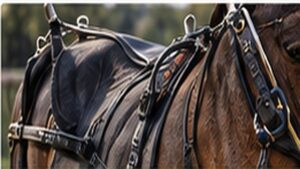
Endurance riding places unusual demands on equipment. A horse and rider may spend several hours moving over varied terrain, often in changing weather, with repeated transitions between walking, trotting and cantering. Tack must remain stable without creating focal pressure, rider clothing must manage heat and rain, hoof protection must tolerate abrasive or wet surfaces, and every important item should be maintainable away from the yard.
There is no single “endurance set-up”. Equipment that is appropriate for a short pleasure ride may be unsuitable for a long-distance competition, while a highly specialised saddle may be unnecessary for a newcomer whose existing tack fits correctly. In Great Britain, the governing requirements are set by the organiser and the relevant rulebook. Endurance GB’s current rules should always be checked before a competition because permitted equipment, safety standards and procedures can change.
Start with the rulebook, not the catalogue
Endurance GB states that no special tack is required to begin endurance riding. A correctly fitted general-purpose saddle, bridle and suitable riding clothing may be entirely adequate for introductory distances. The practical advantages of specialist endurance equipment tend to become more significant as distance, speed, terrain, weather exposure and logistical complexity increase.
The distinction between permitted, required and useful equipment is important:
- Required equipment is specified by the governing body or event organiser. Examples may include an approved riding hat, secure footwear, rider identification and, in some circumstances, high-visibility clothing.
- Permitted equipment is allowed but not compulsory. A particular saddle design, breastplate or hoof-protection system may fall into this category.
- Useful equipment improves comfort, efficiency or contingency planning but has no official status. Examples include a spare stirrup leather, hoof-boot cable or compact first-aid kit.
Endurance GB’s 2026 rulebook specifies that a hard hat must comply with the standards listed in the current rules. It also addresses footwear and stirrup safety: if footwear without a heel is worn, a suitable caged front to the stirrup is required. Riders should read the current rulebook rather than rely on older advice, social-media summaries or equipment labels that claim competition approval without identifying the applicable rule.
The central equipment principle: fit before specification
Long-duration riding magnifies small equipment faults. A saddle that seems acceptable for an hour may produce soreness after four hours. A slightly loose girth may allow repeated movement and rubbing. A hoof boot that stays on during a short hack may rotate, trap grit or abrade the pastern over a longer route.
Equipment selection should therefore proceed in this order:
- Confirm the applicable competition rules.
- Assess the horse, rider, terrain and expected distance.
- Establish correct fit and stability.
- Test the complete combination progressively.
- Only then compare materials, weight, features and price.
Fit is dynamic. The horse’s back changes with conditioning, muscle development, bodyweight, coat length and workload. The rider’s balance and position also affect how forces are distributed. Research involving UK equestrian professionals has highlighted the limitations of owner perception: owners may consider a saddle ideal even when experienced assessors identify suboptimal fit. A saddle check is therefore not simply a matter of looking for obvious movement or asking whether the horse appears willing to be ridden.
Saddles for endurance riding
What an endurance saddle is designed to do
An endurance saddle normally prioritises low mass, weight distribution, rider stability and the ability to carry small items. Designs vary widely. Some resemble lightweight English saddles; others use western-influenced skirts, synthetic panels or short, flexible trees. The label “endurance” does not prove that a saddle will fit a particular horse.
Important design features include:
- Panel contact: panels should provide appropriate bearing area without extending beyond the horse’s usable thoracolumbar region or interfering with the loins.
- Tree or tree-free construction: a rigid tree can help distribute load and maintain shape, while flexible or tree-free designs may accommodate movement differently. Neither category is automatically safer or more comfortable.
- Gullet clearance: the saddle must avoid excessive pressure around the withers and spinal processes while remaining stable under the rider.
- Flap and knee-block geometry: the rider needs secure support without being forced into an unsuitable position.
- Stirrup-bar placement: this affects rider balance and the direction of forces through the saddle.
- Rigging and girthing: girth attachment should resist unwanted migration without concentrating pressure.
- Attachment points: rings and straps are useful for lightweight equipment, but overloading them can destabilise the saddle or create pressure through the panels.
Weight matters, but it is not an independent virtue. A very light saddle that fits poorly is a worse choice than a heavier saddle that distributes load correctly and remains stable. Conversely, carrying unnecessary mass for many hours increases the total load on the horse and may make mounting, handling and emergency dismounting more difficult.
Saddle fit in the endurance context
The horse–saddle–rider interaction is complex. Poor fit may be associated with focal pressure, altered movement, back discomfort and reduced performance, but the same outward sign can have multiple causes. Behavioural changes, uneven sweat patterns, girthiness, tail swishing or reluctance to move forward should not be treated as a diagnosis. They are reasons to stop, reassess the whole combination and involve an appropriately qualified saddle fitter and veterinary professional where necessary.
Assessment should include the horse standing and moving, with the actual rider, girth and pad. The saddle should be checked after a representative period of work, because movement, sweat and fatigue can reveal problems that are not apparent before exercise. A saddle that is stable at walk but shifts during rising trot or canter is not adequately fitted for endurance use.
Particular points to check include:
- clearance from the withers and spinal region;
- even panel contact without isolated bridging or pressure points;
- freedom of the shoulder and scapular region;
- adequate length for the horse’s back;
- absence of rocking, slipping or twisting;
- rider balance in the intended endurance position;
- compatibility with the selected pad and any breastplate or crupper.
Saddle pads, shims and pressure management
A saddle pad protects the saddle from sweat and provides a cleanable interface, but it cannot reliably correct a fundamentally incorrect saddle fit. Thick padding may increase pressure, alter balance or make a saddle less stable. Shims can be useful for controlled, temporary adjustment, but they should not become a substitute for professional fitting.
Materials commonly used in endurance pads include wool or felt, synthetic fleece, closed-cell foams, open-cell foams, spacer fabrics and combinations of these. Each has trade-offs:
| Material or construction | Potential advantages | Limitations to consider |
|---|---|---|
| Wool or felt | Natural resilience, moisture management and durability when maintained correctly. | Can become heavy when saturated; requires thorough drying and inspection. |
| Foam | Can provide cushioning and consistent thickness. | May retain heat, compress permanently or alter saddle balance. |
| Spacer fabric | Air channels and relatively easy washing. | Performance depends on thickness, compression and saddle compatibility. |
| Fleece or pile lining | Soft contact surface and familiar handling characteristics. | Can mat, hold sweat or conceal grit if not cleaned thoroughly. |
Pad design should allow the saddle to sit directly and evenly on the horse. Excess material under the front of the saddle can restrict shoulder movement; excess material behind the saddle can increase bulk and heat. The pad must be large enough to protect the saddle from sweat without extending into areas where it folds or rubs.
Use a separate, clean pad when an event includes a veterinary inspection or repeated stages and the rules or organiser’s instructions require it. Damp, dirty fabric is not merely unattractive: salt, grit and compacted hair can contribute to skin irritation.
Girths, breastplates and cruppers
A girth should hold the saddle securely while allowing normal breathing and movement. Anatomical shaping may reduce interference behind the elbow, but shape alone does not guarantee comfort. The girth must be compatible with the saddle’s billets, the horse’s conformation and the rider’s mounting routine.
Breastplates can help stabilise a saddle on steep ground or horses whose shape encourages backward movement. They should be adjusted so that they stabilise rather than suspend the saddle from the front. Excessively tight breastplates can restrict shoulder movement; excessively loose ones may catch on branches or provide little useful control.
A crupper may be useful where a saddle tends to move forward, particularly on downhill terrain or on a horse with a sloping croup. It should be introduced gradually and fitted so that it remains clear of the tail dock and does not create tension when the horse moves. A crupper is not a correction for a saddle that is fundamentally too wide, too short or otherwise unsuitable.
Bridles, bits and reins
Endurance bridles should be simple, secure and easy to clean. Leather remains popular because it is repairable and familiar, while synthetic materials may offer lower weight, rapid drying and easy washing. The important factors are fit, edge finishing, strength, adjustability and the absence of pressure or rubbing.
Bit choice should be based on the horse’s training, mouth conformation, rider skill and the event rules. A stronger bit is not a substitute for brakes, balance or preparation. Long reins, excessive leverage and unfamiliar bit combinations are especially poor choices for a first competition or a long ride.
Reins should provide a reliable grip in wet conditions without being excessively bulky. Buckles, stitching and rein stops deserve regular inspection. Quick-release systems may be useful in some contexts, but riders should understand how they operate before relying on them.
Rider safety equipment and clothing
Riding hats
Use only a hat meeting the standards currently required by the relevant organiser. Check the exact standard, not merely the manufacturer’s statement that the hat is “competition approved”. Hats should fit securely, sit level and have a correctly fastened chinstrap. They should be replaced after a significant impact, even if there is no visible damage, and should be inspected for ageing, deformation and deterioration.
Body protectors and air vests
A body protector may be sensible for riders working over rough terrain, although its acceptance and any mandatory specification depend on the event. It should fit closely enough not to ride up, while allowing full breathing and arm movement. An air vest requires compatible clothing, correct attachment and a clear understanding of the inflation system. It is not a replacement for a properly fitted body protector where both are being used.
Footwear and stirrups
Riding footwear should provide a secure heel or be used with an appropriate safety stirrup or cage where the rules require it. The sole should not be so wide or soft that it becomes trapped. Safety stirrups reduce risk but do not eliminate it; riders still need to check that the foot is correctly positioned and that the release mechanism is clean and functional.
Layering and weather management
Endurance clothing should manage heat, rain and wind without restricting movement. Synthetic technical fabrics generally dry quickly, while wool can retain useful insulation when damp. Cotton may feel comfortable in cool conditions but can become heavy and chilling when wet.
Useful clothing features include flat seams, secure pockets, reflective detailing, gloves that retain grip when wet and a waterproof outer layer that does not flap or catch on vegetation. Clothing should be tested at the intended pace. A garment that is comfortable at walking speed may overheat during a long trot.
Hoof protection: shoes, hoof boots and barefoot management
Hoof protection is one of the most individual equipment decisions in endurance riding. There is no universal choice between conventional shoes, glue-on systems, hoof boots and barefoot work. The decision depends on hoof quality, conformation, workload, terrain, growth rate, trimming or shoeing practice and the horse’s previous history.
Conventional shoes can provide predictable attachment and protection over abrasive surfaces, but they add weight and may be lost or damaged. Glue-on shoes avoid nails but require appropriate preparation, adhesive conditions and technical skill. Hoof boots can be removed between rides and may be useful for horses that do not need constant protection, but they require precise fitting and regular monitoring.
A hoof boot should:
- match the measured hoof dimensions and shape;
- remain secure through walk, trot, canter and uneven ground;
- avoid pressure at the coronary band, pastern and heel bulbs;
- exclude excessive grit and water where the design permits;
- allow normal breakover and movement;
- be compatible with the horse’s trim cycle.
Boots should be introduced during training, not first used on competition day. Test them over the longest practical training distance and inspect the hoof and surrounding skin immediately afterwards. Carry a spare boot or a realistic retrieval and repair plan if the route and rules permit. The fact that a boot stayed on is not proof that it fitted well: rotation, rubbing, heat and trapped debris may still be present.
Do not assume that pads or inserts solve poor boot fit. They may change comfort or load distribution, but can also reduce internal space and create new pressure. Farriery or trimming decisions should be made with the horse’s qualified hoof-care professional; this article does not provide veterinary treatment or diagnostic advice.
Leg protection
Leg protection is a balance between preventing interference injuries and avoiding heat, moisture, rubbing and retained grit. Lightweight brushing boots may protect against contact, while fetlock boots, bell boots or more substantial systems may be selected for specific risks. However, more coverage is not automatically better.
Endurance horses may work for many hours in conditions where mud, sweat and fine grit accumulate. Boots should be correctly sized, smooth at the edges, securely fastened and easy to remove for inspection. Avoid using unfamiliar boots for a long ride. After work, remove and clean them promptly and check the skin, tendons and pastern areas without attempting to interpret abnormalities as a diagnosis.
Bandages and wraps require particular caution because uneven tension can create problems, and wet or dirty materials are unsuitable for prolonged use. Competition rules may also restrict or control certain forms of leg protection. FEI endurance materials specifically include bandage and tack control, so international competitors must check the applicable FEI rules rather than assume national practice applies.
Navigation, hydration and carrying equipment
Endurance equipment is not limited to tack. Riders may need a map, route card, mobile phone, whistle, identification, money or card, emergency contacts and weather-appropriate layers. The carrying system should keep weight close to the rider’s centre of mass and away from the horse’s spine unless the event specifically requires saddle-mounted equipment.
Small saddle bags can carry essential items, but they should be balanced left to right and checked for movement. Large or poorly secured bags can bounce, interfere with the rider’s legs or place uneven forces through the saddle. Water containers should be sealed and easy to access. Do not attach objects where they can snag branches, reins or stirrup leathers.
Electronics should be fully charged, protected from rain and used in accordance with the event’s navigation rules. A battery bank is useful only if its cables and connectors are protected and it can be carried without creating a snag hazard.
Cleaning, inspection and maintenance
Reliability is a performance characteristic. Leather requires cleaning and conditioning appropriate to its finish; over-oiling can soften or weaken some components. Synthetic tack should be washed according to the manufacturer’s instructions and dried away from excessive heat. Salt and sweat should not be allowed to dry repeatedly into stitching, billets or girth elastic.
Before every substantial ride, inspect:
- stitching, billets, girth points and stirrup leathers;
- buckles, keepers, rein stops and attachment rings;
- hat shell, harness and retention system;
- saddle panels, tree integrity and any distortion;
- pad cleanliness, compression and drying;
- hoof boots, cables, gaiters, fasteners and tread;
- leg-boot closures and internal surfaces;
- lights, reflective elements, phones and emergency equipment.
Retire equipment when it is cracked, stretched, distorted, heat-damaged, chemically degraded or no longer holds its adjustment. A visually tidy item may still be structurally compromised. Keep a written record of repairs and replacement dates for safety-critical equipment.
Common misconceptions
- “An endurance saddle fits because it is made for endurance.” The discipline label describes intended use, not the fit of a particular saddle to a particular horse.
- “A thicker pad protects the back.” Thickness can cushion, but it can also increase pressure, heat and instability.
- “Hoof boots are always lighter and kinder than shoes.” Their suitability depends on fit, terrain, security and the horse’s hoof requirements.
- “If there is no visible rub, the equipment is safe.” Pressure and movement may affect performance without producing an immediate skin mark.
- “More straps mean more stability.” Breastplates, cruppers and extra attachments are useful only when correctly fitted and appropriate to the problem.
- “A new item should be saved for competition.” New equipment should be tested and adjusted progressively in training.
A practical selection checklist
- Identify the distance, terrain, weather exposure and competition level.
- Read the current Endurance GB or FEI rules applicable to the ride.
- Have the saddle assessed with the intended pad, girth and rider.
- Choose hoof protection in consultation with the horse’s hoof-care professional.
- Introduce every new item gradually.
- Test the complete combination at representative duration and intensity.
- Inspect the horse and equipment during and after training.
- Prepare spares for the likely failure points: reins, girth, stirrup leather, hoof boot and clothing fasteners.
- Prioritise cleanability, repairability and reliable adjustment over decorative features.
- Reassess after changes in conditioning, bodyweight, trim, shoeing, saddle fit or rider balance.
The best endurance equipment is not necessarily the most specialised or expensive. It is equipment that fits, remains stable, manages heat and moisture, survives its intended workload and can be checked or repaired by a competent user. In practice, a well-fitted conventional saddle and simple bridle may outperform a specialist set-up that is poorly adjusted. As distances and logistical demands increase, specialist designs can offer real advantages, but those advantages depend on disciplined fitting, progressive testing and regular maintenance.
Sources and further reading
- Endurance GB, Rule Book 2026 — national rules, safety requirements, veterinary procedures and equipment provisions.
- Endurance GB Rules — current rulebook portal and guidance.
- Endurance GB, “Do I need special tack for endurance?” — introductory equipment guidance.
- Fédération Equestre Internationale, Endurance — international endurance rules, veterinary regulations and tack-control resources.
- The Role of Equestrian Professionals in Saddle Fit for Horses and Riders in the United Kingdom, Animals — survey research concerning saddle-fit assessment and professional practice.
- The Horse–Saddle–Rider Interaction, Journal of Equine Veterinary Science — review of horse, rider and saddle factors associated with performance and comfort.
Research note
Automatically researched source pack — editorial review required:
• www.endurancegb.co.uk — https://www.endurancegb.co.uk/Client/Documents/Rule_Book_2026_v1.1_Final_with_contents.pdf
• www.endurancegb.co.uk — https://www.endurancegb.co.uk/Cms/Spaces/RULES/Endurance%2BGB%2BRules
• www.endurancegb.co.uk — https://www.endurancegb.co.uk/Client/Documents/January_Newsletter.pdf
• www.endurancegb.co.uk — https://www.endurancegb.co.uk/Cms/Spaces/NEWS/News/Rule%2BChanges%2Bfor%2B2026%2BWhat%2BRiders%2BNeed%2Bto%2BKnow
• pmc.ncbi.nlm.nih.gov — https://pmc.ncbi.nlm.nih.gov/articles/PMC11394139/
• www.endurancegb.co.uk — https://www.endurancegb.co.uk/Client/Documents/Rule_Book_2026_v1_Final_with_headings.pdf?d=1768176000070
• www.endurancegb.co.uk — https://www.endurancegb.co.uk/Cms/Spaces/NEWS/News/Do%2BI%2Bneed%2Bspecial%2Btack%2Bfor%2Bendurance
• www.endurancegb.co.uk — https://www.endurancegb.co.uk/Cms/Spaces/INTERNATIONAL/Home%2BInternational%2BRules
• inside.fei.org — https://inside.fei.org/fei/sgo/sh/endurance
• www.mdpi.com — https://www.mdpi.com/2076-2615/14/17/2495
• www.endurancegb.co.uk — https://www.endurancegb.co.uk/Cms/Spaces/RD/General%2BRules
• www.endurancegb.co.uk — https://www.endurancegb.co.uk/Cms/Spaces/INTERNATIONAL/Home%2BInternational%2BRules?version=10
• irep.ntu.ac.uk — https://irep.ntu.ac.uk/id/eprint/32853/
• www.endurancegb.co.uk — https://www.endurancegb.co.uk/Cms/Spaces/WG/Events?version=86
• pubmed.ncbi.nlm.nih.gov — https://pubmed.ncbi.nlm.nih.gov/23177524/
• en.wikipedia.org — https://en.wikipedia.org/wiki/Endurance_riding
• www.reddit.com — https://www.reddit.com/r/Equestrian/comments/111wexr
• www.reddit.com — https://www.reddit.com/r/Equestrian/comments/1l1oo74
• en.wikipedia.org — https://en.wikipedia.org/wiki/Hoof_boot
• www.reddit.com — https://www.reddit.com/r/Equestrian/comments/1487wtc
Cite this article
Stable research ID: ERA-2026-000058
The Equestrian Research Atlas (2026) ‘Endurance Riding Equipment Guide’. The Equestrian Research Atlas. Available at: https://equestrianresearchatlas.co.uk/research/endurance-riding-equipment-guide/ (Accessed: 3 November 2026).
The Equestrian Research Atlas. (2026). Endurance Riding Equipment Guide. The Equestrian Research Atlas. https://equestrianresearchatlas.co.uk/research/endurance-riding-equipment-guide/
The Equestrian Research Atlas. “Endurance Riding Equipment Guide.” The Equestrian Research Atlas, 2026, https://equestrianresearchatlas.co.uk/research/endurance-riding-equipment-guide/. Accessed 3 November 2026.
Research references (33)
- www.endurancegb.co.uk
- www.endurancegb.co.uk
- www.endurancegb.co.uk
- www.endurancegb.co.uk
- pmc.ncbi.nlm.nih.gov
- www.endurancegb.co.uk
- www.endurancegb.co.uk
- www.endurancegb.co.uk
- inside.fei.org
- www.mdpi.com
- www.endurancegb.co.uk
- www.endurancegb.co.uk
- irep.ntu.ac.uk
- www.endurancegb.co.uk
- pubmed.ncbi.nlm.nih.gov
- en.wikipedia.org
- www.reddit.com
- www.reddit.com
- en.wikipedia.org
- www.reddit.com
- www.reddit.com
- www.reddit.com
- en.wikipedia.org
- en.wikipedia.org
- www.reddit.com
- www.reddit.com
- www.reddit.com
- www.reddit.com
- www.reddit.com
- www.reddit.com
- en.wikipedia.org
- en.wikipedia.org
- www.reddit.com