Equestrian gloves are often treated as a minor item of riding clothing, but their design sits at the intersection of grip, tactile feedback, dexterity, abrasion resistance, comfort and risk management. A suitable glove helps the rider maintain a consistent connection with the reins, protects the hands from friction and weather, and can make routine handling safer. An unsuitable glove may reduce feel, encourage excessive gripping, become slippery when wet, restrict finger movement or fail prematurely at the rein-contact points.
There is no single “best” glove material. The right choice depends on the rein material, discipline, weather, duration of use, handling tasks, washing regime, desired tactile feel and whether the glove is simply riding clothing or is being marketed as personal protective equipment. Materials that perform well in a dry dressage arena may be less satisfactory for wet hacking, yard work or winter handling.
What an equestrian glove is required to do
The principal functions of a riding glove are to provide controlled friction against the reins, preserve useful sensitivity in the fingers and palm, reduce rubbing and pressure concentration, and protect the skin from cold, moisture, rope burn and repeated contact. The British Horse Society also identifies grip, fit, breathability, manageable bulk and durability as relevant considerations for riding and handling horses.
Grip should not be understood as maximum stickiness. A very high-friction palm can make it harder to slide or shorten the reins smoothly, and can encourage the glove to remain fixed against the rein while the fabric twists around the hand. Good riding grip is controlled friction: sufficient purchase to prevent unintentional slip, but predictable enough to permit small rein adjustments.
Gloves also affect the rider’s hand position indirectly. A loose glove can move independently of the hand and create friction inside the glove. A glove that is too tight can restrict finger flexion, increase fatigue and become uncomfortable as the hand warms. Correct fit is therefore a performance feature, not merely a matter of appearance.
How riding gloves are constructed
Most equestrian gloves combine several zones rather than using one material throughout. The palm and the fronts of the fingers normally receive the greatest wear because they contact the reins and other equipment. The back of the hand is more likely to use a lightweight, elastic or breathable fabric. Reinforcement may be added between the fingers, around the little finger, across the palm or at the thumb saddle.
Palm and finger panels
The palm material determines much of the glove’s feel, friction, moisture response and wear pattern. A glove can use a single continuous palm, separate finger panels, an applied grip print or a combination of these. Fewer seams in the palm generally reduce the risk of pressure points, but seam placement also depends on the pattern and intended flexion.
The areas between the ring and little fingers, and between the index and middle fingers, are commonly exposed to rein friction. Reinforcement in these locations may extend service life, but an overly thick overlay can reduce sensitivity and interfere with rein handling. Flat seams, low-profile overlays and carefully shaped gussets are usually more useful than simply adding material.
Backhand and four-way stretch fabrics
Backhand panels are commonly made from knitted polyester, nylon, elastane-containing blends, mesh, synthetic suede or laminated technical fabrics. Stretch allows the glove to conform closely to the hand and can make it easier to flex the fingers without excess material. However, stretch does not compensate for an incorrect pattern. A glove may feel comfortable when first tried on but pull across the knuckles or fingertips when the hand closes around the reins.
Breathability is particularly important during prolonged schooling, summer hacking and yard work. A breathable backhand can reduce heat and sweat accumulation, although moisture transport depends on the whole assembly: palm coating, lining, membrane, print coverage, fit and environmental humidity all matter. A perforated or mesh back does not guarantee a cool glove if the palm is heavily coated or lined.
Closures and cuffs
Common closures include elasticated slip-on cuffs, hook-and-loop tabs, elastic wrist bands and shaped stretch cuffs. A closure should keep the glove stable without compressing the wrist or limiting wrist movement. Hook-and-loop closures can provide a more adjustable fit but may catch on clothing or collect stable debris. Slip-on cuffs are often lower profile and quicker to use, but their security depends more heavily on the pattern and elasticity.
Leather: feel, conformity and limitations
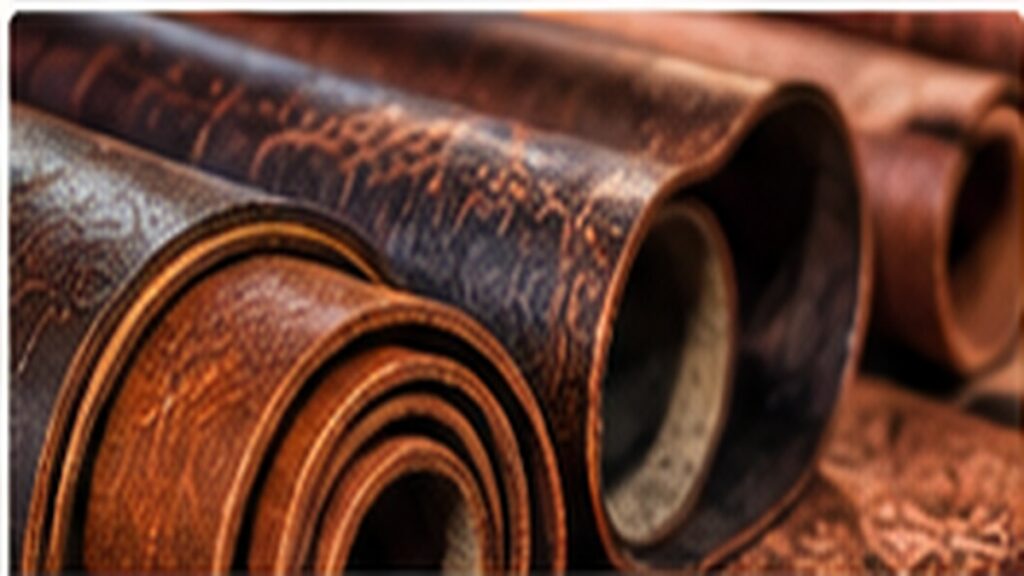
Leather remains popular because thin, supple leather can conform closely to the hand and provide a natural, low-bulk contact with the reins. Common glove leathers include lambskin, goatskin, deerskin, calfskin and split leather. These are not interchangeable.
- Lambskin and fine calfskin can offer a soft, close tactile feel, but fine surfaces may be less tolerant of hard use, repeated wetting or abrasive yard tasks.
- Goatskin is widely valued in gloves for its combination of suppleness and strength relative to its weight.
- Deerskin is naturally soft and flexible and is used in some technical and riding gloves, although performance still depends on tanning, thickness, finish and construction.
- Split leather and suede have a napped surface that can provide useful friction, but the surface may change with contamination, abrasion and cleaning.
Leather is not automatically superior to synthetic materials. Its advantages are often tactile and conformational rather than universal. Leather can become stiff, change shape or lose surface performance when repeatedly saturated and dried incorrectly. It may also require more careful cleaning and conditioning than a washable synthetic glove. A leather palm can be excellent in dry conditions but not the best choice for frequent wet riding or a user who needs easy machine washing.
Leather quality is affected by hide selection, thickness uniformity, fibre structure, tanning and finishing. A premium price alone does not prove that the palm leather is more durable. Inspect the rein-contact zones, edge finishing, stitch density, symmetry and whether the leather is appropriately thin for the intended use.
Synthetic leather and microfibre materials
“Synthetic leather” covers a broad group of materials rather than one defined performance category. It may refer to polyurethane-coated textile, microfibre constructions, polyester or nylon-based suede-like surfaces, and proprietary laminates. The backing fabric, polymer chemistry, surface finish and coating thickness can all alter performance.
Related industry reference: For businesses moving from technical research into trade sourcing, explore equestrian suppliers and manufacturers on EquiGuild.
Microfibre and synthetic suede palms are common in riding gloves because they can be engineered for consistent thickness, stretch and surface texture. They are often easier to wash than leather and can provide predictable grip across large production runs. They may also dry more quickly, although this depends on lining and coating.
Limitations include surface glazing, peeling, compression of the nap and loss of coating adhesion. A glove may remain visually intact while its friction changes. Conversely, a lightly abraded synthetic suede may still function well. The relevant question is not whether a material is synthetic, but how the finished palm behaves after repeated flexing, washing, wetting and contact with the particular reins used by the rider.
Silicone, rubber and polymer grip prints
Grip prints are normally applied as dots, lines, logos, grids or other patterns to a textile or synthetic palm. Silicone is common because it can provide a flexible, high-friction surface in a thin layer. Other elastomeric or polymer coatings may be used for similar purposes.
Print geometry matters. Small dots can preserve flexibility and allow some moisture to escape through the unprinted areas. Larger continuous areas may increase contact but can feel less breathable and may alter the glove’s bending behaviour. Raised lines or patterned prints can be selected to support specific contact zones, such as the fingers or palm crease.
Grip-print performance is context-dependent. It is influenced by the roughness, material and moisture state of the glove and the rein. A print that feels secure against rubberised reins may behave differently against smooth leather, synthetic leather, rope or wet webbing. Temperature can also affect elastomer flexibility.
Marketing terms such as “super grip” do not constitute a standardised performance rating. Unless a manufacturer provides a defined test method, test conditions and comparative results, such claims should be treated as product description rather than independently comparable data. Research and standards work on glove grip also show why a single friction value is insufficient: load, counter-surface roughness, wetting medium and whether the test measures static or dynamic friction can substantially change the result.
Grip is not the same as hand protection
A riding glove may protect against minor rubbing without being certified protective equipment. Equestrian gloves marketed for comfort, grip or riding control should not automatically be assumed to provide tested protection against cuts, punctures, impact, chemicals, heat or severe abrasion.
Where a glove is intended to protect the wearer against a specified health or safety risk, the GB PPE framework may apply. The UK Government describes PPE as equipment designed to protect a person against one or more risks to health or safety. Manufacturers placing PPE on the GB market must address the applicable essential health and safety requirements, conformity assessment, technical documentation, marking and user information.
For workplace use, an employer’s selection should follow a risk assessment. Gloves for grooming, stable work, loading, fencing or machinery-related tasks may need different properties from gloves intended only for riding. A lightweight riding glove should not be substituted for a task-specific protective glove merely because it has a textured palm.
Understanding EN 388 and ISO 21420
BS EN 388:2016+A1:2018 concerns protective gloves against mechanical risks. Its marking system can communicate tested performance for abrasion, cut, tear, puncture and, where applicable, impact. The familiar marking sequence may contain numbers and letters, with “X” indicating that a property was not tested or is not claimed under that part of the marking.
EN 388 is not a general riding-glove quality score. A high abrasion result does not establish good rein feel, wet grip, dexterity, comfort or suitability for horse handling. Nor does it demonstrate that the glove is appropriate for every mechanical hazard encountered around horses. It is a performance classification for defined tests and conditions.
ISO 21420:2020, with its applicable amendment, sets general requirements and test methods for protective gloves, including design, construction, innocuousness, comfort, efficiency, marking and information supplied by the manufacturer. ISO states that it does not by itself address the protective properties of gloves; it is used alongside relevant specific standards. This distinction is important when assessing claims that a glove is “certified” or “tested”. The exact standard, level, product model and intended hazard should be identifiable.
| Claim or feature | What it may indicate | What it does not prove |
|---|---|---|
| Silicone palm print | A raised polymer pattern intended to increase friction or control | Uniform grip in wet conditions, durability or compatibility with every rein |
| EN 388 marking | Declared performance against specified mechanical-risk tests | Good riding feel, horse-handling suitability or superior wet grip |
| Leather palm | A natural hide surface with potential conformity and tactile feel | Long life, waterproofness or better grip than a well-designed synthetic palm |
| Machine washable | The manufacturer permits a stated laundering method | Unlimited wash cycles or retention of original grip and fit |
| Water-resistant outer | Some resistance to water penetration or wetting | Dry hands during prolonged rain or unchanged friction when saturated |
Wet-weather and cold-weather performance
Water affects gloves in several ways. It can reduce or increase friction depending on the material pair, wash away surface treatments, swell or stiffen leather, add weight and reduce insulation. Sweat has a different chemistry from rain and may interact differently with coatings and linings.
For wet hacking, the most useful approach is to test the actual glove with the actual reins, preferably while mounted only in a controlled and safe setting. A glove that grips well when the palm is damp may feel slippery after full saturation. A waterproof membrane can keep rain out but may also reduce vapour transfer and increase internal condensation. A warm glove can preserve finger mobility in cold weather, yet excessive insulation may reduce rein feel and make small adjustments more difficult.
Cold reduces dexterity as well as comfort. The best winter glove is not necessarily the thickest: insulation, wind resistance, fit, flexibility and moisture management must be balanced. In severe cold, riders may need to choose between warmth and tactile sensitivity, or use different gloves for riding and ground handling.
Fit, sizing and dexterity
Measure the hand according to the manufacturer’s instructions; glove sizing systems are not fully uniform between brands. The glove should be close-fitting without blanching the fingers, restricting circulation or pulling the seams into the web spaces. Fingertips should reach the ends without excess material folding under the nails.
Try the glove with the hand closed as it would be around a rein. Check whether the thumb seam lands on a pressure point, whether the palm wrinkles beneath the fingers and whether the wrist closure stays stable. Test opening a buckle, adjusting a girth keeper and picking up a lead rope. These simple actions reveal bulk and seam problems that may not be apparent with the hand held flat.
Touchscreen compatibility is usually achieved through conductive yarn or a conductive surface on one or more fingertips. It can be convenient, but it does not necessarily correlate with grip, durability or wet-weather performance. Similarly, reinforced fingertips may improve wear life while making fine tack adjustments less sensitive.
Selection by use
- Dressage and flatwork: prioritise a close fit, low-bulk palm, quiet construction and compatibility with the reins used. Colour and competition rules should be checked separately for the relevant governing body.
- Show jumping and eventing: balance grip with the ability to make rapid rein adjustments. A washable synthetic or polymer-grip glove may be practical for variable conditions.
- Hacking: weather resistance, warmth, visibility, secure cuff design and durability may matter more than the finest tactile feel.
- Endurance and long rides: ventilation, sweat management, low-friction seams and resistance to salt and repeated washing become significant.
- Leading and lungeing: choose a glove that protects against rope friction and remains secure when the line moves. Riding gloves are not automatically suitable for heavy rope work.
- Grooming and yard work: consider a separate work glove where abrasion, puncture, chemicals or contamination are foreseeable. The BHS notes that gloves may reduce the ability to feel skin when grooming or checking a horse, so they should not be treated as a substitute for appropriate observation.
Durability and quality indicators
Examine the rein-contact areas rather than judging quality only by branding or appearance. Useful indicators include even leather thickness, secure edge binding, consistent grip-print coverage, clean seam finishing, reinforced high-wear zones, symmetrical finger lengths and a thumb that permits natural movement.
Failure commonly begins at the thumb saddle, finger webs, rein fingers, hook-and-loop attachment and palm edges. Peeling, cracking, glazing, thinning and seam opening each suggest different problems. Peeling may indicate coating or laminate failure; thinning may be ordinary abrasion; seam opening may indicate pattern stress, thread selection or inadequate seam allowance.
For businesses and manufacturers, finished-product consistency matters as much as prototype performance. Palm thickness, print height, reinforcement position, stitch density, sizing tolerances and laundering instructions should be controlled between batches. A material supplier’s claim about a substrate cannot be assumed to describe the finished glove after cutting, sewing, printing and washing.
Care and replacement
Follow the care label. Synthetic textile gloves commonly tolerate gentler machine washing than leather, but heat, fabric softener, aggressive detergents and tumble drying can damage elastane, coatings, prints and laminates. Fasten hook-and-loop tabs before washing and allow gloves to dry naturally unless the manufacturer specifies otherwise.
Leather should not normally be left wet, placed on a radiator or aggressively wrung. Dry it gradually, reshape it while damp if appropriate, and use only a compatible leather product if conditioning is recommended. Excess conditioner can soften or coat the surface and alter grip.
Replace gloves when holes expose the skin, the palm has become unreliable, seams cut into the hand, the fingers no longer fit securely, or contamination cannot be removed. A glove that still looks presentable may no longer provide predictable friction. Keep separate pairs for riding, wet conditions and dirty yard work where practical; this often extends the life of the pair intended for rein contact.
Common misconceptions
- “More grip is always safer.” Excessive friction can impede rein adjustment and may increase hand tension.
- “Leather is always the most durable.” Durability depends on hide, thickness, finish, seams, exposure and care.
- “Synthetic means cheap or slippery.” Modern microfibres and engineered coatings can be highly consistent, but quality varies substantially.
- “Waterproof means warm and grippy.” Waterproofness, insulation and friction are separate properties.
- “EN 388 is a riding-glove rating.” It is a mechanical-risk performance standard, not a general equestrian suitability score.
- “A glove protects against rope burn because it has a textured palm.” Texture alone does not establish tested abrasion or tear protection.
- “Tight is the correct fit.” A close fit is useful, but restriction, numbness and finger compression indicate an unsuitable size or pattern.
Practical buying checklist
- Identify the main use: riding, hacking, competition, lungeing, leading or yard work.
- Match the glove to the rein material and likely wetness.
- Choose the required balance of feel, grip, warmth, ventilation and protection.
- Check fit with the hand closed and while performing tack adjustments.
- Inspect palm seams, finger webs, thumb construction and reinforcement placement.
- Read the care instructions before buying, especially for leather or membrane gloves.
- For protective claims, ask for the exact standard, performance levels, conformity information and intended use.
- Test the glove in the conditions in which it will actually be used, and replace it when grip or structural integrity becomes unpredictable.
The most technically sound equestrian glove is therefore not the one with the most aggressive grip print or the highest price. It is the glove whose material system, pattern, seams and care requirements suit the rider’s actual reins, climate and workload. For ordinary riding, comfort and controlled friction are usually more valuable than maximum protection. For occupational or high-risk handling, a task-specific protective glove and a documented risk assessment should take precedence over assumptions based on riding apparel.
Sources and further reading
- British Horse Society: Gloves — riding, handling, fit, grip and practical selection guidance.
- ISO 21420:2020, Protective gloves — General requirements and test methods — scope, general requirements and relationship with specific protective standards.
- BSI: BS EN 388:2016+A1:2018 — protective gloves against mechanical risks.
- Health and Safety Executive: Gloves — choosing the right gloves to protect skin — fit, dexterity, comfort, task and grip considerations.
- Health and Safety Executive: PPE product safety and supply — GB PPE supply and conformity considerations.
- GOV.UK: Regulation 2016/425 and the Personal Protective Equipment (Enforcement) Regulations 2018 — GB obligations for PPE manufacturers and suppliers.
- European Agency for Safety and Health at Work: Protective gloves — overview of EN 388 performance categories and protective-glove selection.
- ASTM International: A New Test Method to Characterize the Grip Adhesion of Protective Glove Materials — discussion of coefficient of friction, test surfaces and grip measurement.
- ASTM International: F2961-26, Standard Test Method for Characterizing Gripping Performance of Gloves Using a Torque Meter — limitations and application of wearer grip testing.
- Your Horse: Choosing a Pair of Riding Gloves — practical discussion of palm materials, rein-finger reinforcement and fit.
Research note
Automatically researched source pack — editorial review required:
• www.iso.org — https://www.iso.org/standard/69030.html
• landingpage.bsigroup.com — https://landingpage.bsigroup.com/LandingPage/Undated?UPI=000000000000334070
• www.iso.org — https://www.iso.org/files/live/sites/isoorg/files/news/magazine/ISOupdate/EN/2022/ISOupdate%20August%202022.pdf
• www.hse.gov.uk — https://www.hse.gov.uk/mvr/topics/gloves.htm
• www.bhs.org.uk — https://www.bhs.org.uk/go-riding-and-learn/riding-out-hacking/what-to-wear/gloves/
• www.yourhorse.co.uk — https://www.yourhorse.co.uk/gear-advice/choosing-a-pair-of-riding-gloves/
• www.discount-equestrian.co.uk — https://www.discount-equestrian.co.uk/rider/riding-wear/riding-gloves/leather-gloves.html
• www.horseandhound.co.uk — https://www.horseandhound.co.uk/buyers-guides/best-gloves-winter-horse-riding-476163
• bushisports.com — https://bushisports.com/horse-riding-gloves-manufacturer-guide/
• www.discount-equestrian.co.uk — https://www.discount-equestrian.co.uk/rider/riding-wear/riding-gloves.html
• heelsdownmag.com — https://heelsdownmag.com/wiki/riding-gloves/
• assets.unilogcorp.com — https://assets.unilogcorp.com/187/ITEM/DOC/HERITAGE_102221315_Catalog.pdf
• www.eglove.co.uk — https://www.eglove.co.uk/de/blogs/news/vegan-horse-riding-gloves-guide
• www.equishop.com — https://www.equishop.com/en/blogs/blog-equishop/riding-gloves-and-contact-the-secret-to-light-hands-and-relaxed-shoulders
• www.iso.org — https://www.iso.org/iso/international_classification_for_standards.pdf
• manuals.plus — https://manuals.plus/m/a6543788eb193add7c2d2d257a943de56e76f652ee07b3544b2fadc9624b5fd2.pdf
• upload.horseware.com — https://upload.horseware.com/transfer/brochure/aw19/rug/aw19_rugs_english.pdf
• www.kingrelianceint.com — https://www.kingrelianceint.com/pdf/catalog.pdf
• en.wikipedia.org — https://en.wikipedia.org/wiki/Chaps
• en.wikipedia.org — https://en.wikipedia.org/wiki/Suede
Cite this article
Stable research ID: ERA-2026-000053
The Equestrian Research Atlas (2026) ‘Equestrian Gloves and Grip Materials’. The Equestrian Research Atlas. Available at: https://equestrianresearchatlas.co.uk/research/equestrian-gloves-and-grip-materials/ (Accessed: 26 September 2026).
The Equestrian Research Atlas. (2026). Equestrian Gloves and Grip Materials. The Equestrian Research Atlas. https://equestrianresearchatlas.co.uk/research/equestrian-gloves-and-grip-materials/
The Equestrian Research Atlas. “Equestrian Gloves and Grip Materials.” The Equestrian Research Atlas, 2026, https://equestrianresearchatlas.co.uk/research/equestrian-gloves-and-grip-materials/. Accessed 26 September 2026.
Research references (46)
- www.iso.org
- landingpage.bsigroup.com
- www.iso.org
- www.hse.gov.uk
- www.bhs.org.uk
- www.yourhorse.co.uk
- www.discount-equestrian.co.uk
- www.horseandhound.co.uk
- bushisports.com
- www.discount-equestrian.co.uk
- heelsdownmag.com
- assets.unilogcorp.com
- www.eglove.co.uk
- www.equishop.com
- www.iso.org
- manuals.plus
- upload.horseware.com
- www.kingrelianceint.com
- en.wikipedia.org
- en.wikipedia.org
- en.wikipedia.org
- de.wikipedia.org
- en.wikipedia.org
- en.wikipedia.org
- www.reddit.com
- www.reddit.com
- www.reddit.com
- arxiv.org
- oshwiki.osha.europa.eu
- store.astm.org
- store.astm.org
- www.gov.uk
- www.hse.gov.uk
- www.hse.gov.uk
- www.gov.uk
- www.gov.uk
- www.gov.uk
- www.hse.gov.uk
- www.gov.uk
- www.gov.uk