
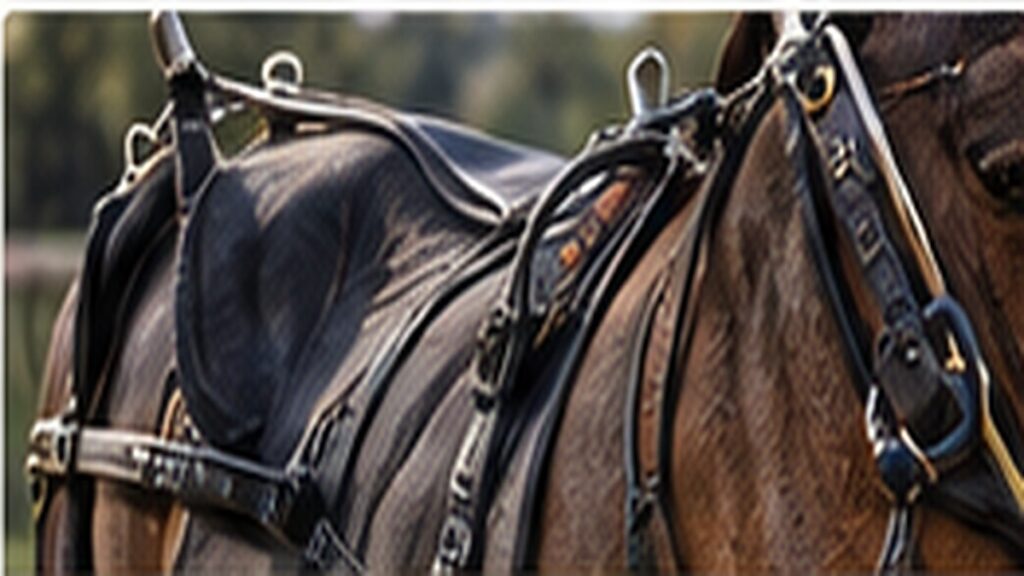
Why harness care is a system rather than a polishing routine
Driving harness is a load-bearing assembly, not merely an item of horse equipment that needs to look presentable. The bridle, saddle, breastcollar or full collar, traces, breeching, reins, tugs, terrets, girthing components and vehicle connections work together while the horse turns, accelerates, brakes and backs. Cleaning and storage therefore have two purposes: preserving the materials and making deterioration visible before it becomes a functional or safety problem.
A good care system has four linked stages:
- Remove contamination: sweat salts, mud, hair, dust, grit, road film and stable residues.
- Inspect: examine leather fibres, stitching, edges, holes, keepers, padding, buckles, rivets, clips and coated surfaces.
- Condition selectively: replace or preserve flexibility where the material and manufacturer permit it, without saturating parts that must retain dimensional stability.
- Store in a stable environment: dry, ventilated, protected from direct heat, sunlight, pests, crushing and contact with contaminated surfaces.
This sequence matters. Conditioning dirt into leather makes inspection harder; storing damp harness promotes mould and corrosion; and polishing hardware before checking the leather can conceal damage at the very points where failure is most consequential.
Know what the harness is made from
The word “leather” covers several different materials. Harness may include vegetable-tanned leather, chrome-tanned leather, finished or pigmented leather, suede-like linings, leather board, rawhide, rubber, textile webbing, coated webbing, synthetic padding and several types of metal. These materials do not respond identically to water, soap, oils, waxes, solvents or heat.
Traditional leather is a fibrous collagen material whose useful properties depend on tannage, fibre structure, thickness, finishing and the way each component was made. A trace, rein, girth billet, tug or saddle strap may need different flexibility and dimensional stability. A thick strap is not automatically a stronger strap: damaged edges, poor stitching, unsuitable hardware or weakened holes can determine the practical limit.
Synthetic harness is not one material. Coated webbing products, PVC-based materials, polyurethane-coated fabrics, nylon or polyester webbing and proprietary laminates differ in coating, reinforcement, heat resistance, flexibility and chemical compatibility. Some are designed to be wiped clean and need no conditioning; others contain textile layers or padding that require careful drying. “Synthetic” should therefore be treated as a construction category, not a complete specification.
Before establishing a routine, identify the maker’s instructions and record the material of each major component. If the harness is second-hand, uncertain or valuable, ask a competent harness maker before applying oil, dressing, solvent or abrasive polish.
Inspection before cleaning
Lay the harness out in good light, preferably in the order in which it is assembled. Do not begin by aggressively flexing stiff leather. Start with a visual and tactile assessment while the material is dry or only lightly damp.
- Look for cuts, deep scratches, grain loss, cracking, splitting, delamination and stretched or elongated holes.
- Examine folded areas, strap ends, trace attachments, tug loops, billets, buckle turns and places where leather contacts metal.
- Check stitching for broken, loose, abraded or pulled threads. A sound-looking stitch line does not compensate for leather that has split beside it.
- Inspect keepers and loops, especially where they retain long or load-bearing straps.
- Check padding for compression, exposed edges, distorted stuffing, trapped grit, dampness and contamination on the horse-contact side.
- Examine buckles, snaps, terrets, rings, quick-release fittings and shaft connections for distortion, corrosion, sharp edges and insecure attachment.
- On coated webbing, look for cuts through the coating, bubbling, peeling, exposed fibres, heat distortion, abrasion and separation around holes or rivets.
Any defect affecting a trace, rein, breeching connection, tug, girthing arrangement, shaft attachment or other load path should be assessed by a competent harness professional before use. Cleaning does not restore strength, and conditioning cannot repair a cut or failed stitch.
Routine cleaning of leather harness
Remove loose contamination first
Brush or wipe off dry dust, hair and grit with a soft brush or clean cloth. Pay particular attention to folds, keeper loops, buckle recesses, stitching and the underside of straps. Grit is an abrasive contaminant: rubbing it into the grain or coating is more damaging than leaving a light surface film until it can be removed safely.
Use controlled moisture
For ordinary stable and road dirt, use a slightly damp sponge or cloth and a small amount of mild, manufacturer-approved soap. Work in small areas and avoid soaking the assembly. Water can swell leather, mobilise dyes and penetrate padding, stitched channels and laminated components. It is usually better to repeat a light clean than to flood the harness once.
Do not use household detergents, disinfectants, degreasers, bleach, alcohol, petroleum solvents or untested kitchen products as general-purpose leather cleaners. Some may remove protective finishes, extract lubricants, stain the surface or attack synthetic coatings. A product that is acceptable for a boot or a saddle may not be suitable for a driving trace, rein or coated webbing component.
Clean contact areas thoroughly
Hair, sweat and salt accumulate on the underside of the saddle, breastcollar, collar, girthing parts and breeching. These residues can abrade the skin-contact surface and attract moisture. Clean them after use, not only when the harness is prepared for a show. Padded components should be allowed to dry fully, with air reaching both sides, before they are put away.
Dry gradually
Hang or lay the harness in a ventilated place away from radiators, heaters, fires, hot pipes and direct sunlight. Artificial heat can dry leather unevenly, harden it and increase the risk of cracking or distortion. Do not seal damp harness in a plastic box or closed tack cabinet. If the harness has been thoroughly wetted, allow extra drying time and inspect it again when dry before applying any dressing.
Conditioning: restraint is a quality indicator
Conditioning is often described as “feeding” leather, but that phrase can encourage over-application. A dressing may temporarily lubricate fibres while also darkening the leather, softening edges, attracting dust, affecting stitching or changing the dimensions of components that need to remain stable.
The Canadian Conservation Institute’s guidance is particularly relevant to the common assumption that more oil necessarily preserves leather. It notes that dressings may be ineffective, that excess oil can contribute to later stiffening as oils oxidise, and that dressings can attract dust or insects, darken surfaces and stain adjacent materials. Conservation practice for historic leather is not identical to working-harness maintenance, but it is a useful warning against routine, indiscriminate oiling.
For working harness, use the maker’s specified conditioner where one is recommended. Apply a small amount to clean, dry leather with a soft cloth, allow it to penetrate according to the product instructions, and remove excess. Test first on an inconspicuous area because colour change and finish variation are common. Do not assume that a conditioner intended for smooth bridle leather is suitable for suede, nubuck-like surfaces, rawhide, leather board, patent finishes or coated webbing.
Conditioning should normally be driven by material condition and use, not by a fixed weekly or monthly quota. Leather exposed to frequent rain, sweat, flexing, dust or road work may require more attention than harness used occasionally in a dry indoor environment, but the correct response is not automatically more oil. A dry, clean, flexible component may need little or no additional dressing. A component that is cracking, sticky, stretched, unusually dark or soft should be referred to a harness maker rather than repeatedly treated.
Where conditioning can be counterproductive
- Traces and reins: excessive softening or stretching can alter feel, adjustment and dimensional stability.
- Billets and girthing straps: oversaturation may soften holes and edges, increasing elongation.
- Tugs and shaft-related components: these must retain secure shape and fit; greasy residues may also interfere with handling.
- Stitched and padded areas: liquid dressing can migrate into thread, lining or stuffing and remain difficult to dry.
- Light-coloured or finished leather: oils and waxes may darken or produce uneven gloss.
Synthetic and coated-webbing harness
The principal advantage of many synthetic harnesses is a more predictable cleaning routine. Manufacturer guidance commonly recommends wiping or washing with clean water and a mild soap solution, followed by air drying away from direct sunlight. One established UK driving-harness supplier specifically warns against petroleum-based products, liniments and solvents on its synthetic materials.
Remove loose dirt first, then use a damp cloth, sponge or gentle stream of water appropriate to the maker’s instructions. Avoid high-pressure jets, aggressive brushes and abrasive pads. Water can enter around stitching, rivets, padding and folded ends even when the outer coating appears waterproof.
Do not apply leather oil, neatsfoot oil, wax dressing or solvent-based polish to coated webbing unless the manufacturer expressly approves it. The coating may become sticky, swollen, dull or brittle, and the underlying webbing can be affected without obvious surface warning.
After washing, hang the components so air can circulate. Inspect the edges and underside after drying. A synthetic harness can appear clean while hidden textile fibres, stitching or hardware are deteriorating. UV exposure, abrasion, sharp edges, heat and chemical contamination remain relevant even where water resistance is good.
Pure nylon webbing should not be treated as interchangeable with a purpose-designed driving harness. Guidance from the Riding for the Disabled Association notes that pure nylon harness is unsuitable because it can cause friction. Material choice must be judged alongside construction, padding, fit, intended load and the carriage arrangement.
Hardware, metalwork and mixed materials
Clean metal fittings separately where practical, protecting adjacent leather and coatings from polish. A soft brush or cloth is usually preferable to abrasive compounds. If a metal polish is used, apply it sparingly and prevent residue entering stitching, padding, leather pores or coated webbing. Remove all residue before assembly.
Related industry reference: For businesses moving from technical research into trade sourcing, explore driving-harness suppliers on EquiGuild.
Brass, stainless steel, plated metal and white-metal fittings can have different finishes and corrosion behaviour. A polish that produces an attractive shine may remove plating or alter an intentionally aged surface. Never use aggressive abrasive treatment on a load-bearing fitting merely to improve appearance.
Check corrosion beneath buckles, around rivets and at contact points where dissimilar metals may meet in the presence of sweat or moisture. Surface tarnish is not the same as structural corrosion, but pitting, distortion, sharp edges or loose attachment require professional assessment.
Mixed-material harness deserves special attention because one component may dry quickly while another remains damp. Padded breastcollars, collars and saddle surfaces can hold moisture against leather or metal. Separate or open components during drying and do not store them tightly compressed.
Storage in a British stable, workshop or tack room
The aim is a clean, stable, ventilated storage environment rather than a perfectly controlled museum store. Conservation guidance for leather commonly emphasises stable relative humidity, avoidance of extremes, protection from direct light and prevention of mould. The National Archives gives a useful general reference point of approximately 40–60% relative humidity for mixed collections, warning that leather may crack below 40% and that mould risk rises with excessive humidity. Working tack rooms will not always maintain these values, but the direction is clear: avoid damp, stagnant conditions and rapid swings.
Do not store harness:
- against a damp external wall or on a concrete floor;
- beside a radiator, boiler, heater, drying room outlet or strong light source;
- in a sealed bag while any part remains damp;
- under heavy equipment where straps, padding or blinkers can be crushed;
- on dirty hooks that transfer grit, manure or corrosive residues;
- where rodents, insects or birds can reach leather, padding or stitching.
Use clean, smooth, load-appropriate hooks or racks with sufficient support. Hang bridles so blinkers are not distorted, support saddles and collars without forcing their shape, and avoid sharp bends in traces and reins. Long straps should be coiled or hung without tight kinks. Keep buckles and clips from pressing into finished leather.
Breathable covers can protect against dust, but they should not trap condensation. Cotton or other clean, non-abrasive covers are preferable to airtight plastic for dry harness. Keep stored sets identifiable, especially where several horses, sizes or pairs are involved. A simple tag or photograph can reduce incorrect assembly and avoid repeated handling.
Monitor the room, not just the harness
A low-cost thermometer and hygrometer can reveal seasonal problems that are otherwise blamed on the leather. Record readings in winter, during wet weather and after washing. Look for condensation, musty odour, surface bloom, sticky finishes, rust or recurrent mildew. If humidity remains high, improve ventilation and address building damp rather than relying on more conditioner or disposable moisture absorbers.
A practical inspection and care schedule
| Interval | Action | Purpose |
|---|---|---|
| Before every use | Check traces, reins, tugs, girthing parts, breeching, shaft connections, stitching, holes, clips and fittings. | Identify defects before the harness carries load. |
| After every use | Remove sweat, hair, mud and grit; wipe contact areas; separate damp padded parts. | Prevent abrasion, salt accumulation and trapped moisture. |
| As needed | Clean leather with controlled moisture and approved soap; wash synthetic materials according to maker instructions. | Remove contamination without damaging finishes or coatings. |
| After drying | Inspect edges, holes, stitching, hardware and coatings; condition only where appropriate. | Make deterioration visible and avoid unnecessary dressing. |
| Seasonally or before intensive work | Disassemble sufficiently to inspect hidden areas, check fit and review storage conditions. | Find wear that routine wiping does not reveal. |
| After unusual wetting, chemical exposure or impact | Quarantine from use until fully dry and assessed. | Prevent hidden damage from entering service. |
For commercial yards, riding schools, carriage operators and manufacturers, the system should be documented. Record the harness identity, material, date of inspection, defects, cleaning products used, repairs requested and the person who released it for use. This is especially valuable where several people clean or assemble equipment.
Common misconceptions
“More oil means better leather.”
No. Conditioning is material- and component-specific. Excess dressing can attract dust, darken leather, soften parts that should remain stable and contribute to long-term deterioration.
“Synthetic harness needs no maintenance.”
No. It may need less conditioning, but it still requires cleaning, inspection, drying and protection from abrasion, heat, UV exposure and unsuitable chemicals.
“If it looks shiny, it is safe.”
Shine is a presentation characteristic, not a strength test. Cracks beside stitching, elongated holes, hidden delamination, corrosion beneath fittings and damaged fibres may be concealed by polish.
“Water ruins all leather.”
Uncontrolled soaking, rapid drying and heat are the main risks in ordinary cleaning. Light, controlled damp cleaning followed by gradual drying is different from leaving leather wet or forcing it dry.
“A stronger-looking strap can replace a damaged original.”
Not necessarily. Harness components are designed as a system. Width, thickness, hole placement, flexibility, edge finishing, stitching, hardware and load direction all matter. Substitution should be approved by a competent harness maker.
When to stop cleaning and seek competent assessment
Remove the harness from service if a trace, rein, breeching strap, tug, shaft attachment, girthing component or other load-bearing part has a cut, split, deep crack, severe abrasion, failed stitching, distorted fitting, loose rivet or questionable repair. Also seek advice where leather is sticky, powdery, extensively mouldy, badly stained by chemicals, or has changed dimension after soaking.
Professional assessment is also appropriate for valuable antique or historically significant harness. Museum conservation advice cautions that traditional dressings can create irreversible changes; historic harness should not automatically be treated like modern working equipment.
Cleaning and storage cannot compensate for poor fit. After care, the assembled harness must still be correctly fitted to the horse and compatible with the carriage, shaft arrangement and intended use. Harness care belongs alongside, not instead of, competent fitting, driving instruction, vehicle inspection and safe operating practice.
Sources and further reading
- Canadian Conservation Institute: Leather, skin and fur.
- Canadian Conservation Institute Note 11/7: Leather Dressing: To Dress or Not to Dress.
- The National Archives: Managing mixed collections guidance for archive services.
- Bennington Carriages: Hints and Tips on Cleaning Your Harness.
- Riding for the Disabled Association: Carriage Driving Safety Code.
- Criterion: Quick-hitch driving harness care information.
- The National Archives: Caring for archives.
Research note
Automatically researched source pack — editorial review required:
• www.gov.uk — https://www.gov.uk/government/publications/guidance-for-the-care-of-human-remains-in-museums/guidance-for-the-care-of-human-remains-in-museums
• www.moray.gov.uk — https://www.moray.gov.uk/community-life-sports-and-leisure/museums/conservation-preventive-care/
• democracy.leics.gov.uk — https://democracy.leics.gov.uk/documents/s160294/Museum%20Accreditation%20App%20A.pdf
• www.criterion-uk.com — https://www.criterion-uk.com/collections/quick-hitch-harness
• www.canada.ca — https://www.canada.ca/en/conservation-institute/services/care-objects/leather-skin-fur.html
• cdn.nationalarchives.gov.uk — https://cdn.nationalarchives.gov.uk/documents/archives/managing-mixed-collections-guidance.pdf
• equiguild.co.uk — https://equiguild.co.uk/equestrian-suppliers/driving-harness-carriage/synthetic-driving-harness/?eg_lang=en
• www.myrda.org.uk — https://www.myrda.org.uk/assets/Carriage-Driving-Safety-Code-August-2021.pdf
• www.benningtoncarriages.co.uk — https://www.benningtoncarriages.co.uk/files/ww/Cleaning%20Harness%20Tips.pdf
• www.canada.ca — https://www.canada.ca/content/dam/cci-icc/documents/services/conservation-preservation-publications/canadian-conservation-institute-notes/11-7-eng.pdf
• www.nationalarchives.gov.uk — https://www.nationalarchives.gov.uk/archives-sector/advice-and-guidance/managing-your-collection/caring-for-archives/
• equestrianresearchatlas.co.uk — https://equestrianresearchatlas.co.uk/research/driving-harness-fitting-principles/
• equestrianresearchatlas.co.uk — https://equestrianresearchatlas.co.uk/research/anatomy-of-a-driving-harness/
• seasanscarriages.co.uk — https://seasanscarriages.co.uk/seasans-debut-harness
• newsite.cityoflondon.gov.uk — https://newsite.cityoflondon.gov.uk/things-to-do/attractions-museums-entertainment/guildhall-art-gallery/conservation
• causewaycoastandglens.gov.uk — https://causewaycoastandglens.gov.uk/uploads/general/210921_LD_Item_8_-_Museums_Services_Stores.pdf
• rideanddrive.uk — https://rideanddrive.uk/harness/harness.htm
• www.gov.uk — https://www.gov.uk/government/publications/guidance-for-the-care-of-human-remains-in-museums
• en.wikipedia.org — https://en.wikipedia.org/wiki/Horse_harness
• en.wikipedia.org — https://en.wikipedia.org/wiki/Crupper
Cite this article
Stable research ID: ERA-2026-000424
The Equestrian Research Atlas (2026) ‘Driving Harness Cleaning, Conditioning and Storage Systems’. The Equestrian Research Atlas. Available at: https://equestrianresearchatlas.co.uk/research/driving-harness-cleaning-conditioning-and-storage-systems/ (Accessed: 3 November 2026).
The Equestrian Research Atlas. (2026). Driving Harness Cleaning, Conditioning and Storage Systems. The Equestrian Research Atlas. https://equestrianresearchatlas.co.uk/research/driving-harness-cleaning-conditioning-and-storage-systems/
The Equestrian Research Atlas. “Driving Harness Cleaning, Conditioning and Storage Systems.” The Equestrian Research Atlas, 2026, https://equestrianresearchatlas.co.uk/research/driving-harness-cleaning-conditioning-and-storage-systems/. Accessed 3 November 2026.
Research references (27)
- www.gov.uk
- www.moray.gov.uk
- democracy.leics.gov.uk
- www.criterion-uk.com
- www.canada.ca
- cdn.nationalarchives.gov.uk
- equiguild.co.uk
- www.myrda.org.uk
- www.benningtoncarriages.co.uk
- www.canada.ca
- www.nationalarchives.gov.uk
- equestrianresearchatlas.co.uk
- equestrianresearchatlas.co.uk
- seasanscarriages.co.uk
- newsite.cityoflondon.gov.uk
- causewaycoastandglens.gov.uk
- rideanddrive.uk
- www.gov.uk
- en.wikipedia.org
- en.wikipedia.org
- en.wikipedia.org
- en.wikipedia.org
- en.wikipedia.org
- en.wikipedia.org
- www.reddit.com
- www.reddit.com
- www.reddit.com
Related research
 Harness Hardware and FittingsContinue research →Driving Harness Fitting PrinciplesContinue research →
 BioThane Driving Harness ExplainedContinue research →Quick Hitch Harness SystemsContinue research →Breastcollar vs Full Collar HarnessContinue research →Anatomy of a Driving HarnessContinue research →