Hub research overview
What this authority hub covers
The Horse Fit, Sizing & Ergonomics hub is a practical guide to understanding how equestrian equipment should relate to the horse, the rider, the vehicle where relevant, and the conditions in which the equipment is used. Its central premise is that fit is not proved by a product label, a single measurement or a quick visual check. Equipment has to work with anatomy and movement while remaining stable, comfortable and safe.
The spoke research covers six connected areas: bridle sizing, common equipment fit problems, ergonomics in equestrian equipment, harness sizing, rug measurement and saddle-fit terminology. Together, these references provide a vocabulary for discussing fit, methods for identifying likely problems, and a framework for knowing when a qualified saddler, bridle fitter or veterinary professional should be involved.
The central idea: fit is a system, not a number
Terms such as pony, cob, full and extra-full can be useful starting points, but they are not reliable measurements. The same principle applies to rug and harness sizes, where nominal dimensions can vary between manufacturers and where the stated size may describe only one part of the equipment. A horse’s anatomy, proportions, body shape and movement determine whether an item is suitable.
Fit is also dynamic. The interaction changes with the horse, rider, tack, workload and environment. A piece of equipment that looks acceptable when the horse is standing may behave differently in movement. Load, balance, adjustment, changing body shape and the activity being performed can all affect pressure and stability. For that reason, the hub treats fitting as an assessment process rather than a simple act of choosing a size.
Key technical themes
Anatomy and sensitive structures
Equipment must clear or accommodate relevant anatomical structures instead of merely sitting in an apparently conventional position. This is particularly important for bridles and harness, where the arrangement of straps can affect sensitive areas, the poll, the nose, the airway, the shoulder and the mouth. Rug design also has to allow adequate shoulder freedom and an appropriate depth, while saddle assessment considers the horse’s back and the way the saddle’s bearing surfaces relate to it.
Anatomy matters more than assumptions based on breed, height or a broad size category. The bridle and harness spokes therefore focus on component-by-component assessment. In a saddle, the terminology reference explains how the tree, points, headplate, panels, channel and bearing area relate to fit. These terms help readers describe what they are seeing without treating any one feature as conclusive.
Pressure distribution, restriction and stability
Good ergonomic design does more than prevent obvious rubbing. It should distribute load, preserve movement, support balance, limit pressure peaks and accommodate changing body shape. A saddle’s balance, clearance, panel contact, flocking and rider fit all contribute to how forces are managed. A girth, noseband, breastcollar or collar must remain secure without creating unnecessary restriction. Protective equipment must be suitable for its intended conditions and should not introduce new movement or comfort problems.
Pressure can be uneven even when equipment appears tidy. Restriction may be subtle rather than visible, and stability problems may develop as the horse moves, works, sweats or changes shape. The hub consequently encourages readers to look beyond cosmetic appearance and ask what the equipment is doing under realistic use.
Movement and the horse–human relationship
Equestrian ergonomics concerns both horse and human. Tack and clothing influence how the rider sits, balances and communicates, while the rider’s position and forces affect the horse. In driving, the vehicle becomes part of the system: the bridle, collar or breastcollar, girth, saddle, breeching, traces and reins must function with the horse’s movement and the vehicle’s demands.
This systems view explains why a change to one component can alter the behaviour of others. An adjustment that improves stability in one area may create pressure or restriction elsewhere. The aim is not simply to make equipment look symmetrical or conventional, but to achieve a functional relationship between the equipment, the users and the activity.
Measurement, adjustment and manufacturer variation
Measurement is valuable when the correct method is used and the result is interpreted against the relevant manufacturer’s information. The rug guide distinguishes body-length and back-seam sizing and explains why depth, shoulder freedom and the manufacturer’s chart also matter. Harness guidance similarly treats sizing and adjustment as a system rather than a single measurement.
Measurement alone cannot establish fit. It must be combined with inspection of placement, clearance, stability, movement and signs of discomfort or failure. Manufacturer charts are useful, but variation between brands means that a nominal size should not be transferred uncritically from one product to another. The same caution applies to bridle components and saddle terminology, where trade language and construction details do not always provide a complete assessment.
How the spoke topics connect
Bridles, bits and harness
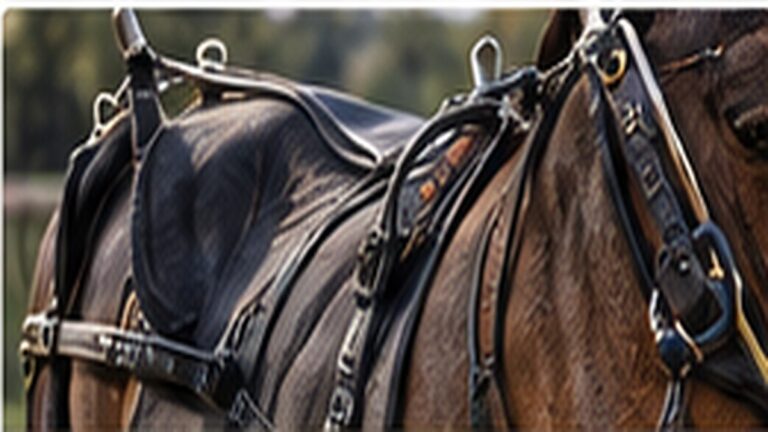
The bridle-sizing reference explains why every component needs assessment, including the effects of poll and noseband fit on comfort and performance. The harness reference extends this approach to a complete driving system. Its bridle must clear sensitive structures; the breastcollar or collar must transmit traction without restricting the airway or shoulder; and the girth, saddle, breeching, traces and reins must remain functional together.
These topics connect through the distinction between nominal size and working fit. A correct label does not compensate for poor adjustment, unsuitable proportions or interference with movement. Modular equipment or professional fitting may be more appropriate when standard combinations cannot accommodate the horse’s anatomy.
Saddles and rider fit
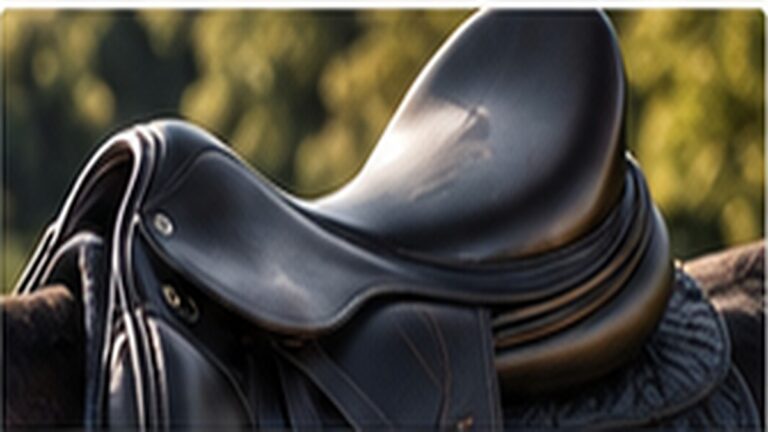
The saddle terminology spoke supplies the technical language needed to understand common assessments. Tree, points, headplate, panels, channel, balance, clearance, bearing area, flocking, pressure distribution and rider fit describe different aspects of construction and use. No single measurement can prove that a saddle fits, and visual inspection has limits.
This makes saddle fit a clear example of the hub’s broader principle: assessment should consider the horse, the rider, the saddle and movement together. Terminology is useful only when it supports that wider evaluation rather than replacing it.
Rugs and protective equipment
Rug fitting shows why a correct measurement system is necessary but insufficient. Body length or back-seam information must be interpreted alongside depth, shoulder freedom, movement, heat management and the manufacturer’s design. Poor fit can contribute to rubbing, restricted movement, overheating or premature rug failure.
Protective equipment raises the same ergonomic questions. The relevant issue is not merely whether an item is present or appears correctly fastened, but whether it fits the intended user, preserves necessary movement and remains safe under the conditions for which it was designed. The ergonomics reference addresses saddle, bridle, girth, stirrup, body-protector and helmet fit while distinguishing established evidence from industry convention and marketing claims.
Recognising problems and deciding what to do
The common-fit-problems reference brings the subjects together by examining saddles, girths, bridles, bits, rugs and protective equipment. It focuses on how to recognise fit failures and why equipment that seems acceptable can still create pressure or restriction. Readers should consider patterns such as instability, rubbing, restricted movement, unsuitable clearance, pressure concentration, altered balance or equipment that fails under the actual workload.
These observations are not a substitute for specialist assessment. A qualified saddler, bridle fitter or veterinary professional may be needed, particularly when there are persistent signs of discomfort, suspected pressure-related problems, difficulty identifying the cause, or a requirement for a substantial modification. The hub supports informed observation and communication; it does not turn a label, photograph or isolated measurement into a definitive diagnosis.
What to understand before exploring the spokes
- Size labels are starting points, not proof of fit.
- Anatomy, movement and the intended use of the equipment must be considered together.
- Fit includes pressure distribution, clearance, balance, stability and freedom of movement, not just the absence of visible rubbing.
- Measurements must use the correct method and be checked against the relevant manufacturer’s information.
- Equipment should be assessed as a system, especially when horse, rider, harness and vehicle interact.
- Visual checks are useful but have limits; dynamic assessment may reveal problems that are not apparent when standing still.
- Professional input is appropriate when discomfort, restriction, instability or uncertainty persists.
With these principles in place, the spoke research can be read as a connected set of practical tools: terminology for describing equipment, measurement methods for beginning an assessment, ergonomic principles for judging function, and warning signs that indicate when a more detailed or professional evaluation is needed.