Research snapshot
Key areas covered
- Early coverings: protection, utility and display
- From blankets to purpose-made horse rugs
- The British stable and the rise of routine rugging
- Materials: from wool and canvas to technical fabrics
- Wool
- Cotton and canvas
Referenced source footprint (12)
- George Washington University Museum and The Textile Museum: Adorning the Horse: Equestrian Textiles for Power and Prestige — museum.gwu.edu
- British Horse Society: Types of rugs and rugging a horse — app-bhswebsite10-internaldev-uksouth.azurewebsites.net
- British Horse Society: Winter horse care and routine — prod.bhs.org.uk
- A survey on the use of rugs in Australian horses, Animals — pmc.ncbi.nlm.nih.gov
- Effect of different blanket weights on surface temperature of horses in cold climates — www.sciencedirect.com
- The effect of blankets on horse behaviour and preference for shelter in Nordic winter conditions — www.sciencedirect.com
- Temperature regulation in horses during exercise and recovery in a cool environment — pmc.ncbi.nlm.nih.gov
- Effect of cooling blanket on the heat stress of horses in hot and humid environments — pmc.ncbi.nlm.nih.gov
- Plus 4 more source links within the article.
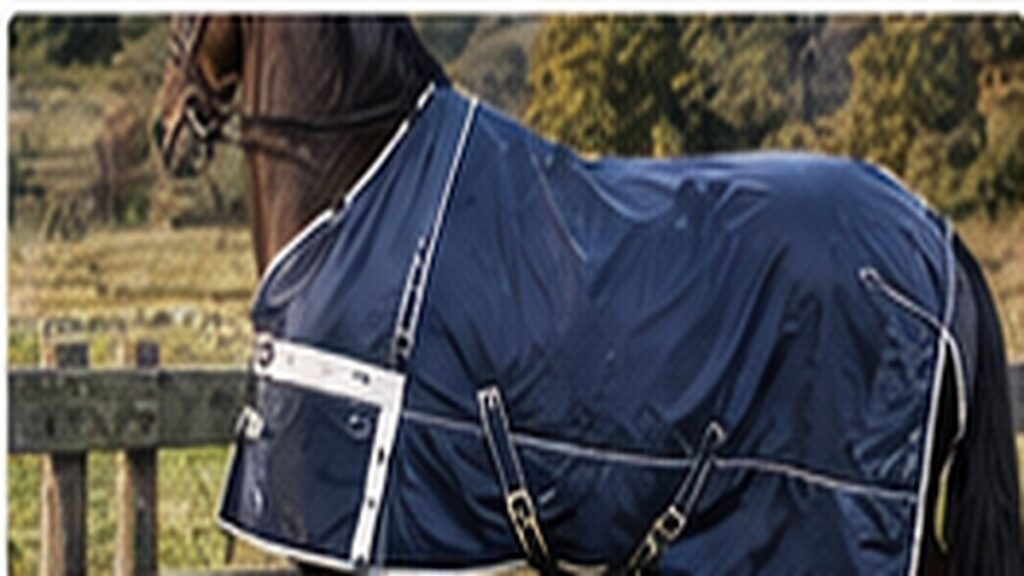
Horse rugs are often treated as a modern stable-management product, but the underlying idea is ancient. People have covered horses for warmth, protection, status and practical management for many centuries. What has changed most is not the existence of horse coverings, but their purpose, construction and precision. A rectangular woollen blanket, a ceremonial saddle cover, a canvas stable rug and a modern breathable turnout rug belong to the same broad history, yet they solve very different problems.
In Britain, the word rug generally means a removable textile covering worn over the horse’s body. In North America, blanket is more usual; elsewhere, terms such as horse cover, sheet or coat may be used. The distinction between a rug and a saddlecloth is important. A saddlecloth is positioned beneath the saddle and primarily manages pressure, friction, sweat and cleanliness at the interface between horse and saddle. A rug covers the trunk and may extend over the neck, chest and quarters, usually without carrying a saddle.
Rug choice is ultimately a balance of weather protection, breathability, fit and the individual horse. Readers wanting to compare practical options can browse horse rugs available from JSM Equestrian Supplies, including designs intended for changing UK conditions.
Early coverings: protection, utility and display
The earliest horse coverings were unlikely to resemble a modern fitted rug. They were probably adapted from available blankets, woven cloths, felted materials, hides and other textiles. Their functions would have depended on climate, horse use and the resources of the people keeping the animals. A covering could reduce exposure to cold wind, rain or snow, keep a valuable horse clean, protect the coat during travel, or provide a layer between the horse and a saddle or harness.
Equestrian textiles also carried social and political meaning. Museums hold examples of richly decorated saddle covers, horse blankets and other textiles from Asia, the Middle East and Europe. These objects show that textiles associated with horses were not merely utilitarian. Colour, weave, embroidery, fringe, metallic thread and pattern could identify rank, wealth, ceremonial function or cultural origin. The George Washington University Museum and The Textile Museum’s exhibition Adorning the Horse documented equestrian textiles spanning roughly 1,300 years, illustrating how horses were decorated and equipped across several regions.
In many historical settings, the horse’s textile equipment was divided between a saddle cover, a rump cloth, a breast cloth and a body covering. These forms should not be collapsed into the modern British concept of a turnout rug. Some were designed for ceremony rather than weatherproofing; others were used beneath or around tack. Their construction may have prioritised visual effect, warmth, flexibility or local availability rather than the balanced combination of waterproofing, breathability, low weight and secure fit expected today.
Paintings and surviving objects are valuable evidence, but they must be interpreted cautiously. An image may show a ceremonial textile, a temporary travelling covering or a stable practice specific to one region or social group. It cannot automatically establish that the same design was used routinely by all horse owners at the time.
From blankets to purpose-made horse rugs
For much of equestrian history, horse coverings were relatively simple. Wool was particularly useful because it could provide insulation even when damp, while woven wool blankets could be repaired and reused. Cotton and linen offered lighter, more breathable options, although untreated plant fibres were not inherently waterproof. Canvas and heavy woven fabrics became associated with hard-wearing outdoor use, especially where resistance to abrasion and tearing mattered more than softness or low weight.
The modern fitted blanket is often associated with the nineteenth-century expansion of industrial textile production. A peer-reviewed survey of rug use in Australian horses identifies 1857 as the date associated with the manufacture of the first fitted horse rug by Troy Woolen Mills in New Hampshire. That claim should be understood as a documented milestone in commercial fitted blankets, not proof that no shaped or secured horse coverings existed earlier. Historical horse equipment developed gradually, and terminology such as first can depend on whether it refers to a patented design, a mass-produced product, a fitted blanket or a surviving example.
Industrial manufacture changed the economics of horse clothing. Mechanised spinning and weaving made consistent fabrics more available; improved cutting and sewing allowed panels, gussets and shaped necks; and standardised sizing made it easier to produce rugs for different classes and types of horse. The growth of rail travel, racing, military remount systems, commercial transport and organised sport created further demand for protective coverings that could be used repeatedly and maintained at scale.
Traditional rugs were commonly secured with surcingles, breast straps, leg straps, tail cords or combinations of these. A blanket that simply rested over the back could shift, expose the shoulders or become dangerous if it slipped beneath the legs. The central engineering problem has therefore remained consistent: the rug must stay sufficiently stable during movement while allowing the horse to graze, lie down, roll, turn and rise.
The British stable and the rise of routine rugging
Horse rug use expanded alongside changes in how horses were managed. A working horse kept outdoors in a group has different needs from a clipped competition horse kept in an enclosed stable. As horses became more likely to be stabled, groomed, clipped and exercised on a schedule, rugs increasingly became part of routine management rather than an occasional emergency covering.
Clipping was particularly significant. A horse’s winter coat is an important part of its natural insulation. Removing some or all of that coat can make it easier for a horse in regular work to dry after exercise and remain comfortable during exertion, but it also reduces protection when the horse is standing at rest. Rugs became a practical means of compensating for some of that lost insulation, especially for horses working through winter.
Stable rugs developed as relatively clean, comfortable indoor coverings. They were traditionally made from wool, cotton, quilted textile or synthetic fleece and were not necessarily waterproof. Turnout rugs, by contrast, were designed for exposure to rain, wind, mud, rubbing and movement. The distinction between the two remains important: a stable rug may become saturated outdoors, while a heavy waterproof turnout rug may be unnecessarily warm, restrictive or difficult to manage indoors.
The British Horse Society identifies several modern categories, including turnout rugs, stable rugs, exercise sheets, coolers, travel rugs, fly rugs and sweet-itch rugs. These categories describe intended use rather than a universal technical standard. A product marketed as a cooler, for example, may be made from fleece, mesh or a technical wicking fabric, and its suitability depends on the horse, weather and stage of recovery after exercise.
Materials: from wool and canvas to technical fabrics
Wool
Wool was historically important because its fibres trap air and retain useful insulation when damp. It can be warm, flexible and comfortable, but wool rugs can also be heavy, absorb moisture and require careful drying. Their weight becomes increasingly inconvenient when a rug is repeatedly soaked, carried, washed or stored.
Cotton and canvas
Cotton is comfortable and comparatively breathable, which helped make it useful for stable sheets, summer rugs and fly protection. Conventional cotton is not, however, a substitute for a waterproof membrane or coated turnout fabric. Canvas and other densely woven materials can be robust, but durability depends on yarn, weave, coating, stitching and maintenance rather than fabric name alone.
Nylon and polyester
Synthetic fibres transformed horse rugs by allowing manufacturers to combine lower weight with high tensile strength, faster drying and more predictable performance. Polyester and nylon are used in outer shells, linings, meshes, webbing and binding. Their performance varies widely according to yarn construction, weave, coating and finishing.
Denier and fabric strength
Denier describes the linear density of a fibre or yarn. In equestrian retail, it is commonly used as shorthand for the apparent robustness of a rug’s outer fabric: 600D, 1200D and 1680D are familiar examples. A higher denier can indicate a heavier or more substantial yarn, but it is not a complete measure of tear resistance, abrasion resistance or waterproofing. Two fabrics with the same denier may perform differently because of differences in weave, yarn quality, ripstop structure, coating and seam construction.
The British Horse Society describes denier in practical terms as relating to the strength of the outer material and notes that higher-denier rugs may provide greater resistance to wet weather. That is useful consumer guidance, but it should not be read as a universal test result or a guarantee that one denier rating will outperform another in every application.
Ripstop construction
Ripstop fabrics use a reinforcing grid or heavier yarns at intervals within the weave. If a small cut occurs, the grid can help limit how rapidly the tear spreads. Ripstop does not make a rug impossible to tear, and a poor fit, exposed fastener or weak seam can still cause failure. It is one component of a construction system that also includes fabric weight, coatings, seam design, binding and hardware.
Waterproofing and breathability
A turnout rug has to manage two conflicting requirements: limiting rain entry while allowing heat and water vapour to escape. Waterproof performance may come from a tightly woven fabric, a surface coating, a membrane or a combination of these. Breathability is influenced by the fabric system, temperature and humidity gradient, fit, lining and the amount of moisture being generated by the horse.
Marketing terms such as water-resistant, showerproof, waterproof and breathable should not be treated as interchangeable. They may refer to different test methods or may be used descriptively without a comparable published specification. A rug can be waterproof when new yet leak through damaged or poorly maintained seams. Dirt, grease, detergent residue, abrasion and repeated washing can also reduce performance.
Insulation: fill, layering and the modern rug system
Modern rugs commonly use synthetic insulation, described as fill and measured in grams per square metre. Retail categories often call 0–100g light, 150–250g medium and 300g or more heavy, although category boundaries vary between brands. Fill weight is not the same as total rug weight and does not by itself predict how warm a rug will be.
Warmth depends on the loft and distribution of the insulation, the outer fabric, lining, fit, coverage, wind exposure and whether the horse’s coat can stand up beneath the rug. A close-fitting rug that compresses the coat may behave differently from a looser design. Neck coverage, belly coverage and the design of the front closure also affect the protected area and the way wind enters.
Layering has become common because it allows owners to combine a waterproof shell with interchangeable liners. In principle, this can provide more flexibility than buying a separate rug for every weather condition. In practice, layers can shift, increase bulk, compress insulation or create additional rubbing points. Compatibility between brands should not be assumed simply because the nominal size is the same.
| Rug type | Primary purpose | Typical construction | Main limitation |
|---|---|---|---|
| Turnout rug | Protection from rain, wind and outdoor exposure | Waterproof outer, lining, secure closures, often synthetic fill | Can overheat, leak or rub if poorly fitted or left unchecked |
| Stable rug | Indoor warmth and cleanliness | Quilted fabric, fleece, cotton or synthetic lining | Usually not designed for sustained rain or mud |
| Sheet or rain sheet | Light protection with little or no insulation | Unfilled waterproof or water-resistant fabric | Provides limited warmth in cold conditions |
| Cooler | Managing moisture and chill after exercise | Fleece, wool, mesh or moisture-managing technical fabric | Not necessarily suitable for turnout or unattended use |
| Fly rug | Reducing insect contact and sometimes solar exposure | Lightweight mesh, often with neck and belly coverage | Can trap heat or irritate if poorly fitted; not a winter rug |
| Exercise sheet | Keeping hindquarters or the main body covered during ridden work | Fleece, wool, mesh or waterproof shell | Coverage and movement are limited by tack and rider position |
From winter protection to insect and solar management
The history of the horse rug is not only a history of keeping horses warm. Summer rugs and fly sheets broadened the role of horse clothing into insect management, coat protection and, in some conditions, solar management. Lightweight mesh can reduce direct contact with biting insects while allowing air movement. Some fabrics are designed to reflect or reduce solar absorption, although the effect depends on colour, fabric structure, fit, wind and ambient humidity.
Specialist rugs for horses affected by insect irritation may provide closer coverage at the neck, belly, chest and tail. Such products are management tools, not universal solutions, and their value depends on the individual horse and the wider environment. A rug that reduces insect contact may still create heat, sweat or rubbing if used in unsuitable conditions.
Research into light-coloured cotton rugs and cooling blankets illustrates how varied the purposes of horse coverings have become. Studies have examined whether particular coverings influence skin temperature, sweating, behaviour or heat stress. These findings should not be generalised into a single rule for every horse: experimental conditions, fabric type, climate and workload matter.
Thermoregulation and the limits of historical assumptions
A horse’s need for a rug is determined by more than air temperature. Coat length and condition, body condition, age, health, clipping, wind, rain, shelter, forage availability, activity and acclimatisation all influence thermal comfort. Horses also regulate temperature behaviourally by seeking shelter, changing posture, moving, eating and standing close to other horses.
Modern rugging practice sometimes treats fill weights as if they were a universal temperature scale. They are not. The same 200g rug may be comfortable for one horse and excessive for another, particularly if one is clipped and the other has a full coat. A still, dry night is not equivalent to cold rain and wind, and a horse in direct sun is not experiencing the same thermal environment as one standing in shade.
Research on blankets and thermoregulation remains more limited than the confidence of some retail charts suggests. Studies have investigated skin temperature, behaviour and recovery after exercise, but results do not establish a single correct rugging protocol for all horses. One study of blanket weights in cold climates noted that evidence on how blanketing affects body temperature was limited. Research in Nordic conditions has also highlighted that blankets can interact with shelter use and may create unnecessary thermal load when weather becomes warmer or solar radiation increases.
The practical implication is not that rugs are unnecessary. Clipped, elderly, underweight, recently transported, unwell or poorly acclimatised horses may have different requirements from healthy, acclimatised horses with a full coat and good shelter. The implication is that rugging is a management decision requiring observation and adjustment rather than an automatic response to a forecast number.
Fit, movement and safety: the enduring design challenge
Despite advances in fabrics, many important quality indicators remain anatomical and mechanical. A rug should allow free movement at the shoulder, avoid pressure over the withers and spine, lie smoothly without pulling across the chest, and remain stable during grazing, rolling and lying down. The neck opening must accommodate the horse’s shape without restricting the base of the neck or allowing the rug to slide backwards.
Common construction features include shaped shoulders, gussets, adjustable front fastenings, cross surcingles, leg straps, tail flaps and tail cords. These features are not automatically beneficial in every design. More adjustment points can improve fit but also increase complexity and the number of components requiring inspection. Elasticated leg straps can permit movement, but they must be correctly adjusted and kept in good condition.
Rubbing is often associated with the shoulder, withers, chest, girth area and behind the elbows. It may result from incorrect size, a dirty or damaged lining, excessive movement, poor strap adjustment or a horse’s individual conformation. A rug that appears correctly sized when the horse is standing may still restrict movement or shift during turnout.
Routine checks remain essential. Owners and carers should inspect the horse beneath the rug, check for dampness or excessive heat, examine the skin for rubbing, and assess whether fastenings and straps remain secure. Rugs should be removed often enough to permit a meaningful inspection, grooming and assessment of the horse’s body condition and coat. The British Horse Society specifically warns that inappropriate rugging can contribute to overheating, rubbing and other welfare problems.
Quality indicators and procurement considerations
For owners and businesses, quality is better assessed as a combination of performance, construction and serviceability than by one headline specification. Useful questions include:
- Is the intended use clearly stated: turnout, stable, travel, exercise, cooling or insect protection?
- Is the outer fabric appropriate for expected abrasion, weather and herd conditions?
- Are seams, binding, fastenings and attachment points neatly constructed and reinforced where loads are concentrated?
- Can the lining move smoothly over the coat without catching or creating pressure points?
- Are the neck, chest, belly and hindquarter coverage appropriate for the horse and use?
- Are replacement parts, repairs and laundering instructions available?
- Does the manufacturer explain waterproofing, fill and fabric specifications clearly rather than relying only on promotional language?
- Can the rug be washed, dried and stored without compromising its performance?
For yards and retailers, consistency is also important. A rug library should be labelled by type, size, fill and condition. Damaged rugs should be removed from circulation until repaired, and waterproof turnout rugs should be dried before storage. A wet or contaminated rug can become heavy, cold and uncomfortable even if its outer shell is technically waterproof.
Common misconceptions
“A horse is cold because I am cold.”
Human thermal comfort is not a reliable guide to a horse’s needs. Horses have a different body size, coat and thermoregulatory system. Observation of the individual horse and its conditions is more useful than copying the owner’s clothing choices.
“Higher denier always means a better rug.”
Denier can be relevant to fabric robustness, but it does not describe the entire rug. Weave, ripstop reinforcement, coating, seams, fit and hardware all influence service life.
“Waterproof means breathable.”
Water exclusion and vapour transmission are separate performance characteristics. A rug may resist rain but allow limited moisture escape, particularly when the horse is warm or the air is humid.
“More fill is always safer in winter.”
Extra insulation may be appropriate for some horses and conditions, but unnecessary warmth can cause sweating and discomfort. Over-rugging can also obscure changes in body condition or skin health.
“A rug prevents every type of weather problem.”
Rugs do not replace shelter, forage, clean water, appropriate exercise management or regular welfare checks. They are one part of the management system.
Where the history is heading
Contemporary rug design continues to move towards lower weight, modular layering, improved fit, recycled or lower-impact fibres, more durable coatings and more specialised uses. Manufacturers are also experimenting with fabrics intended to balance waterproofing and vapour transfer, stretch panels that improve freedom of movement, and designs tailored to different body shapes rather than relying on a single generic cut.
The next stage of development is likely to be judged less by the number of available rug weights and more by measurable performance, repairability and welfare outcomes. Better information about fabric testing, durability, laundering and fit would help purchasers compare products more rationally. Research into under-rug microclimates, behaviour and individual variation may also improve decision-making, although evidence is not yet sufficient to replace observation and experienced care.
Historically, the horse rug evolved because people wanted to protect valuable working and sporting animals. Its modern form reflects industrial textiles, clipped horses, year-round competition, transport, insect pressure and changing expectations of convenience. The central principle has remained unchanged: a covering is useful when it solves a genuine problem without creating a greater one. Good rugging therefore combines appropriate design with correct fit, regular inspection and a willingness to remove or change the rug when the horse or weather changes.
Related industry reference: For businesses moving from technical research into trade sourcing, explore horse-rug and textile suppliers on EquiGuild.
Sources and further reading
- George Washington University Museum and The Textile Museum: Adorning the Horse: Equestrian Textiles for Power and Prestige
- British Horse Society: Types of rugs and rugging a horse
- British Horse Society: Winter horse care and routine
- A survey on the use of rugs in Australian horses, Animals
- Effect of different blanket weights on surface temperature of horses in cold climates
- The effect of blankets on horse behaviour and preference for shelter in Nordic winter conditions
- Temperature regulation in horses during exercise and recovery in a cool environment
- Effect of cooling blanket on the heat stress of horses in hot and humid environments
- Effects of a light-coloured cotton rug on horse thermoregulation and behaviour indicators of stress
- Museums Victoria Collections: Horse rug associated with Phar Lap, 1932
For readers comparing current UK retail options relevant to fly rug, see John Whitaker Rastrick Mesh Fly Rug with Fixed Hood – White at JSM Equestrian Supplies.
For readers comparing current UK retail options relevant to fly rug, see Fly Rugs: Lightweight Fixed Neck Fly Rug White at JSM Equestrian Supplies.
Research note
Automatically researched source pack — editorial review required:
• museum.gwu.edu — https://museum.gwu.edu/adorning-horse-equestrian-textiles-power-and-prestige
• app-bhswebsite10-internaldev-uksouth.azurewebsites.net — https://app-bhswebsite10-internaldev-uksouth.azurewebsites.net/horse-care-and-welfare/health-care-management/seasonal-care/types-of-rugs-and-rugging-a-horse/
• prod.bhs.org.uk — https://prod.bhs.org.uk/horse-care-and-welfare/health-care-management/seasonal-care/winter-care/
• en.wikipedia.org — https://en.wikipedia.org/wiki/Horse_blanket
• collections.museumsvictoria.com.au — https://collections.museumsvictoria.com.au/items/269559
• pmc.ncbi.nlm.nih.gov — https://pmc.ncbi.nlm.nih.gov/articles/PMC10098481/
• en.wikipedia.org — https://en.wikipedia.org/wiki/Rug_%28animal_covering%29
• www.museumofthehorse.org — https://www.museumofthehorse.org/a-stable-interior-1747-by-james-seymour/
• pmc.ncbi.nlm.nih.gov — https://pmc.ncbi.nlm.nih.gov/articles/PMC9559210/
• www.bhs.org.uk — https://www.bhs.org.uk/horse-care-and-welfare/health-care-management/stable-management-and-bedding/
• www.sciencedirect.com — https://www.sciencedirect.com/science/article/pii/S0737080619305970
• www.sciencedirect.com — https://www.sciencedirect.com/science/article/pii/S0168159119300838
• pmc.ncbi.nlm.nih.gov — https://pmc.ncbi.nlm.nih.gov/articles/PMC3427134/
• rasayely-journals.com — https://rasayely-journals.com/index.php/ijes/article/download/196/129
• researchportal.scu.edu.au — https://researchportal.scu.edu.au/esploro/outputs/journalArticle/Effects-of-a-light-colored-cotton-rug/991013293554502368
• www.hartpury.ac.uk — https://www.hartpury.ac.uk/media/dkziq5mb/ahc-2026-conference-programme-proceedings.pdf
• s3.amazonaws.com — https://s3.amazonaws.com/kajabi-storefronts-production/file-uploads/sites/2147549522/themes/2149559392/downloads/246b4dd-335-101-f866-6fdc40355_ISES_Proceedings_2018_Roma_def.pdf
• www.bhs.org.uk — https://www.bhs.org.uk/media/awwnklj1/surfaces-1225.pdf
• museum.gwu.edu — https://museum.gwu.edu/sites/g/files/zaxdzs6286/files/2026-02/Adorning%20the%20Horse_Gallery%20Guide.pdf
• en.wikipedia.org — https://en.wikipedia.org/wiki/Carpet
Cite this article
Stable research ID: ERA-2026-000081
The Equestrian Research Atlas (2026) ‘History of Horse Rugs’. The Equestrian Research Atlas. Available at: https://equestrianresearchatlas.co.uk/research/history-of-horse-rugs/ (Accessed: 3 November 2026).
The Equestrian Research Atlas. (2026). History of Horse Rugs. The Equestrian Research Atlas. https://equestrianresearchatlas.co.uk/research/history-of-horse-rugs/
The Equestrian Research Atlas. “History of Horse Rugs.” The Equestrian Research Atlas, 2026, https://equestrianresearchatlas.co.uk/research/history-of-horse-rugs/. Accessed 3 November 2026.
Research references (39)
- museum.gwu.edu
- app-bhswebsite10-internaldev-uksouth.azurewebsites.net
- prod.bhs.org.uk
- en.wikipedia.org
- collections.museumsvictoria.com.au
- pmc.ncbi.nlm.nih.gov
- en.wikipedia.org
- www.museumofthehorse.org
- pmc.ncbi.nlm.nih.gov
- www.bhs.org.uk
- www.sciencedirect.com
- www.sciencedirect.com
- pmc.ncbi.nlm.nih.gov
- rasayely-journals.com
- researchportal.scu.edu.au
- www.hartpury.ac.uk
- s3.amazonaws.com
- www.bhs.org.uk
- museum.gwu.edu
- en.wikipedia.org
- en.wikipedia.org
- hy-equestrian.com
- en.wikipedia.org
- en.wikipedia.org
- arxiv.org
- www.reddit.com
- www.reddit.com
- www.reddit.com
- www.reddit.com
- www.reddit.com
- www.reddit.com
- www.reddit.com
- www.reddit.com
- www.reddit.com
- arxiv.org
- www.horseandhound.co.uk
- www.reddit.com
- www.reddit.com
- www.reddit.com