
Research Library
Independent research across equipment, materials, manufacturing, standards, horse care, fit, disciplines and trade.


Equestrian Product Quality Control
A practical reference to equestrian product quality control in Great Britain, covering design specifications, materials, construction, testing, standards, supplier approval, traceability, inspection, complaints, recalls and the selection of protective and general horse equipment.
Read research →How Private Label Equestrian Products Are Made
Private-label equestrian products are not simply generic goods with a logo added. A commercially viable product requires a defined specification, suitable materials, controlled manufacturing, verification against its intended use, compliant labelling, batch traceability and an after-sales system capable of identifying and correcting faults. In Great Britain, the business selling an own-brand product may carry manufacturer-level responsibilities even when another factory designed or made it.
Read research →OEM vs ODM in Equestrian Manufacturing
OEM and ODM are often used interchangeably in equestrian sourcing, but they describe different allocations of design ownership, technical responsibility, tooling investment and product risk. This reference explains how the models work, where terminology becomes unreliable, and how GB equestrian businesses can assess suppliers, specifications, testing, traceability and long-term control.
Read research →
Foams and Padding Materials in Tack
Foams and padding materials in tack are not interchangeable comfort layers. Their density, cell structure, resilience, compression behaviour, moisture response, durability and construction all affect how a saddle, numnah, girth, bridle or protective garment performs. This reference explains the principal materials used in equestrian equipment, what their technical terms mean, how padding interacts with fit and pressure, and how to assess products without treating thickness or softness as evidence of quality.
Read research →
Technical Textiles Used in Horse Equipment
Technical textiles in horse equipment are engineered systems rather than interchangeable labels such as “600D”, “breathable” or “waterproof”. This reference explains fibres, yarns, weaves, coatings, membranes, insulation, linings and nonwovens used in rugs, saddle pads, boots, bandages, clothing and stable equipment. It also examines testing, care, quality indicators, limitations and the practical significance of technical claims for the British market.
Read research →Stainless Steel Hardware in Equestrian Products
Stainless steel is widely used in equestrian buckles, rings, snaps, screws, D-rings, bits, chain fittings and hardware because it combines useful strength, ductility, appearance and corrosion resistance. It is not, however, a single material or a guarantee of failure-free service. Grade, manufacturing process, geometry, surface condition, loading, contact with other metals and maintenance all affect performance. This reference article explains how stainless steel hardware behaves in equestrian products, how 304 and 316 differ, why pitting and crevice corrosion occur, how to assess quality, and what manufacturers, businesses and horse owners should inspect before relying on a fitting.
Read research →Polyester and Nylon Webbing Compared
Polyester and nylon webbing can look interchangeable, but their behaviour differs significantly under load, moisture, ultraviolet exposure, abrasion, heat and repeated use. This reference explains the practical distinctions for halters, lead ropes, headcollars, breastplates, rugs, bags, lorry equipment and manufactured tack, while separating fibre properties from the performance of the complete webbing assembly.
Read research →BioThane as an Equestrian Material
BioThane® is a trade name for coated webbing rather than a single universal material. In equestrian products it usually consists of a woven polyester or polyethylene webbing core with a thermoplastic polyurethane (TPU), PVC or related polymer coating. This construction explains its combination of water resistance, cleanability, colour stability and consistent dimensions, while also creating limitations around heat, cutting, hardware installation, coating damage and end-of-life recycling. This reference examines how coated webbing is made, how its variants differ, what quality indicators matter in tack and equipment, and how to select and maintain it for British conditions.
Read research →Vegetable Tanned vs Chrome Tanned Leather
Vegetable-tanned and chrome-tanned leather are not simply ‘traditional’ versus ‘modern’ versions of the same material. They are different tanning systems that influence fibre structure, handle, dimensional stability, finishing options, maintenance, environmental controls and suitability for particular equestrian applications. This reference explains what the terms mean, how each tannage performs in bridles, saddlery, harness and accessories, what quality indicators matter, and why tannage alone cannot determine whether a leather is good or appropriate.
Read research →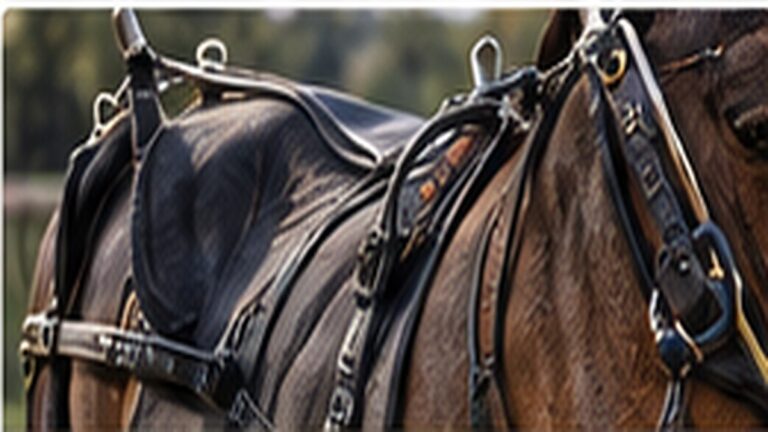
Harness Hardware and Fittings
Harness hardware is the working interface between the horse, the leatherwork and the vehicle. Its quality cannot be judged by appearance alone: safe selection depends on load path, construction, corrosion resistance, compatibility, adjustment range, maintenance and the way each fitting behaves under movement. This reference article explains the principal fittings used in British carriage driving, how they function, where failures occur, and how owners, businesses and manufacturers can assess harness hardware critically.
Read research →Driving Harness Fitting Principles
A correctly fitted driving harness distributes traction, braking and vehicle movement through the horse’s strongest, most mobile areas while keeping vulnerable tissues clear of pressure, rubbing and restriction. This reference explains the function and fitting principles of breastcollars, collars, saddles, girths, breeching, traces, reins and associated components for carriage driving in Great Britain. It distinguishes established welfare and safety principles from discipline-specific convention, and sets out practical inspection and adjustment procedures for owners, drivers, fitters and businesses.
Read research →BioThane Driving Harness Explained
BioThane driving harness is not a single material or a guarantee of safety: it is a family of coated webbing products used in place of, or alongside, leather and other synthetic materials. This reference explains how BioThane is constructed, how its different coatings and webbing cores affect performance, where it works well in driving harness, where it does not, and how fitting, stitching, hardware, maintenance and inspection determine whether a harness is suitable for real work.
Read research →Quick Hitch Harness Systems
Quick-hitch harness systems are not one universal design but a family of shaft-attachment arrangements intended to make putting-to faster and more repeatable. Their value depends less on the label than on compatibility between the harness fitting, shaft profile, carriage geometry, equine conformation and the work required. This reference explains fixed quick hitches, quick-release tugs and related systems, with particular attention to construction, fit, safety, maintenance and selection for British driving practice.
Read research →Breastcollar vs Full Collar Harness
Breastcollar and full-collar harnesses are not interchangeable versions of the same design. They distribute traction through different areas of the horse’s forehand, demand different fitting methods, and suit different combinations of horse, vehicle, workload and terrain. A correctly fitted breastcollar can be entirely appropriate for carriage driving, while a correctly fitted full collar may offer better load distribution for heavier draught work. The decisive issue is not whether one style is universally superior, but whether the complete harness allows the horse to apply traction without restricting breathing, damaging skin, destabilising the vehicle or compromising braking and control.
Read research →Anatomy of a Driving Harness
A driving harness is a load-distribution and control system, not simply a bridle with traces attached. Its components must keep the horse comfortable, allow efficient traction and braking, transmit rein aids, and remain secure if the carriage changes speed or direction. This reference explains the anatomy of the British driving harness, the function of each component, fitting principles, materials, construction quality, discipline-specific differences and the limits of commonly repeated advice.
Read research →How Horse Rug Liners Work
Horse rug liners are removable insulating layers that change the thermal performance, moisture behaviour and fit of a base rug. Their effectiveness depends less on the nominal gram weight alone than on loft, trapped air, compression, moisture management, construction, fit and the horse’s own coat and condition. This reference explains how liners work, how they differ from sheets and under-rugs, what GSM can and cannot tell you, and how to select, fit and maintain them in British conditions.
Read research →Horse Rug Sizing and Fit
A practical, technically informed guide to measuring, selecting and checking horse rugs for fit in the British market. It explains UK rug sizing conventions, why nominal measurements vary between brands, how chest, shoulder, wither, belly and hindquarter fit interact, and how construction, movement, weatherproofing and rug weight affect comfort and welfare.
Read research →Detachable Neck vs Combo Turnout Rugs
Detachable-neck and combo turnout rugs solve the same broad problem—protecting the horse from rain, wind and cold—but they do so with different compromises in fit, flexibility, coverage, maintenance and failure risk. This expert comparison explains how each construction works, what waterproof and breathable claims really mean, how neck design affects grazing and movement, and how to select and inspect a rug for British conditions.
Read research →Horse Rug Fill Weights Explained
Horse rug fill weights describe the approximate mass of insulating material inside a rug, not the total weight of the finished garment. This reference explains what 0g, 50g, 100g, 200g, 300g and heavyweight rugs mean in practice; why fill weight cannot be treated as a universal temperature chart; how coat, clipping, body condition, shelter, wind, rain, rug construction and management alter the decision; and how to assess fit, moisture, durability and welfare risks in a British climate.
Read research →Turnout Rug Waterproofing and Breathability
Waterproofing and breathability in turnout rugs are related but distinct performance characteristics. This expert guide explains hydrostatic resistance, water-repellent finishes, membranes, coatings, seams, moisture-vapour transfer, rug construction, failure modes, care, reproofing and selection for British conditions.
Read research →Horse Rug Denier Explained
Denier is widely used to describe the outer fabric of a horse rug, but it is not a complete measure of quality, waterproofness, warmth or service life. This expert guide explains what denier actually measures, how yarn size relates to weave and construction, why 600D and 1200D rugs cannot be compared by number alone, and which technical specifications matter when selecting, manufacturing, inspecting or maintaining rugs for British conditions.
Read research →Leather Reins, Rubber Reins and Synthetic Reins
Leather, rubber and synthetic reins are not interchangeable versions of the same product. Their construction affects grip, feel, flexibility, wet-weather behaviour, cleaning, longevity and failure modes. This reference explains how each material is made, where it performs well, what quality indicators matter, how to inspect and maintain it, and how to choose reins for different horses, riders and disciplines in Great Britain.
Read research →
Stirrup Materials and Safety Features
Stirrups are structural components, rider interfaces and potential emergency-release devices. Their material, geometry, tread, finish and safety mechanism all affect performance, but no stirrup can compensate for unsuitable footwear, poor fit, neglected maintenance or incorrect use. This reference examines common stirrup materials, construction methods, release systems, quality indicators and selection considerations for riders, riding schools, manufacturers and equestrian businesses in Great Britain.
Read research →Girth Design and Pressure Distribution
Girth design is not simply a matter of choosing between a straight, anatomical or padded model. The girth is a load-bearing interface that couples the horse’s thorax, saddle and rider, and its shape, stiffness, tension, attachment points and surface materials all influence how forces are transmitted. Research has identified high local pressures behind the elbow with some conventional designs, while other studies have found smaller or no measurable differences between straight and anatomical girths under particular test conditions. The practical conclusion is not that one design is universally superior, but that girth performance depends on the individual horse, saddle, girthing arrangement, movement, tension and the quality of the fit assessment.
Read research →