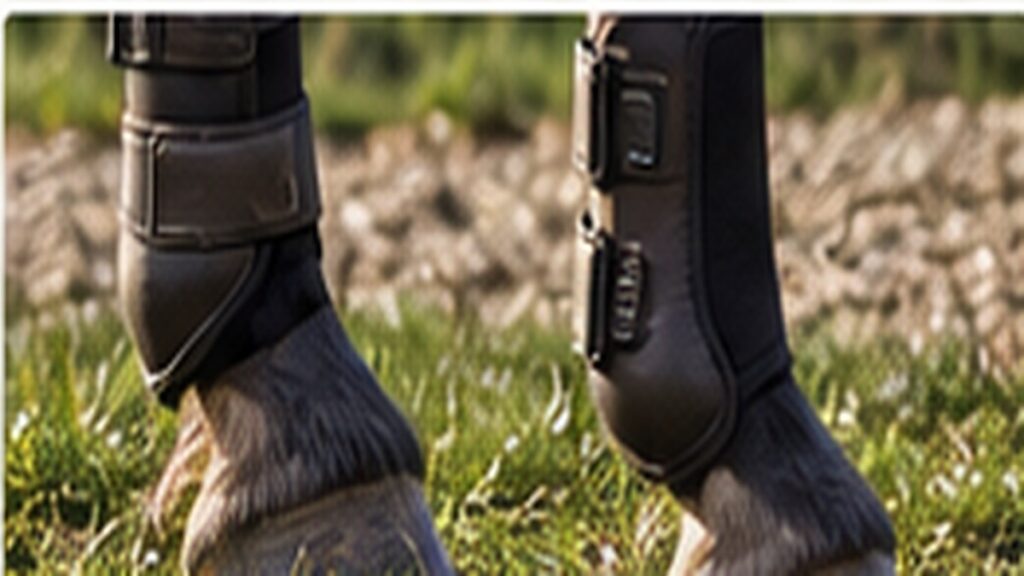
Protective equipment is a control measure, not a guarantee of safety. Its effectiveness depends on the relationship between the equipment, the rider, the activity and the accident mechanism. A riding hat designed for equestrian use is intended to reduce particular head-injury risks; a body protector is intended to reduce some impact and penetration loads to the torso; an air vest can add inflation-dependent coverage; boots and gloves mainly help prevent entrapment, abrasion and loss of control. None eliminates the possibility of serious injury.
For British riders, equipment selection has three separate dimensions. First, the product must be suitable for the hazard and correctly fitted. Secondly, it must be manufactured and labelled to an appropriate current standard, where one exists. Thirdly, it must comply with the rules of the activity, venue, employer or governing body. These are related but not interchangeable: a product may fit well but fail a competition rule; it may carry a familiar standard mark but be too old or damaged for reliable use; or it may meet a standard but be unsuitable for a particular discipline.
What protective equipment can and cannot do
Protective equipment reduces risk by managing energy, limiting contact, spreading loads, retaining the equipment on the body or preventing a specific secondary hazard. It does not make a fall predictable. A horse can fall, rotate, kick, roll or land against an obstacle in ways that are outside the test conditions of any product standard.
Standards are therefore best understood as minimum performance specifications for defined test methods. They are not rankings of all-round safety, and a higher-looking number or a more elaborate appearance does not necessarily mean that one product will be safer for every rider. Fit, retention and correct use remain critical. The Health and Safety Executive’s general PPE guidance makes the same basic point for workplace equipment: selection should follow the hazard, and PPE must fit the user and be maintained and replaced when damaged. HSE: Using the right type of PPE
Riding hats and helmets
Construction and performance
An equestrian helmet normally combines an outer shell, an energy-absorbing liner, a retention system and internal fit components. The shell helps distribute and resist impact and penetration; the liner is designed to manage energy; and the harness keeps the helmet in position. Ventilation, removable liners, adjustment systems and cosmetic coverings affect comfort and fit but should not be confused with independent evidence of protection.
The current British Standard for equestrian helmets is BS EN 1384:2023. BSI describes the standard as covering helmets for people involved in equestrian activities, including riding, driving and handling horses. Its requirements include construction and field of vision, shock absorption, resistance to penetration, lateral deformation, retention-system properties, peak deflection, marking and information. BSI: BS EN 1384:2023
Older labels remain common in the GB market. PAS 015:2011 was historically an important UK equestrian helmet specification, but BSI records it as withdrawn on 3 January 2025. That does not mean that every helmet bearing the former mark instantly became unsafe, nor does it mean that every current competition accepts every current standard. It does mean that owners, retailers and organisers should check the applicable rules and the manufacturer’s current information rather than assuming that a familiar label is still the most appropriate purchasing reference. BSI: PAS 015:2011 status
Other standards may be recognised by particular organisations or disciplines. Common examples historically include VG1 and ASTM F1163, but recognition is rule-dependent. Certification marks are more useful than a vague claim that a helmet is “tested”: third-party certification can provide evidence that a specified product and production system have been assessed against a defined requirement. BSI also notes that certification marks and standards do not all test exactly the same features. BSI: Certification marks and equestrian helmet standards
How a riding hat should fit
Fit should be assessed on the rider’s actual head, with the hairstyle and any headwear normally worn beneath the helmet. The hat should sit level, with the front neither tipped back nor pulled down over the eyes. It should make close, even contact around the head without a painful pressure point. The harness should sit around the ears and under the jaw in accordance with the manufacturer’s instructions; the buckle should be secure and the straps should not be twisted.
A new hat may feel snug. That is different from feeling painful, producing numbness or creating a concentrated pressure point. Many liners settle slightly with use, whereas a helmet that is already loose is unlikely to become reliably tighter. Do not try to alter the protective shape by cutting, heating, drilling or inserting unofficial padding. Replaceable liners and fit systems should only be used where the manufacturer specifies them for that model.
Use a practical retention check: fasten the harness, hold the helmet and move the head naturally. The helmet should remain stable rather than rocking substantially or sliding backward. Check stability while looking down, turning and simulating the posture used when riding. Long hair, thick plaits, hats, hair nets and winter layers can materially alter fit. A helmet that fits in the shop may not fit in the same way at the yard.
When to replace a helmet
- Immediately after a significant impact. A helmet may have internal damage that cannot be seen. Do not continue to use it merely because the shell looks intact.
- When the fit changes. Growth, weight change, hairstyle, stretched or damaged harnesses and compressed liners can all affect retention.
- When the manufacturer’s service-life guidance has been reached. There is no single universal replacement interval that applies to every helmet. Follow the model-specific instructions and inspect more frequently if the helmet is heavily used, stored in heat or exposed to chemicals.
- When components are damaged, missing or altered. Cracked shells, crushed or loose liners, damaged buckles, frayed straps and missing labels are serviceability failures.
Heat, solvents, adhesives, rough storage and repeated compression can degrade materials. A helmet should be stored away from direct sunlight, heaters, hot vehicle interiors, chemicals and animals likely to chew it. Do not place heavy equipment on top of it. Manufacturer cleaning instructions matter because some detergents and solvents can damage liners, adhesives or finishes.
The British Horseracing Authority’s helmet replacement initiatives illustrate the principle that an impacted helmet should be removed from circulation rather than passed to another rider. Its concussion-related replacement scheme requires the damaged helmet to be returned before a replacement voucher is issued. This is a racing scheme, not a universal consumer entitlement, but it reflects sound equipment-control practice. BHA concussion SOP
Body protectors
Materials and protection limits
Most body protectors use segmented blocks or panels of energy-absorbing foam enclosed in a textile cover. The panels must be positioned to cover the required anatomical areas while allowing the rider to mount, sit, balance and move. Segmentation improves flexibility; it also makes panel layout, overlap and gaps important. A protector cannot protect an area it does not cover, and it is not a substitute for a properly fitted saddle, sound riding practice or risk assessment.
The BETA 2018 Body Protector Standard specifies coverage, limits on gaps between panels and shock-absorption performance. It uses three colour-coded levels. BETA identifies Level 1 as intended for licensed jockeys subject to weight restrictions, Level 2 as lower-than-normal protection for low-risk situations or where a racing authority specifies it, and Level 3 as the normal higher level for general riding activities. The appropriate level remains a matter of activity and rule; the label should not be interpreted without considering the intended use. BETA: Body protectors
The BETA 2018 standard meets the requirements of the corresponding European standard EN 13158, according to BETA. BETA also states that there is no performance difference between its 2009 and 2018 versions, but the older version has been withdrawn from some discipline rules because garments could have become very old. A 2009-labelled protector may therefore be acceptable for some hacking or non-regulated use while being unacceptable under a particular competition rule. Always check the current rulebook rather than relying on the date alone. BETA standard and rule-use information
Fitting a body protector
Body protectors should be fitted over the clothing normally worn for the relevant activity, but not over bulky layers that will never be used in practice. The protector should cover the required chest, back and side areas, sit at the correct height and remain stable when the rider bends, twists and adopts the riding position. It should not ride up into the neck, interfere with the saddle, obstruct breathing or leave excessive gaps at the front, sides or waist.
Fastenings should be adjusted symmetrically and firmly. A protector should feel close to the body without restricting normal breathing or movement. A loose garment can shift on impact; an excessively tight one may be uncomfortable enough that the rider unfastens it or stops wearing it. The correct size is not necessarily the same as the rider’s coat size, and children’s garments need particular attention because growth can quickly invalidate a once-correct fit.
A trained fitting service is valuable because fitting involves more than choosing a chest measurement. BETA trains retailers in construction, standards, use, fitting and maintenance, and recommends seeking a personalised fitting from a BETA-trained retailer. BETA rider safety equipment fitting qualification
Replacement and inspection
After a heavy fall, inspect the protector immediately. BETA states that foam may expand back to its original shape within about 30 minutes, but a visible dent after that period indicates likely loss of impact-absorption performance and the garment should be replaced. This is a practical screening rule, not proof that an apparently recovered protector is undamaged.
Replace a protector if panels are permanently compressed, cracked, split, distorted or displaced; if stitching, seams, fastenings or the cover are failing; or if the garment no longer fits because the rider has grown or changed shape. BETA gives a recommended lifespan of three to five years, depending on use and care. That is guidance rather than a universal legal expiry date. The manufacturer’s instructions, inspection history, exposure and any impacts should determine the decision.
Do not buy a second-hand protector with an unknown history unless its provenance, age, standard label, storage and impact history can be reliably established. Hidden damage cannot be ruled out by appearance alone. Store the protector hanging on a suitable hanger, with zips closed and hook-and-loop fastenings secured. Avoid prolonged heat in a car, damp tack rooms, direct sunlight, compression under equipment and contact with sharp objects or animals.
Air vests and hybrid systems
An air vest contains an inflatable airbag that is triggered when a tether separates as the rider is thrown from the horse. Its protection is therefore conditional: it does not provide its full function before inflation, during some types of fall in which the tether is not activated, or after the air has deflated. Trigger length and attachment must allow separation in a fall without restricting normal movement or causing accidental activation.
BETA’s rider-safety guidance states that there is no specific European standard for equestrian air vests. Some manufacturers use SATRA M38, while others may refer to EN 1621-4, a motorcycle air-vest standard; neither is compulsory for equestrian air vests according to the guidance. This is an important distinction for purchasers: the presence of a test specification does not automatically mean that the product is approved for every equestrian discipline or equivalent to a body protector. BETA: A world of choice—rider safety equipment
An air vest should be fitted by a trained supplier. The manufacturer’s instructions should define the required clearance over a body protector, tether arrangement, cartridge type, inflation checks, re-arming procedure and storage conditions. A cartridge must be replaced after activation, even if the garment appears to have deflated normally. Some systems require inspection after deployment or after a period of storage.
BETA recommends wearing an air vest over a body protector because the body protector offers constant protection while the air vest only protects after inflation. An air vest may be especially useful as an additional measure in eventing and other activities involving high-speed falls, but it has limitations. BETA specifically notes limited or no protection against some direct kicks when the rider is falling or on the ground. Hybrid garments should be assessed as both systems: the integral body protector should meet the level required for the activity, and the airbag should be correctly connected and maintained.
Boots, gloves and related equipment
Boots
Riding boots are primarily control and entrapment equipment. A defined heel helps reduce the risk of the foot sliding through a stirrup, while a suitable sole and secure fit help the rider maintain contact. The boot should be compatible with the stirrup, not so wide or bulky that it catches, and not so loose that it can come off in a fall. Smooth soles are common in riding footwear because deeply lugged soles may make withdrawal from a stirrup more difficult.
Inspect soles, heels, stitching, zips and fasteners. Replace boots when the heel is worn down, the sole is separating, the tread or shape has become unsuitable for the stirrup, or the upper no longer supports the foot and ankle adequately. Yard and riding footwear should be selected for the task: a boot suitable for riding may not provide the toe protection, penetration resistance or slip performance required for manual work around machinery, heavy materials or chemicals.
Gloves
Gloves improve grip, protect against friction and weather, and may reduce blistering or rope burns. They must preserve rein feel and should not have loose material likely to catch on tack or equipment. Check the palm, fingers, seams, closures and grip surface. Replace gloves when the palm is smooth or split, seams expose skin, fasteners fail or the material becomes stiff enough to impair rein handling.
Gloves are not automatically impact- or crush-protection gloves. If an employer identifies a workplace hazard such as machinery, sharp edges or chemicals, the glove must be selected against that hazard and marked accordingly. A fashionable riding glove should not be represented as certified industrial PPE unless its documentation supports that claim.
Buying and managing equipment in businesses
Riding schools, livery yards, competition organisers and employers should treat protective equipment as a controlled asset rather than an informal personal accessory. A written system can record the model, size, standard, purchase date, user, inspection dates, reported impacts and disposal decision. Shared helmets and body protectors require particular discipline because fit, hygiene, age and history may vary between users.
Employers should complete a risk assessment for work activities and provide suitable PPE where required. In racing, the BHA states that helmets and body protectors are PPE and that employers must provide them free of charge in the relevant employment context. The precise legal duties depend on the work arrangement and activity, so businesses should consult current HSE and governing-body guidance rather than treating sporting practice as a complete legal assessment. BHA Health and Safety Manual
Staff should be trained to recognise poor fit, impact damage, missing labels, unauthorised modifications and expiry or service-life information. Disposal should prevent accidental reuse: remove or clearly mark failed equipment, and do not donate an impacted helmet or body protector to a charity or novice rider.
Common misconceptions
- “If it looks fine, it is fine.” Internal helmet and foam damage may not be visible.
- “A newer standard automatically means a safer product.” Standards change and may improve or clarify requirements, but fit, retention, activity and rule recognition still matter.
- “An air vest replaces a body protector.” An air vest is inflation-dependent; BETA recommends wearing it over a body protector.
- “One size fits all.” Head shape, torso length, proportions, clothing and movement affect fit.
- “Second-hand is acceptable if it is clean.” Cleanliness says nothing about impact history, age or storage damage.
- “The most protective equipment is always the best choice.” Equipment that restricts movement, interferes with tack or is uncomfortable enough to be misused may reduce practical safety.
- “A competition-approved item is suitable for every job.” Sporting standards do not necessarily address workplace hazards such as machinery, chemicals or crushing loads.
A practical inspection routine
- Confirm the intended activity, likely hazards and any competition or employer requirements.
- Check the product label, standard, model and manufacturer’s instructions.
- Assess fit on the actual rider with normal clothing, hairstyle and tack.
- Check retention systems, fastenings, seams, panels, liners, shells, soles and tether connections.
- Ask whether the item has been involved in a fall, activation, heavy compression or unknown storage event.
- Record the inspection and set a review date, particularly for shared or business-owned equipment.
- Quarantine and replace equipment where damage, impact history or fit cannot be resolved with confidence.
Related industry reference: For businesses moving from technical research into trade sourcing, explore equestrian suppliers and manufacturers on EquiGuild.
Sources and further reading
- British Equestrian Trade Association: Body Protectors
- British Equestrian Trade Association: Rider Safety Equipment Fitting
- BETA: A World of Choice—Rider Safety Equipment
- British Standards Institution: BS EN 1384:2023 Helmets for Equestrian Activities
- British Standards Institution: PAS 015:2011 Status
- Health and Safety Executive: Using the Right Type of PPE
- British Horseracing Authority: Health and Safety Manual
- British Horseracing Authority: Concussion Standard Operating Procedure
Research note
Automatically researched source pack — editorial review required:
• beta-uk.org — https://beta-uk.org/body-protectors/
• www.bsigroup.com — https://www.bsigroup.com/en-GB/products-and-services/assessment-and-certification/validation-and-verification/client-directory-profile/CHAMPI-0009256068-000/
• beta-uk.org — https://beta-uk.org/free-information/
• www.hse.gov.uk — https://www.hse.gov.uk/pubns/priced/l25.pdf
• www.bsigroup.com — https://www.bsigroup.com/en-GB/products-and-services/assessment-and-certification/validation-and-verification/client-directory-certificate/CE%20826824/
• knowledge.bsigroup.com — https://knowledge.bsigroup.com/products/helmets-for-equestrian-activities-3
• beta-uk.org — https://beta-uk.org/wp-content/uploads/2025/10/Body-Protector-Manufacturers-Leaflet-2018-Standard-Oct-25.pdf
• knowledge.bsigroup.com — https://knowledge.bsigroup.com/products/helmets-for-equestrian-use
• beta-uk.org — https://beta-uk.org/safety/
• beta-uk.org — https://beta-uk.org/wp-content/uploads/2024/10/BETA-2018-Standard-updated-October-2022-with-label-costs-and-licensee-fee.pdf
• www.bsigroup.com — https://www.bsigroup.com/en-GB/products-and-services/assessment-and-certification/validation-and-verification/product-directory-details/?license=KM+34584&productid=58490
• knowledge.bsigroup.com — https://knowledge.bsigroup.com/products/helmets-for-equestrian-activities
• www.hse.gov.uk — https://www.hse.gov.uk/ppe/using-the-right-type-of-ppe.htm
• landingpage.bsigroup.com — https://landingpage.bsigroup.com/LandingPage/Undated?UPI=000000000030061431
• knowledge.bsigroup.com — https://knowledge.bsigroup.com/products/specification-for-helmets-for-equestrian-activities
• www.bsigroup.com — https://www.bsigroup.com/globalassets/localfiles/en-us/documents/bsi-equestrian-helmets-kitemark-brochure.pdf
• media.britishhorseracing.com — https://media.britishhorseracing.com/bha/Rules/BHA_Rules_Of_Racing.pdf
• www.britishequestrian.org.uk — https://www.britishequestrian.org.uk/getInvolved/participation/learn-to-ride/beginners-guide/jargon-buster
• beta-uk.org — https://beta-uk.org/wp-content/uploads/2024/03/40703-BETA-Guide-to-Rider-Safety-Equ-Leaflet.pdf
• beta-uk.org — https://beta-uk.org/rider-safety-equipment/
Cite this article
Stable research ID: ERA-2026-000054
The Equestrian Research Atlas (2026) ‘Protective Equipment Fit and Replacement’. The Equestrian Research Atlas. Available at: https://equestrianresearchatlas.co.uk/research/protective-equipment-fit-and-replacement/ (Accessed: 26 September 2026).
The Equestrian Research Atlas. (2026). Protective Equipment Fit and Replacement. The Equestrian Research Atlas. https://equestrianresearchatlas.co.uk/research/protective-equipment-fit-and-replacement/
The Equestrian Research Atlas. “Protective Equipment Fit and Replacement.” The Equestrian Research Atlas, 2026, https://equestrianresearchatlas.co.uk/research/protective-equipment-fit-and-replacement/. Accessed 26 September 2026.
Research references (33)
- beta-uk.org
- www.bsigroup.com
- beta-uk.org
- www.hse.gov.uk
- www.bsigroup.com
- knowledge.bsigroup.com
- beta-uk.org
- knowledge.bsigroup.com
- beta-uk.org
- beta-uk.org
- www.bsigroup.com
- knowledge.bsigroup.com
- www.hse.gov.uk
- landingpage.bsigroup.com
- knowledge.bsigroup.com
- www.bsigroup.com
- media.britishhorseracing.com
- www.britishequestrian.org.uk
- beta-uk.org
- beta-uk.org
- www.britishhorseracing.com
- media.britishhorseracing.com
- www.britishhorseracing.com
- www.britishequestrian.org.uk
- www.britishhorseracing.com
- www.britishhorseracing.com
- www.britishhorseracing.com
- www.britishequestrian.org.uk
- media.britishhorseracing.com
- www.britishhorseracing.com
- www.britishhorseracing.com
- www.britishhorseracing.com
- www.britishhorseracing.com