
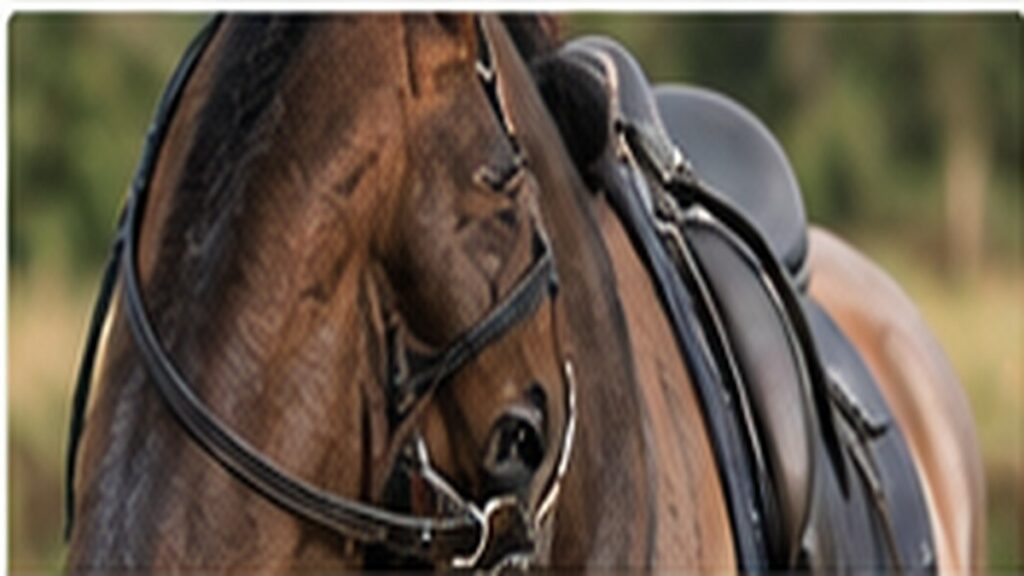
Turnout is often discussed as though it were a single management variable: hours outside the stable. In welfare terms, however, turnout is a package of experiences. It may provide locomotion, grazing or other forage, exposure to daylight and weather, opportunities to make choices, environmental enrichment and contact with other horses. The quality of those experiences can vary greatly between a large, stable group living on pasture and a short period alone in a small, bare pen.
Social contact is similarly more complex than placing horses within sight of one another. Horses may see, hear, smell and physically interact with conspecifics. These forms of contact are not interchangeable, although each may be useful in particular circumstances. A horse separated for health, safety or management reasons may benefit from visual contact, but this should not automatically be treated as equivalent to the ability to rest beside, groom or move with another horse.
For owners, livery-yard operators, riding schools and manufacturers, the practical question is therefore not simply whether a horse is turned out. It is whether the management system gives each horse a realistic opportunity to express important species-typical behaviours while controlling foreseeable risks.
Why turnout and social contact matter
Domestic horses remain highly social, grazing animals. Their behavioural requirements have not been removed by domestication or by selective breeding for sport, work or companionship. A systematic review of equine social behaviour concluded that sociality remains an ethological need and that welfare assessment should include the opportunity to establish stable affiliative bonds. It also warned that research and observation have historically concentrated on conflict, while giving less attention to affiliative, tolerant and neutral interactions.
Affiliative behaviour includes standing close together, mutual grooming, resting near a preferred companion, following, play and other low-conflict interactions. These behaviours are not merely decorative signs of a pleasant life. They can help horses obtain security, maintain relationships and regulate their responses to unfamiliar situations. A stable social partner may also reduce the perceived threat of separation, transport, new environments or routine handling, although the strength of that effect will differ between individuals.
The current UK framework reflects this principle. The Defra Code of Practice for the Welfare of Horses, Ponies, Donkeys and their Hybrids identifies appropriate company and the ability to behave normally among the horse keeper’s welfare responsibilities. The code is not itself a criminal offence, but courts may consider compliance when determining whether an offence under the Animal Welfare Act has occurred.
For licensed commercial activities, the statutory guidance is more explicit. The Animal Activities Licensing guidance states that horses are usually best kept in social groups, that animals of social species should not be isolated longer than necessary, and that a horse separated from a group should retain sight of other horses where possible. It also requires operators to monitor behavioural changes, including signs of stress, fear and anxiety.
Turnout is more than exercise
Exercise is one component of turnout, but it is not the whole purpose. Horses allowed to move freely can choose their pace, direction, distance from companions and resting location. That differs from ridden exercise, lunging or hand-walking, where the human determines much of the movement and timing.
World Horse Welfare describes freedom of movement as important to physical and mental wellbeing and notes that horses given the opportunity may travel substantial distances during a day. The exact distance is not a universal target for domestic management: terrain, forage distribution, weather, herd structure, body condition, health and access to shelter all influence movement. The important point is that a brief work session should not automatically be treated as a complete substitute for opportunities to move freely.
Turnout can also support:
- Foraging behaviour: grazing, browsing and searching for forage extend feeding time and occupy behaviourally important periods.
- Postural variety: horses can stand, walk, roll, lie down and stretch in ways that may be constrained by stable dimensions or routine.
- Choice and control: horses can select where to stand, whom to approach, when to rest and whether to move away.
- Environmental enrichment: changing surfaces, vegetation, terrain, weather and social arrangements provide information and activity.
- Social learning and maintenance: horses can practise appropriate spacing, tolerance and affiliative behaviour with compatible companions.
The commonly used “three Fs”—friends, forage and freedom—are a useful communication framework rather than a complete welfare assessment. They connect social contact, feeding behaviour and movement, which are often managed separately even though they interact. For example, forage placed at several locations can increase movement while reducing competition; a group turnout arrangement can provide social choice but may also create conflict if resources are scarce.
Types of social contact
Physical contact
Physical contact allows mutual grooming, direct investigation, play, coordinated movement and resting close to another horse. It is generally the richest form of conspecific interaction. It also carries the greatest potential for biting, kicking, chasing, resource competition and transmission of infectious disease, so compatibility and management quality matter.
Physical contact does not require a large herd. A stable pair or small compatible group may meet social needs more effectively than a larger but unstable group. Some horses have clear preferences for particular companions; others tolerate several individuals but avoid close contact. A successful group should be judged by the horses’ ongoing behaviour, not by the assumption that any group is automatically beneficial.
Adjacent contact
Adjacent turnout places horses in neighbouring paddocks, pens or stable areas, commonly with a secure fence between them. It can provide sight, sound and smell and may allow limited nose-to-nose contact. It is often a valuable option for horses that cannot safely share space, including those undergoing gradual introductions, recovering from injury or requiring individual dietary management.
However, adjacent turnout has limitations. A fence may prevent a horse from moving away from an intimidating neighbour, and repeated charging, striking or fence-line pacing can make proximity aversive. A horse that spends much of its time guarding a boundary may have less opportunity to graze or rest. The design therefore needs escape space, safe stand-off distances and careful observation.
Visual and auditory contact
Seeing and hearing other horses is generally preferable to complete isolation when direct contact is not possible. It can help a separated horse remain oriented to the social group and may reduce the abruptness of stable confinement. Nevertheless, sight and sound do not provide the full behavioural opportunities of physical contact. A “horse visible from the stable” policy should not become a reason to disregard opportunities for safe, compatible companionship.
Human contact
Positive interaction with people has value, especially where horses are handled frequently or where disease control, rehabilitation or individual management limits horse-to-horse contact. Grooming, calm leading, training and routine inspection may provide occupation and predictability. Human companionship should not, however, be presented as a straightforward replacement for equine companionship. People and horses offer different forms of interaction, and most social horses require appropriate contact with their own species.
Group turnout: benefits and limits
Group turnout can combine movement, forage, social relationships and choice in one environment. In a stable, compatible group, horses may distribute themselves according to preference, form alliances and avoid unnecessary conflict. The presence of companions may also support confidence when horses encounter unfamiliar sights, sounds or handling routines.
Group turnout is not automatically welfare-positive. A horse that is persistently chased, excluded from forage, prevented from resting or forced to remain at the edge of a group may experience poor welfare despite being outdoors. High arousal during turnout, repeated injuries, weight loss or reluctance to enter the field should prompt a management review.
Group stability matters. Frequent removals and additions can repeatedly disrupt relationships and increase competition. This is especially relevant on busy yards where horses are turned out according to work schedules, owner preferences or limited field capacity. A group that is calm and predictable is usually easier for horses to navigate than one with continual changes.
Resource distribution is a major design factor. Where forage, water, shelter or shade is available at only one location, a higher-ranking horse may control access. Multiple, well-separated resources can reduce competition, although they do not remove the need to observe individual horses. Feeding concentrates in a group requires particularly careful planning because food can intensify conflict.
Compatibility and introductions
Compatibility is more useful than labels such as “dominant” or “submissive”. Relevant factors include age, previous social experience, temperament, body size, sex, reproductive status, mobility, feeding requirements and the physical layout of the turnout area. A horse that is quiet with one companion may be unsuitable for another group.
Introductions should be planned rather than treated as a single release into a new field. A risk-managed sequence may include:
- Reviewing the health status, temperament and management requirements of all horses involved.
- Providing visual and olfactory contact across a secure barrier.
- Allowing horses to observe one another without being trapped against fencing, gateways or corners.
- Introducing a compatible pair before adding individuals to a larger group where appropriate.
- Using a sufficiently large, familiar and well-maintained area to permit avoidance and movement.
- Removing hazards such as narrow gateways, unstable fencing, dead ends and poorly positioned troughs.
- Supervising the first interactions and checking the horses again after the initial excitement has reduced.
Some squealing, posturing and brief displacement may occur during social negotiation. The relevant question is whether interactions settle and whether all horses retain access to movement, forage, water, shelter and rest. Persistent pursuit, cornering, repeated striking, serious bites, escalating fear or an inability to disengage are not acceptable simply because “horses have to sort it out”.
When individual turnout is necessary
Individual turnout may be justified by veterinary restrictions, infectious disease control, dietary management, unsafe incompatibility, breeding management, temporary rehabilitation or a field layout that cannot safely accommodate the horse. It should not be used solely because group turnout is inconvenient or because minor social negotiation is considered undesirable.
Where a horse must be alone, management should preserve as much appropriate social information and choice as possible. Options may include a neighbouring compatible horse, a safe shared boundary, stable arrangements that provide visual contact, paired hand-walking, supervised time with a companion or gradual reintroduction when the reason for separation has ended.
Individual turnout should also be made behaviourally worthwhile. A bare pen with no forage, limited movement and no opportunity to investigate its surroundings may provide less welfare value than a smaller but thoughtfully designed area. Forage distribution, safe surfaces, shelter, water, shade and environmental variation should be considered. If the horse shows escalating anxiety, fence-running, calling, persistent pacing or other marked behavioural change, the system requires review and, where appropriate, professional advice.
Turnout, health and biosecurity
Turnout decisions involve genuine trade-offs. Outdoor access can increase exposure to infectious agents, parasites, toxic plants, poor ground, extreme weather and injuries associated with social interaction. Stabling can make observation, feeding and medication easier, but prolonged confinement may reduce movement, foraging and social contact. Welfare-centred management does not pretend that one setting is risk-free; it identifies and controls risks without eliminating normal behaviour by default.
Biosecurity is particularly important when horses from different sources share fields, yards or equipment. New arrivals may need isolation according to the yard’s veterinary biosecurity plan. Sick or potentially infectious horses should be managed separately in suitable facilities, with equipment, clothing, footwear and cleaning procedures controlled according to veterinary advice and the relevant disease risk.
Field safety requires routine inspection. Fences should be visible, secure and appropriate to the horses using them. Gateways, water points, troughs, hay stations and shelters should be positioned to reduce bottlenecks. Mud, standing water, damaged surfaces and accumulating manure may affect both welfare and disease control. Shade and shelter should be sufficient for the number and type of horses using the area, with enough space to prevent a subordinate horse being excluded.
Commercial operators should document turnout arrangements, introductions, inspections, incidents and changes in behaviour. The Animal Activities Licensing guidance requires behaviour to be monitored and recorded where relevant, and states that horses at grass must be inspected at least daily, or more often as needed for the individual horse. Stabled and group-housed horses require at least twice-daily inspection under that guidance.
Turnout and welfare assessment
A turnout schedule is not, by itself, evidence of good welfare. Assessment should combine resources, management and horse-based outcomes. Useful questions include:
| Area | Questions for owners and businesses |
|---|---|
| Social contact | Can the horse see, hear and, where safe, physically interact with compatible horses? Is it able to move away from unwanted contact? |
| Movement | Does the horse have meaningful opportunities for free movement, rather than only short, human-directed exercise? |
| Forage | Is forage available for an appropriate duration and distributed so that lower-ranking horses can eat without persistent displacement? |
| Choice | Can the horse select where to stand, rest, graze, drink and interact, within safe limits? |
| Behaviour | Are there changes in calling, pacing, fence-running, aggression, withdrawal, reluctance to leave or reluctance to return? |
| Physical outcomes | Are injuries, weight changes, skin damage, lameness, poor coat condition or signs of exhaustion occurring repeatedly? |
| Management quality | Are introductions, absences, weather changes, field conditions and emergencies covered by written procedures? |
Behaviour must be interpreted in context. Calling when a companion leaves may reflect attachment, frustration, fear, habit or pain; it is not a diagnosis. Similarly, a quiet horse is not necessarily content. Withdrawal, reduced exploration and low responsiveness can be welfare concerns, while overt aggression may indicate fear, competition, pain or poor social experience. A change from the individual horse’s normal pattern is often more informative than a single behaviour observed in isolation.
Tools such as the Horses’ Experiences on Yards welfare assessment tool can help structure observation across the horse’s daily environment. They should complement, not replace, competent handling, veterinary assessment where health concerns arise and a clear understanding of the yard’s management system.
Common misconceptions
“Any turnout is better than none, so quality does not matter.”
Outdoor access is generally valuable, but the conditions determine its welfare effect. A horse that is frightened, bullied, hungry, unable to rest or exposed to unsafe fencing is not receiving the same benefit as a horse in a calm, resource-rich environment. The correct conclusion is that limitations should be managed, not that turnout should be abandoned.
“A horse only needs a companion if it is anxious.”
Social contact is a normal behavioural need, not merely a treatment for visible separation anxiety. Some horses show distress clearly; others adapt their behaviour in ways that are less obvious. The absence of dramatic calling or fence-walking does not demonstrate that social isolation is harmless.
“A neighbouring horse is always an adequate substitute for group turnout.”
Adjacent contact can be an excellent compromise, particularly where direct contact is unsafe. It remains a compromise, because it cannot provide allogrooming, coordinated movement, shared resting or the ability to choose a preferred social partner. Its success depends on whether the horses actually settle and whether the boundary creates frustration or conflict.
“Group turnout inevitably causes injuries.”
Social interaction carries risk, especially during introductions and in poorly designed spaces. But individual turnout also carries risks, including isolation, reduced movement and fence-related behaviour. Risk should be assessed comparatively and controlled through compatibility screening, gradual introductions, resource management, suitable fencing and observation.
“A ridden session replaces turnout.”
Ridden work may contribute to fitness and enrichment, but it does not reproduce free choice, grazing, social contact or self-directed movement. It is best viewed as one part of a broader management programme.
Implications for yards, designers and manufacturers
Facilities should be designed around horse behaviour rather than only labour efficiency. Field systems need safe circulation routes, multiple resource points, practical inspection access and contingency arrangements for weather, injury and disease. Stable blocks should support visual and auditory contact where appropriate, while avoiding layouts that force horses into repeated unwanted confrontation across narrow aisles.
Related industry reference: For businesses moving from technical research into trade sourcing, explore horse trainers and equine service providers on EquiGuild.
Manufacturers of fencing, gateways, shelters, feeders and stable partitions should provide performance information that is meaningful for equine use. Important considerations include visibility, breakaway behaviour, resistance to entrapment, durability, cleanability, maintenance requirements and suitability for different horse groups. A product marketed as “social” because it permits nose contact is not automatically welfare-positive if its openings allow biting, trapping or persistent harassment.
Forage systems and field equipment should be assessed for competitive behaviour. Slow-feeding devices may extend eating time, but they can also create queues or frustrate horses if too few units are provided. Water points should be accessible to all horses and positioned so that a dominant animal cannot easily block the only route. Shelter design should allow horses to enter, turn and leave without a subordinate being trapped.
Yard policies should explain what happens when a horse is injured, bullied, newly arrived, infectious, difficult to catch or temporarily unable to join its usual group. A welfare-centred policy is not one that promises identical turnout for every horse; it is one that provides a defensible individual plan and reviews outcomes.
A practical standard for good management
There is no single scientifically established minimum turnout duration that guarantees good welfare for every horse and every management system. A fixed number of hours can therefore be misleading when it ignores the quality of the environment, the horse’s health, the availability of forage, the stability of social relationships and what happens during the remaining time.
A stronger standard is to ask whether the horse has regular, meaningful opportunities to:
- move freely at different speeds and in different directions;
- eat forage in a way that reflects its behavioural needs;
- rest without being threatened or excluded;
- see, hear and, where safe, physically interact with compatible horses;
- choose distance from companions and resources;
- experience a varied but safe environment;
- return to a stable or other housing area without prolonged distress; and
- receive monitoring and management appropriate to its individual risks.
Where those opportunities cannot all be provided at once, the keeper should identify the shortfall, reduce its impact and work towards improvement. This is particularly important for businesses, because routine restrictions can become normalised when they are efficient for staff but poorly aligned with the horse’s needs.
Conclusion
Turnout and social contact are closely connected foundations of equine welfare. The most beneficial systems allow horses to move, forage, rest, make choices and maintain appropriate relationships. Group turnout in a stable, compatible herd may provide the fullest expression of these needs, but a smaller pair, adjacent turnout or carefully managed individual turnout can be appropriate when safety, health or individual requirements demand it.
The central principle is not that every horse must be managed identically. It is that social and movement needs should be treated as real welfare requirements, not optional extras removed whenever they complicate stable routines. Good management combines evidence, observation and practical risk control. It asks not merely whether a horse is outside, but what the horse can do there, with whom, for how long, under what conditions and with what effect on its behaviour and quality of life.
Sources and further reading
- UK Government: Code of Practice for the Welfare of Horses, Ponies, Donkeys and their Hybrids.
- UK Government: Animal Activities Licensing Statutory Guidance for Hiring Out Horses.
- Hartmann et al.: “Equine Social Behaviour: Love, War and Tolerance”, Applied Animal Behaviour Science.
- World Horse Welfare: The 3Fs — Friends, Forage and Freedom.
- World Horse Welfare: Horses’ Experiences on Yards welfare assessment tool.
- British Equestrian: The Charter for the Horse.
- FEI Equine Ethics and Wellbeing Commission: A Good Life for Horses.
For readers comparing current UK retail options relevant to light turnout rug, see John Whitaker Rastrick V2 Combo Turnout Rug 250g with Detachable Neck – Navy at JSM Equestrian Supplies.
Research note
Automatically researched source pack — editorial review required:
• www.horseandhound.co.uk — https://www.horseandhound.co.uk//industry-news/scottish-government-equine-welfare-guidance
• www.horseandhound.co.uk — https://www.horseandhound.co.uk//industry-news/horse-sport-backs-on-your-side-suicide-prevention-campaign
• www.gov.uk — https://www.gov.uk/government/publications/code-of-practice-for-the-welfare-of-horses-ponies-donkeys-and-their-hybrids
• www.sciencedirect.com — https://www.sciencedirect.com/science/article/pii/S000334722400366X
• www.worldhorsewelfare.org — https://www.worldhorsewelfare.org/advice/the-3fs-friends-forage-and-freedom
• pubmed.ncbi.nlm.nih.gov — https://pubmed.ncbi.nlm.nih.gov/37174510/
• www.gov.uk — https://www.gov.uk/government/publications/animal-activities-licensing-guidance-for-local-authorities/hiring-out-horses-licensing-statutory-guidance-for-local-authorities
• www.sciencedirect.com — https://www.sciencedirect.com/science/article/pii/S0737080626003102
• doi.org — https://doi.org/10.1111/evj.14510
• www.britishequestrian.org.uk — https://www.britishequestrian.org.uk/equine/ethics-and-welfare/the-charter-for-the-horse
• www.gov.uk — https://www.gov.uk/keeping-horses
• www.gov.uk — https://www.gov.uk/guidance/keeping-horses-commercially
• int.worldhorsewelfare.org — https://int.worldhorsewelfare.org/advice/horse-management-essentials
• int.worldhorsewelfare.org — https://int.worldhorsewelfare.org/advice/horse-welfare-assessment
• www.britishequestrian.org.uk — https://www.britishequestrian.org.uk/assets/WELFARE/CharterForTheHorse_Corp_Portrait_FINAL.pdf
• assets.publishing.service.gov.uk — https://assets.publishing.service.gov.uk/media/5ad4b5f5e5274a76c13dfb33/horses-welfare-codes-of-practice-april2018.pdf
• www.britishequestrian.org.uk — https://www.britishequestrian.org.uk/assets/About%20the%20BEF/Rulebook/Rulebook%202025/Policy10-Equine_Ethics_and_Welfare_25.pdf
• www.bhs.org.uk — https://www.bhs.org.uk/media/hrgnlzbi/3605_brchandbook_2025_digital.pdf
• equinewellbeing.fei.org — https://equinewellbeing.fei.org/assets/documents/EEWB%20Final%20Report%20to%20FEI%20Board_Updated%2014Nov23.pdf
• pure.hartpury.ac.uk — https://pure.hartpury.ac.uk/ws/portalfiles/portal/29103955/Investigating_equestrians_perceptions_of_horse_happiness_An_exploratory_study.pdf
Cite this article
Stable research ID: ERA-2026-000230
The Equestrian Research Atlas (2026) ‘Turnout, Social Contact and Equine Welfare’. The Equestrian Research Atlas. Available at: https://equestrianresearchatlas.co.uk/research/turnout-social-contact-and-equine-welfare/ (Accessed: 3 November 2026).
The Equestrian Research Atlas. (2026). Turnout, Social Contact and Equine Welfare. The Equestrian Research Atlas. https://equestrianresearchatlas.co.uk/research/turnout-social-contact-and-equine-welfare/
The Equestrian Research Atlas. “Turnout, Social Contact and Equine Welfare.” The Equestrian Research Atlas, 2026, https://equestrianresearchatlas.co.uk/research/turnout-social-contact-and-equine-welfare/. Accessed 3 November 2026.
Research references (42)
- www.horseandhound.co.uk
- www.horseandhound.co.uk
- www.gov.uk
- www.sciencedirect.com
- www.worldhorsewelfare.org
- pubmed.ncbi.nlm.nih.gov
- www.gov.uk
- www.sciencedirect.com
- doi.org
- www.britishequestrian.org.uk
- www.gov.uk
- www.gov.uk
- int.worldhorsewelfare.org
- int.worldhorsewelfare.org
- www.britishequestrian.org.uk
- assets.publishing.service.gov.uk
- www.britishequestrian.org.uk
- www.bhs.org.uk
- equinewellbeing.fei.org
- pure.hartpury.ac.uk
- en.wikipedia.org
- en.wikipedia.org
- en.wikipedia.org
- www.reddit.com
- en.wikipedia.org
- www.reddit.com
- en.wikipedia.org
- en.wikipedia.org
- www.reddit.com
- www.reddit.com
- arxiv.org
- www.reddit.com
- www.reddit.com
- www.reddit.com
- www.reddit.com
- www.horseandhound.co.uk
- www.horseandhound.co.uk
- www.horseandhound.co.uk
- www.horseandhound.co.uk
- www.lemonde.fr
Related research
 Choosing Stable and Turnout Equipment Around Equine Agency and ChoiceContinue research →
 Welfare Considerations in Competition EquipmentContinue research →
 Rugging Decisions and Equine Thermal ComfortContinue research →Handling Equipment and Low-Stress Horse ManagementContinue research →
 Equipment Fit and Behavioural Signs of DiscomfortContinue research →Stable Enrichment for Horses: Evidence and Practical DesignContinue research →