Why saddle construction matters
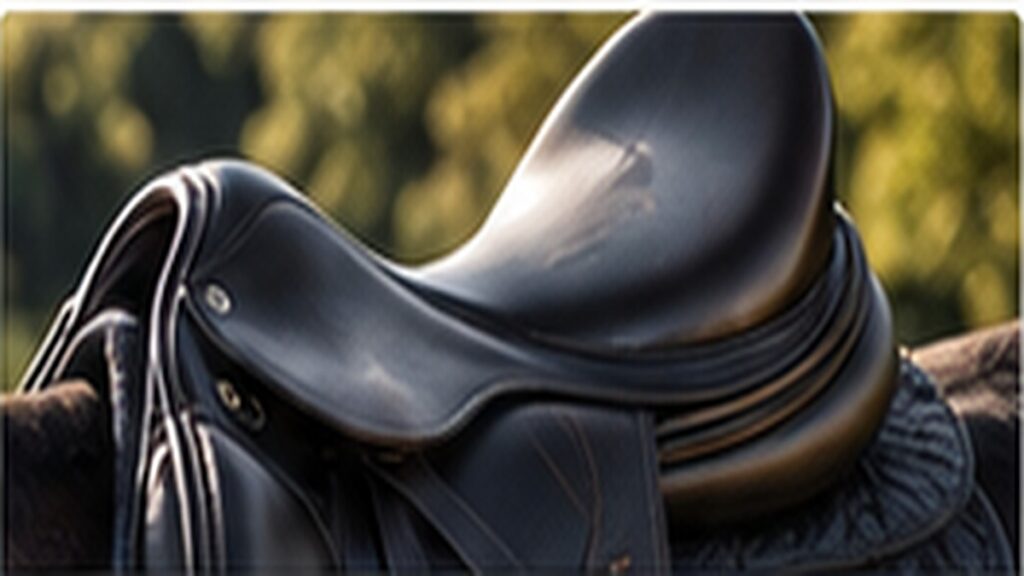
A saddle is not simply a shaped seat with stirrups attached. It is a composite structure designed to distribute the rider’s mass, maintain a stable interface with the horse, permit movement of the thoracolumbar region and provide controlled support for the rider. Its behaviour depends on the interaction of the tree, panels, flocking or foam, webbing, girthing system, leather or synthetic coverings, stirrup attachments and the geometry of the seat and flaps.
Related industry reference: For businesses moving from technical research into trade sourcing, explore saddle and saddlery suppliers on EquiGuild.
Construction also determines what can be adjusted later. A saddle with a conventional tree and wool-flocked panels may allow meaningful alteration by a qualified saddler. A saddle with a fixed composite tree and moulded foam panels may offer consistency but less scope for reshaping. A treeless design removes the conventional rigid tree but does not remove the need for load distribution, clearance and correct positioning.
For the horse owner or buyer, the important distinction is between materials, construction method and fit outcome. A wooden tree is not automatically superior to a synthetic tree; leather is not automatically more comfortable than a synthetic covering; and a treeless saddle is not automatically kinder. The complete saddle, horse, rider, workload and fitting process must be considered together.
The main structural layers
Although patterns vary between English, dressage, jumping, general-purpose, endurance, racing, side-saddle and Western designs, a conventional English saddle can be understood as a series of structural layers:
- Tree: the semi-rigid internal framework that establishes the principal shape, width, length and balance of the saddle.
- Webbing and girthing attachments: load-bearing straps fixed to or around the tree, to which the girth billets are secured.
- Seat and cantle structure: the shaped upper surface supporting the rider.
- Panels: padded structures beneath the tree that create the horse-facing contact surface.
- Flaps, skirts and facings: leather or synthetic outer components that protect the saddle and position the rider’s leg.
- Hardware: stirrup bars, buckles, D-rings, rivets and other fittings.
These parts are assembled under tension and are not independent cushions. Altering one layer can affect the balance and loading of the others. For example, changing panel thickness may alter the rider’s position, reduce or increase clearance, change the effective tree fit and alter how the saddle sits behind the scapula.
The saddle tree
Function and geometry
The tree is the principal load-spreading framework. In a conventional saddle it bridges the horse’s spine and supports the rider above the panels. Its front arch or pommel region must accommodate the withers and shoulder area; its central waist or twist contributes to the shape of the seat; and its rear section forms the basis of the cantle and rear bearing area. The underside incorporates the panels and the channel that protects the vertebral processes.
In English terminology, tree width commonly refers to the angle and spread of the front tree points rather than a simple measurement across the whole saddle. A saddle can therefore be labelled “wide” while still being unsuitable because its front-to-back curvature, rail shape, length, or panel configuration does not match the horse.
The tree also influences rider position. The height of the pommel and cantle, the depth of the seat, the twist and the relationship between the stirrup bar and seat affect how the rider is placed over the horse’s centre of motion. A tree is therefore both a horse-facing structural component and a rider-facing positional component.
Wooden and spring trees
Traditional English trees are commonly made from laminated wood, often reinforced with metal components. Lamination allows thin layers to be bonded into a shaped structure with strength in multiple directions. A metal spring element may run around the rear portion of the tree, contributing controlled flexibility and helping the saddle retain its shape.
Wooden trees have a long service history and can be repaired or re-covered by specialist makers, but they are not indestructible. A fall, crushing load, deterioration of adhesives, water damage or excessive age can contribute to distortion or breakage. A damaged tree may be difficult to identify from the outside because the leather panels and seat can remain visually attractive.
“Spring tree” does not mean that the entire saddle is designed to flex freely. The intended movement is limited and controlled. Excessive flex, uneven flex or structural failure can change the distribution of load and the stability of the saddle. A saddle suspected of having a broken or distorted tree should be assessed by a suitably qualified saddler rather than judged only by pressing the pommel or cantle by hand.
Synthetic and composite trees
Synthetic trees use materials such as reinforced polymers, thermoplastics, fibreglass or other composite constructions. British Standard BS 7875:2009 specifies requirements for synthetic saddle trees for general-use saddles, excluding racing and side-saddle applications. The existence of a standard does not mean that every saddle on the market is certified to it, nor does certification establish that a particular saddle fits a particular horse.
Composite construction can provide repeatable production, lower weight and resistance to some environmental conditions. It may also permit interchangeable or adjustable gullet systems in certain designs. However, “synthetic” describes a broad category rather than one uniform behaviour. Different laminates, moulding methods and reinforcement patterns can produce substantially different stiffness, durability and flex characteristics.
Some flexible-tree saddles use a flexible central structure or flexible panels rather than a conventional rigid tree. Their performance should not be assumed from the word “flexible” alone. A saddle that flexes may still concentrate pressure if its panels are too narrow, its bearing surface is too short, its balance is poor or its girthing pulls it out of position.
Treeless construction
A treeless saddle lacks the conventional rigid tree, but it still requires a deliberate load-distribution system. It may use shaped foam, layered textiles, reinforced panels, a pommel insert, a cantle support or other semi-rigid components. The purpose is to create stability and protect the horse from concentrated rider loading without relying on a traditional tree.
Research comparing treeless and conventional saddles has shown that the absence of a rigid tree does not remove fit requirements. Panel size, shape, position and construction remain important. A treeless saddle may be suitable for one horse-and-rider combination and unsuitable for another, particularly where the rider is heavy relative to the horse, the horse has a prominent spine, or the saddle bridges, shifts or compresses excessively.
Webbing, girthing and load transfer
Before the visible leatherwork is completed, the tree is fitted with webbing and other reinforcement. The webbing helps form the seat and provides a foundation for girthing attachments. Billets may be attached through different arrangements, including long billets, short billets, three-point systems or combinations intended to influence where the girth tension acts.
Girthing is not merely a retention system. Tension from the girth can alter saddle balance and the pressure pattern beneath the panels. A forward girth groove, a narrow ribcage, a prominent sternum or asymmetry can all influence how the saddle is pulled into position. Billet placement is consequently part of saddle design and fitting, not an afterthought.
Load-bearing webbing, billet stitching and stirrup-bar attachments deserve particular inspection on older or heavily used saddles. Stitching may look intact while the underlying webbing has degraded. Sweat, repeated wetting and drying, contamination, abrasion and over-tightening can weaken fibres and leather.
Seat construction
The seat is created by shaping material over the tree, often using layers of leather, textile, foam and reinforcement. The seat depth is influenced by the tree geometry, the thickness and placement of padding and the design of the cantle and pommel. A deeper seat can provide a more enclosed feel, while a flatter seat may allow greater freedom of movement; neither description alone determines whether the saddle is appropriate.
The rider’s seat should not be treated as a separate comfort feature. If the saddle places the rider behind or ahead of the horse’s centre of balance, the rider may compensate through the pelvis, lumbar region, leg or reins. A saddle that feels comfortable in a static fitting may therefore behave differently when the horse is moving and the rider is mounted.
Seat materials include full-grain or corrected-grain leather, suede-like leather, synthetic-coated textiles and moulded synthetic surfaces. Surface grip, moisture response, abrasion resistance and maintenance requirements differ. A grippy surface may help some riders but can also restrict necessary movement if combined with an excessively deep seat or restrictive knee rolls.
Panels: the horse-facing structure
Purpose and shape
Panels are the padded structures attached beneath the tree. They create the bearing surface, preserve the spinal channel and mediate between the relatively rigid tree and the moving horse. Their length, width, curvature, angle and thickness are central to fit.
Panel design must account for the horse’s back in three dimensions. Important variables include the shape of the ribcage, the width and angle of the thoracic region, the withers, the slope behind the scapula, the amount of available bearing surface and the horse’s change of shape during movement. A panel that appears symmetrical on the bench may not sit symmetrically on an individual horse.
Large panels can spread load over a greater area, but increasing area is not automatically beneficial. A panel that extends too far behind the horse’s load-bearing region may interfere with movement or rock as the back changes shape. A panel can also be large yet poorly fitted if it has unsuitable curvature or fails to maintain even contact.
Wool flocking
Traditional flocked panels are filled with wool fibres, usually inserted through access points in the panel and shaped by hand. The saddler can add, remove or redistribute flocking to correct some irregularities and maintain contact. Wool can be re-flocked and can conform progressively to the saddle and horse, but it may also compact, migrate or become lumpy over time.
Quality flocking is not simply a matter of filling the panel tightly. The distribution must be smooth and appropriate to the tree, horse and rider. Excessive or uneven flocking can create hard areas, alter saddle balance or reduce the intended spinal clearance. Flocking adjustments are limited: they cannot make a fundamentally unsuitable tree the correct shape.
Foam and moulded panels
Foam panels may use polyurethane, latex, memory-type or other engineered foams, sometimes in multiple densities or layers. Moulded panels can provide consistent dimensions and may resist some forms of migration. Their behaviour depends on density, resilience, thickness, temperature, compression history and the way the panel is bonded or enclosed.
Foam is not inherently harsher or kinder than wool. It may distribute pressure smoothly when correctly designed, but permanent compression, loss of resilience or an unsuitable mould can reduce performance. Foam panels are generally less amenable to traditional hand adjustment, although some designs allow replacement, reshaping or limited modification.
Leather and panel covers
Panels are commonly covered with leather, synthetic leather or textile materials. The cover protects the filling and controls its shape. Leather may be durable and repairable, but it varies considerably by tannage, fibre structure, thickness and finish. A visually attractive leather cover does not prove that the underlying panel is even or that the tree is sound.
Flaps, skirts and rider-interface components
The flaps protect the horse-facing side of the saddle from the rider’s leg and protect the rider from billets and girthing hardware. Their length, forwardness, drop, curvature and stiffness are chosen according to discipline and rider position. Jumping saddles generally provide a more forward flap and knee support; dressage saddles commonly use a longer, straighter flap; general-purpose patterns sit between these extremes.
Knee rolls may be fixed, removable, external or integrated into the flap. They can support consistency of leg position but should not force the rider into a position incompatible with their proportions. A knee roll that is too large or incorrectly placed may create pressure or encourage the rider to brace.
Stirrup bars are fixed to the tree or to a reinforced structural area. Their position affects the effective line of the stirrup and can influence whether the rider remains balanced or is pulled forward. Safety stirrup mechanisms, bar guards and quick-release systems vary between saddles and should be maintained according to the manufacturer’s instructions.
Leather, textiles and synthetic coverings
Leather selection is often discussed as though “quality leather” were a single characteristic. In practice, the appropriate leather depends on location and purpose. Thick, durable hide may be suitable for structural flaps or skirts; softer leather may be selected for the seat or knee contact area; thin leather may be used for decorative or close-contact components.
Full-grain leather retains more of the hide’s natural structure, while corrected or coated leather may provide a more uniform appearance. Surface finish affects grip, water resistance, colour stability and maintenance. Leather can stretch, crease and change feel with use. This is normal within limits, but excessive stretching around the stirrup bar, girth points or tree edges is a structural concern.
Synthetic coverings can reduce cost, weight or maintenance and may offer consistent texture. Their service life depends on polymer formulation, stitching, exposure to ultraviolet light, abrasion and cleaning products. The relevant question is not whether a material is natural or synthetic, but whether it is correctly specified for the loads and environment involved.
How saddles are assembled
Manufacturing sequences vary, but a conventional saddle commonly passes through these stages:
- Tree selection or manufacture: the tree is selected or made to a specified shape, size and stiffness.
- Tree preparation: edges are finished, reinforcement checked and structural attachment points prepared.
- Webbing and girthing: webbing, billets and other load-bearing components are fitted and secured.
- Seat blocking: leather and padding are shaped over the tree to establish the seat and cantle profile.
- Panel making: panel covers are cut and sewn, then filled with wool or fitted with foam.
- Flap and skirt fitting: the rider-facing components are attached and aligned with the tree and billets.
- Finishing: edges are trimmed and burnished, stitching is checked, hardware fitted and the surface cleaned or dressed.
- Inspection and fitting: the finished saddle is assessed for symmetry, balance, structural integrity and suitability for the intended horse and rider.
Hand-made and factory-made saddles can both be well constructed. The difference is not simply craftsmanship versus machinery. Consistency, material control, design validation, skilled assembly and quality assurance all matter. A small workshop may provide highly individualised work, while a large manufacturer may deliver repeatable dimensions and documented production controls.
Construction and saddle fit
Saddle fit is a moving interaction rather than a static measurement. The horse’s back changes shape with gait, speed, collection, extension, muscle development and rider loading. Research has found that altering tree width can change pressure distribution and thoracolumbar movement, with both a saddle one width wider and one width narrower producing undesirable changes compared with the correctly fitted saddle in the study.
Fit assessment should consider:
- tree width, angle and longitudinal curvature;
- withers and shoulder clearance;
- panel contact and avoidance of bridging;
- channel width and spinal clearance;
- front-to-back balance;
- stability during mounting and movement;
- girth position and billet alignment;
- rider size, symmetry, discipline and usual stirrup length;
- changes in the horse’s body condition and training.
Pressure-mapping studies can provide useful information, but pressure data are not a complete substitute for skilled assessment. Results are influenced by the sensor system, saddle pad, rider, speed, gait, surface and test protocol. Conversely, visual assessment alone can miss loading patterns that occur only in motion. The most useful approach combines construction knowledge, physical examination, observation of the horse and rider, and appropriate objective tools where available.
Common misconceptions
“A flexible saddle must be more comfortable.”
Flexibility can reduce some forms of rigidity, but uncontrolled or poorly located movement may increase instability or concentrate load. The relevant question is where and how the saddle flexes, and whether the panels continue to distribute load.
“Wool flocking always fits better than foam.”
Wool is adjustable and repairable, but it can compact or become uneven. Foam can be consistent and durable, but it may be less adjustable. Either can work well when correctly designed and maintained.
“A wide tree is safer because it gives the horse more room.”
A tree that is too wide can fail to stabilise the saddle and may create concentrated loading at the front or rear. Width must be considered with angle, curvature, panel design and movement.
“Treeless means no pressure points.”
Rider weight still has to be distributed. The shape, thickness and stiffness of the treeless system remain important, as do horse conformation, rider balance and workload.
“An expensive or attractive saddle is structurally sound.”
Price and appearance are weak indicators of hidden tree condition, panel evenness or billet integrity. A professional inspection is particularly important when buying used equipment.
Quality indicators and inspection points
When examining a saddle, look beyond branding and surface finish. Useful indicators include even stitching, clean and secure edge finishing, symmetrical panels, consistent flocking, correctly seated hardware, sound billets and a seat that is not distorted relative to the tree.
Warning signs include a sudden change in balance, uneven panel firmness, visible dips or bulges, cracked or stretched leather around load-bearing points, loose stitching, damaged stirrup bars, unusual creaking, a saddle that twists or collapses under modest handling, and persistent movement that cannot be explained by girthing or fit.
Maintenance should be proportionate to use. Saddles exposed to frequent sweat, rain, dust or intensive work require more regular inspection than lightly used indoor tack. Cleaning products should be compatible with the covering and should not saturate structural layers. Over-oiling can soften or stretch leather, while neglect can promote cracking and stiffness.
Choosing construction for the intended use
Selection begins with the horse-and-rider combination, not with a material preference. A professional rider who changes horses may prioritise adjustability and repeatability. A leisure rider may value durability, ease of maintenance and a versatile seat. A young or changing horse may require a design that permits realistic future adjustment, while a mature horse with a stable shape may suit a more fixed construction.
Discipline matters because the saddle must accommodate different rider positions, movement patterns and rein or stirrup demands. Racing saddles, endurance saddles, jumping saddles and dressage saddles are not merely variations in upholstery; their structures, weight distribution and attachment systems reflect different functional requirements.
For businesses and manufacturers, construction decisions should be documented in terms of intended use, tree geometry, materials, tolerances, repairability and quality controls. Marketing terms such as “close contact”, “flexible”, “anatomical” or “pressure relieving” require technical explanation if they are to be useful. No descriptor can replace evidence that the finished saddle performs appropriately under representative conditions.
Conclusion
A saddle is a controlled compromise between rigidity and compliance. The tree establishes the principal architecture; webbing and girthing transfer loads; panels create the horse-facing bearing surface; flocking or foam mediates contact; and leather or synthetic coverings protect and shape the whole assembly. Good construction is not defined by one material or one tradition. It is defined by structural integrity, appropriate geometry, maintainability and a demonstrably suitable interaction between horse, saddle and rider.
Understanding construction makes fitting discussions more precise. It helps the owner distinguish a correctable panel issue from an unsuitable tree, recognise why a new saddle may need follow-up adjustment, and identify when a visually good saddle warrants professional inspection before use.
Sources and further reading
- The Effect of Tree Width on Thoracolumbar and Limb Kinematics, Saddle Pressure Distribution, and Thoracolumbar Dimensions in Sports Horses in Trot and Canter, peer-reviewed open-access study.
- Shape change in the saddle region of the equine back during trot and walk, peer-reviewed open-access study.
- Force and pressure distribution beneath a conventional dressage saddle and a treeless dressage saddle with panels, peer-reviewed study indexed by PubMed.
- Effects of Large Saddle Panels on the Biomechanics of the Equine Back During Rising Trot, Journal of Equine Veterinary Science.
- Saddle pressure patterns of three different training saddles in Thoroughbred racehorses, Equine Veterinary Journal.
- BS 7875:2009 Synthetic saddle trees — Specification, British Standard specification record.
- Bespoke Saddler apprenticeship end-point assessment materials, Skills England.
- Saddlery Level 3 Skills Test Handbook, Walsall Leather Museum and associated training material.
Research note
Automatically researched source pack — editorial review required:
• pmc.ncbi.nlm.nih.gov — https://pmc.ncbi.nlm.nih.gov/articles/PMC6827167/
• www.sciencedirect.com — https://www.sciencedirect.com/science/article/pii/S0737080616300740
• pmc.ncbi.nlm.nih.gov — https://pmc.ncbi.nlm.nih.gov/articles/PMC11286149/
• pubmed.ncbi.nlm.nih.gov — https://pubmed.ncbi.nlm.nih.gov/24268681/
• pubmed.ncbi.nlm.nih.gov — https://pubmed.ncbi.nlm.nih.gov/31668303/
• www.sciencedirect.com — https://www.sciencedirect.com/science/article/abs/pii/S0737080616300740
• beva.onlinelibrary.wiley.com — https://beva.onlinelibrary.wiley.com/doi/10.1111/j.2042-3306.2010.00237.x
• www.gov.uk — https://www.gov.uk/government/publications/care-and-accommodation-of-animals-in-science-advisory-standards/advisory-standards-for-the-care-and-accommodation-of-animals-bred-supplied-or-used-for-scientific-purposes-accessible
• pmc.ncbi.nlm.nih.gov — https://pmc.ncbi.nlm.nih.gov/articles/PMC12427339/
• shop.standards.ie — https://shop.standards.ie/en-ie/standards/bs-7875-2009-235012_saig_bsi_bsi_609393/
• www.sciencedirect.com — https://www.sciencedirect.com/science/article/pii/S1090023311004667
• pmc.ncbi.nlm.nih.gov — https://pmc.ncbi.nlm.nih.gov/articles/PMC5991391/
• skillsengland.education.gov.uk — https://skillsengland.education.gov.uk/media/1227/bespoke_saddler.pdf
• walsall-leather.org — https://walsall-leather.org/wp-content/uploads/2024/07/Level-3-Skills-Test-handbook.pdf
• www.abbeyengland.com — https://www.abbeyengland.com/content/files/abbey%20catalogue%202020%20final.pdf
• rvc-repository.worktribe.com — https://rvc-repository.worktribe.com/OutputFile/1392271
• www.swst.org — https://www.swst.org/wp/wp-content/uploads/2022/05/Wood-in-sport-equipment_Heritage-present-perspective.pdf
• nixonequinevetconsultancy.com — https://nixonequinevetconsultancy.com/wp-content/uploads/2022/10/bspa-conference-2017-saddlery-update1.pdf
• en.wikipedia.org — https://en.wikipedia.org/wiki/English_saddle
• en.wikipedia.org — https://en.wikipedia.org/wiki/Saddle