BioThane® is widely used in modern equestrian equipment, including reins, headcollars, bridles, driving lines, breastplates, long-reining equipment, training aids, stable accessories and custom tack. The name is often used informally to describe any leather-look synthetic strap, but that is technically imprecise. BioThane® is a registered trade mark associated with coated webbing made by BioThane Coated Webbing Corp.; similar products from other manufacturers may be described as TPU-coated webbing, PVC-coated webbing, coated polyester webbing or synthetic leather webbing.
For buyers and makers, the important question is not simply whether a product is advertised as “BioThane”. It is which polymer is used, what webbing forms the load-bearing core, how thick and wide the finished strap is, how the ends and holes are finished, and whether the hardware and stitching are suitable for the intended load. A coated strap can be attractive, waterproof and easy to clean while still being poorly designed or unsuitable for a safety-critical application.
What BioThane® is
In construction terms, coated webbing is a composite strap. A woven textile webbing supplies much of the tensile structure, while a polymer coating surrounds or bonds to the webbing and provides the visible surface. The coating gives the material its leather-like appearance, colour, resistance to water and ease of cleaning. The webbing core remains important because the polymer layer alone should not be assumed to provide the complete strength of the finished strap.
Manufacturer information identifies several BioThane® coating families, including thermoplastic polyurethane, PVC, TPE and silicone-containing constructions. The webbing may be polyester, polyethylene or another textile depending on the product specification. Consequently, “BioThane” does not describe one fixed formula with one universal set of performance characteristics. A TPU product and a PVC product may look similar but behave differently under flexing, abrasion, temperature changes, chemical exposure and long-term ageing.
The manufacturer’s published material tables also show that performance varies between grades. Their comparative data rates abrasion resistance, ultraviolet resistance and flexibility separately, using a stated test basis and a 1-to-10 performance scale. These figures are useful for comparing grades within the manufacturer’s range, but they should not be treated as universal ratings for all coated webbing or as a substitute for testing the finished equestrian article.
After exercise, bathing or travel, the aim is usually controlled cooling rather than rapid heat loss. Examples of moisture-managing designs can be compared in the fleece and cooler rug range at JSM Equestrian Supplies.
Trade name and generic description
Correct terminology matters particularly for businesses. Genuine material should be described as BioThane® webbing or as a product made using BioThane® webbing. A strap made from an unbranded TPU-coated webbing may have similar construction and may perform well, but it is not automatically BioThane®. Conversely, the presence of the BioThane® mark does not certify the design, workmanship or suitability of the completed bridle, rein or headcollar.
Typical construction
Textile webbing core
The core is commonly a woven narrow fabric. Its fibre type, weave, width, thickness, edge construction and linear density affect tensile strength, elongation, flexibility and resistance to edge damage. Polyester is common in technical webbing because it offers comparatively low moisture absorption, good dimensional stability and useful resistance to ultraviolet exposure. Polyethylene webbing is also listed in some BioThane® product information.
The core is not necessarily visible. In a well-bonded product, the coating encapsulates the textile and prevents ordinary water and dirt from reaching much of the webbing. At cut ends, punched holes, badly formed edges or damaged areas, however, the textile may be exposed. Those areas can become the first points for fraying, wicking, contamination or local loss of strength.
Polymer coating
The outer layer may be TPU, PVC, TPE or another specified polymer system. Thermoplastic polyurethane is an elastomeric thermoplastic: it can combine flexibility with relatively high abrasion resistance and can be softened or melted by controlled heat. PVC is another thermoplastic commonly used in coated webbing and is available in different formulations and surface finishes.
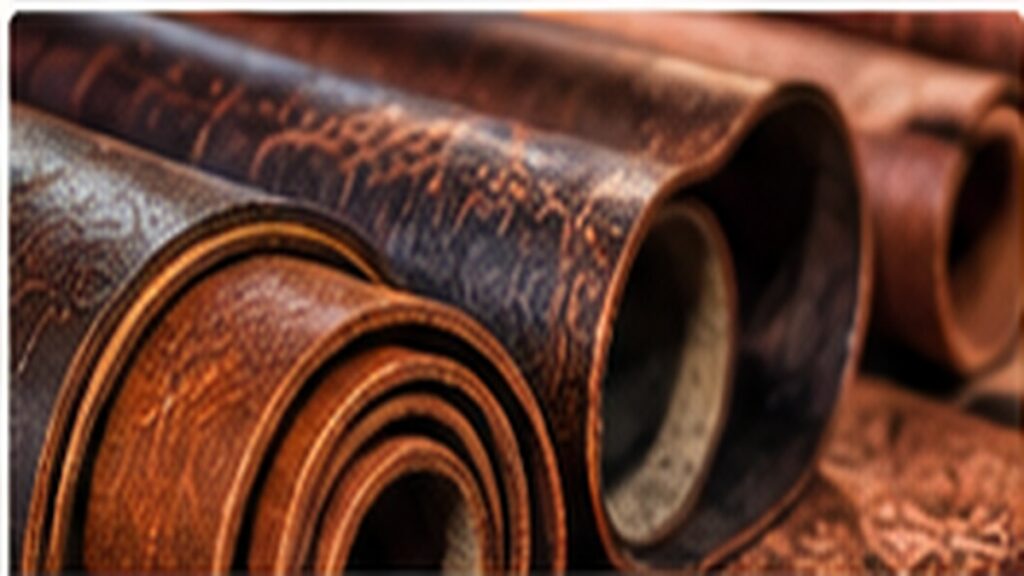
The polymer’s hardness, formulation, thickness and surface texture influence handling. Softer grades generally feel more pliable and can be comfortable in the hand, but may mark or deform more readily. Harder grades may resist scuffing and hold their shape, but can feel less supple and may be less pleasant around bends or small hardware. A matte, embossed surface can provide a leather-like appearance and may hide minor scuffs better than a high-gloss finish; appearance alone does not establish superior performance.
Surface finish and colour
Coated webbing is available in smooth, textured, embossed, matte and gloss finishes. The surface is often chosen for a mixture of practical and aesthetic reasons. Texture can alter grip and may reduce the visual impact of scratches, while a smooth surface is usually easier to wipe clean. Bright colours can be useful for visibility and identification, but pigments and stabilisers form part of the formulation and colour stability should be considered for equipment kept outdoors.
Performance characteristics relevant to equestrian use
Water resistance and cleanability
The principal advantage over traditional vegetable-tanned or unfinished leather is that the continuous polymer surface does not readily absorb water. Mud, sweat and many ordinary stable contaminants can usually be removed with water and a mild detergent. This is valuable for headcollars, long lines and other equipment exposed to wet weather or frequent cleaning.
Water resistance is not the same as complete waterproofing of the product. Moisture can enter through cut ends, punched holes, stitch perforations, damaged coating, folded seams and hardware interfaces. The textile core, thread, lining, padding and metal fittings may have different moisture behaviour. A coated exterior therefore reduces water uptake but does not make every component of a finished item immune to corrosion, mildew or freeze-thaw damage.
Abrasion and scuff resistance
TPU and some PVC grades can provide good resistance to surface abrasion. This is useful where reins pass through hands, straps rub against rings, or equipment contacts stable fittings. However, abrasion performance depends on the exact grade and on the direction and severity of wear. A smooth coated face can remain visually intact while the edge is being cut by a sharp ring, buckle tongue or poorly finished hole.
Manufacturers’ comparative data demonstrate why material selection should be specific. In one published table, TPU grades have different abrasion ratings from one another, and PVC grades are rated differently again. The figures are based on stated laboratory methods and sample conditions; they are not a guaranteed service life for a rein or headcollar. Hardware geometry, repeated bending, grit, sweat, pulling angle and maintenance can dominate real-world wear.
Ultraviolet exposure and weathering
Ultraviolet resistance varies by polymer grade, pigment package, surface and exposure conditions. Some coated-webbing grades are marketed for outdoor use and have relatively high manufacturer ratings for UV resistance. Nevertheless, continuous sunlight, heat, flexing and contamination can accelerate ageing. Colour fading is not the only concern: prolonged weathering can change flexibility, produce surface cracking or reduce the margin of safety in a strap.
Outdoor equipment should be stored out of direct sunlight when not in use. A strap that has become chalky, brittle, sticky, cracked or permanently distorted should be withdrawn from load-bearing service, regardless of whether it still looks attractive at a distance.
Flexibility and handling
Flexibility is a design variable rather than an absolute virtue. Reins and lines need controlled suppleness, while a breastplate tab, keeper or structural strap may benefit from greater body. Published BioThane® data distinguish flexibility between coating classes, and the same width can feel markedly different depending on polymer hardness, total thickness and the textile core.
Very stiff material can create sharp bends at buckle points and concentrated pressure at holes. Very soft material may roll, stretch or fold around hardware. The correct choice depends on the component, not merely on the overall product category.
Dimensional stability and stretch
Compared with absorbent natural fibres, synthetic webbing is generally less affected by ordinary wetting and drying. This helps preserve strap length and hole spacing. It does not mean that coated webbing cannot elongate. Textile construction, sustained load, heat, repeated cycling and the geometry of the finished item all influence extension.
For reins, driving lines and other length-sensitive equipment, the maker should consider the elongation of the complete assembly, not only the nominal webbing strength. A strap can be strong enough in a short tensile test yet feel unsuitable if it stretches noticeably under repeated working loads.
TPU, PVC and similar materials
| Material family | Typical characteristics | Points requiring verification |
|---|---|---|
| TPU-coated webbing | Often combines flexibility, abrasion resistance and a broad range of finishes; used in several BioThane® grades. | Exact hardness, hydrolysis resistance, UV performance, temperature range and coating construction vary by grade. |
| PVC-coated webbing | Can provide a smooth or embossed, water-resistant and easy-clean surface; available in flexible formulations. | Plasticiser system, low-temperature behaviour, abrasion rating, environmental compliance and long-term flexibility should be checked. |
| TPE or blended constructions | May offer a particular balance of grip, flexibility, surface feel and processing characteristics. | Generic labels are insufficient; request the manufacturer’s technical specification and intended-use information. |
| Uncoated textile webbing | Usually lighter and breathable, with familiar sewing behaviour and potentially good strength-to-weight ratio. | Absorbs more moisture and contamination, may fray, and generally requires different cleaning and inspection practices. |
It is misleading to describe TPU as automatically superior to PVC, or PVC as automatically unsuitable for equestrian use. The relevant comparison is between specified grades and finished designs. A well-made PVC strap may outperform a poorly selected TPU strap in one application, while a high-quality TPU grade may offer better flex life or abrasion resistance in another.
Manufacturing and fabrication
Cutting and edge treatment
Coated webbing is commonly cut with a blade, die or heated tool. Cutting quality matters because a ragged edge can expose the textile core and create a starting point for tearing. Some TPU products can be heat-sealed at the edge, but heating must follow the manufacturer’s instructions. BioThane® safety information notes that certain TPU coatings can be melted at controlled temperatures while the polyester webbing remains below its melting range; excessive heat can damage the webbing, produce fumes or create a fire risk.
Heat sealing is not a universal repair method. It may close the coating without restoring the tensile integrity of a damaged textile core. A melted edge can also become hard or sharp if poorly controlled. For commercial production, the process should be repeatable and verified on the actual grade and thickness being used.
Punching holes
Hole quality is critical in buckled tack. Holes should be clean, correctly sized and positioned far enough from the edge to maintain an adequate load path. A blunt punch can crush the coating and distort the webbing. An oversized hole can allow a buckle tongue or rivet to move excessively, while a hole too close to the edge can form a tear initiation point.
Where a hole exposes the textile, sealing may reduce contamination and fraying, but it does not remove the need for sufficient edge distance and appropriate reinforcement. Load-bearing holes should be inspected for elongation, tearing, cracking and local deformation.
Stitching, rivets and screws
Hardware attachment usually determines the strength of the finished item more than the headline tensile strength of the raw material. Stitch length, thread type, seam allowance, stitch pattern, back-tacking and the radius of turns all matter. Rivets and screws can provide useful attachment but may introduce local stress concentrations and corrosion points.
Hardware should match the intended environment. Stainless steel, brass, plated steel and other fittings differ in corrosion resistance, hardness and compatibility with sweat, salt and cleaning chemicals. A corrosion-resistant fitting can still fail if its cross-section is inadequate or if its attachment tears through the webbing.
Manufacturers should test the complete assembly where the product is load-bearing. Testing only a strip of raw webbing does not establish the strength of a stitched rein, a headcollar cheekpiece or a multi-layered breastplate attachment.
Use in equestrian equipment
Headcollars and halters
Coated webbing is attractive for headcollars because it resists mud and can be wiped clean. Its smooth surface may also reduce the tendency of dirt to remain embedded. Fit remains more important than material: edges, buckle positions and cheekpiece stiffness can influence comfort and pressure distribution.
A headcollar should not be assumed to be breakaway merely because it is synthetic. If a product is intended to include a breakaway feature, the sacrificial component and its performance must be clearly specified. Conversely, equipment intended for controlled restraint requires appropriate hardware and a design that will not fail unpredictably at a weak hole, seam or rivet.
Reins, long lines and driving lines
For reins and lines, users often value consistent grip, resistance to wet weather and the absence of oiling or conditioning. The selected finish should suit the handler’s preferred feel. Smooth high-gloss material may become less secure when contaminated with mud, water or sweat, while a textured finish may provide more tactile feedback.
Long lines and driving lines can experience high dynamic loads, dragging abrasion and repeated bending through rings. Width, thickness, core construction, join design and the quality of snaps and end attachments should therefore be evaluated together. A narrow strap is not automatically stronger or weaker than a wide strap; the complete load path is what matters.
Bridles, breastplates and training equipment
BioThane® can be used for bridles and breastplates where easy cleaning and resistance to wet conditions are priorities. It may be particularly useful for endurance, trekking, carriage driving, yard work and horses that generate heavy sweat or mud contamination.
Training aids require additional caution because the material’s low water absorption and strength can make them easy to maintain but not necessarily forgiving. The material should not be selected as a justification for excessive tension or poorly fitted equipment. Design, adjustment and the intended method of use remain separate welfare considerations.
Quality indicators for buyers
A credible product description should identify more than colour and width. For professional purchasing, request or record:
- Whether the material is genuine BioThane® or a different coated webbing.
- The coating family or polymer, such as TPU, PVC or TPE.
- The webbing-core fibre and construction where available.
- Finished width and thickness, with reasonable manufacturing tolerances.
- Any published abrasion, UV, flexing, tensile or chemical-resistance data and the test method used.
- Recommended temperature, cleaning and storage conditions.
- Details of stitching, rivets, screws, snaps and reinforcement in the finished product.
- Evidence of quality control, batch traceability and a documented inspection or withdrawal policy.
Visual inspection should look for straight edges, consistent coating thickness, clean holes, secure hardware, smooth folded sections and stitching that is neither sparse nor damagingly dense. Warning signs include bubbling, delamination, exposed or frayed webbing, sharp cut edges, cracked coating, distorted holes, loose rivets, corrosion and stitching that has cut into the strap.
Common misconceptions
“BioThane® is plastic, so all grades are the same”
No. The product family includes different polymer systems, hardnesses, surface finishes and core constructions. Performance claims must be tied to a specific grade.
“Waterproof means maintenance-free”
No. Cleaning is easier, but dirt can collect around hardware and stitching, metal fittings can corrode, and damaged coating can expose the core. Regular inspection remains necessary.
“The strongest raw material makes the safest tack”
No. Strength is only one design property. Excessive strength in one component can move failure to a buckle, snap, seam or horse-contact point. The correct behaviour may be high strength, controlled breakaway, predictable deformation or easy adjustment, depending on the product.
“A leather-like appearance means leather-equivalent performance”
No. Coated webbing and leather have different moisture behaviour, ageing mechanisms, repair options, tactile properties and environmental profiles. They should be compared by application and specification, not appearance.
Care, storage and inspection
For routine cleaning, remove loose grit first, wash with clean water and use a mild detergent if necessary. Avoid aggressive solvents unless the material manufacturer specifically approves them. Solvents can affect the coating, printed markings, adhesives, thread or adjacent components even when the strap initially appears unchanged.
Allow equipment to dry before storage and keep it away from prolonged direct sunlight, high heat, sharp edges and rodents. Do not leave coated tack compressed against hot vehicle surfaces or radiators. Where a product has a manufacturer-specific care instruction, that instruction should take precedence over generic advice.
Inspect load-bearing equipment before use and more closely where it is used frequently or exposed to sand, salt water, sweat, mud, sunlight or repeated wetting and drying. Retire equipment if the coating is separating, the core is visible over a significant area, holes are elongating, stitching is failing, hardware is cracked or corroded, or the strap has become brittle, sticky or permanently deformed. Repairs should be carried out by a competent maker who understands the original load path; simply adding a rivet may create a new weak point.
Environmental and regulatory considerations in Great Britain
Coated webbing is a composite of textile and polymer, which can complicate recycling. The polymer coating is bonded to the textile core and finished products also contain thread, metal fittings, dyes and sometimes adhesives. In practice, disposal options depend on local facilities and the specific formulation. Businesses should avoid making broad recyclability claims unless they can substantiate the collection and processing route.
For products placed on the market in Great Britain, businesses should consider their obligations under UK REACH and applicable product-safety requirements. UK REACH applies across sectors to substances placed on the GB market, including substances in articles. Compliance is not established merely by saying that a material is “non-toxic”, “eco-friendly” or “REACH compliant”; a supplier declaration should identify the scope and date of the information provided.
Material compliance and product safety are separate questions. A chemically compliant strap can still be unsafe because of poor stitching, underspecified hardware or inadequate fit. Conversely, a well-designed item still requires responsible material sourcing and appropriate chemical information.
How to choose between coated webbing and leather
| Consideration | Coated webbing | Leather |
|---|---|---|
| Wet-weather care | Usually easy to rinse and dry; low surface absorption. | Depends strongly on tannage and finish; may require conditioning and careful drying. |
| Consistency | Manufactured width, thickness and colour can be relatively uniform. | Natural variation in fibre structure, hide quality and thickness. |
| Repair | Can be repaired, but heat, adhesives and stitching must suit the coating and core. | Established repair and stitching practices, although damaged leather may have hidden fibre loss. |
| Feel | Ranges from supple to firm; surface feel depends on grade and finish. | Changes with tannage, finishing, use and conditioning. |
| Ageing | May fade, crack, stiffen, soften or delaminate depending on polymer and exposure. | May dry, harden, stretch, mould or deteriorate through moisture and neglect. |
| Environmental profile | Petrochemical polymer and textile composite; end-of-life separation can be difficult. | Animal-derived material with its own tanning, land-use and end-of-life considerations. |
Neither material is automatically the responsible or superior choice. The appropriate selection depends on the component, expected exposure, repairability, user preference, production controls and verified supply-chain information.
Practical specification checklist
- Define the component’s function and whether it is load-bearing, adjustable, sacrificial or primarily decorative.
- Specify the polymer family and grade rather than using “BioThane” as the whole specification.
- Confirm the core fibre, width, thickness and tolerances.
- Check the relevant abrasion, UV, flexing and temperature information for the exact grade.
- Design holes, folds, seams and hardware to avoid concentrated stress.
- Test the completed assembly, not only the incoming webbing.
- Document cleaning, storage, inspection and withdrawal criteria.
- Keep chemical and regulatory information current for the GB supply chain.
BioThane® and comparable coated webbings are useful materials for equestrian equipment because they combine a textile load-bearing structure with a protective polymer surface. Their strongest practical advantages are cleanability, resistance to ordinary wet conditions, consistent manufacture and a wide range of handling characteristics. Their limitations arise from the same composite construction: different grades behave differently, exposed cores and holes can become weak points, and a durable surface does not remove the need for sound design or inspection.
Sources and further reading
- BioThane Coated Webbing Corp.: Article Information Sheets — product and regulatory information for TPU, PVC, TPE and related coated-webbing grades.
- BioThane Coated Webbing Corp.: Properties of BioThane® — comparative manufacturer data for coating type, webbing, abrasion, UV resistance and flexibility.
- BioThane Coated Webbing Corp.: Safety Guidelines for Sealing BioThane® TPU Coated Belting — manufacturer guidance on heat sealing and handling.
- BioThane Coated Webbing Corp.: Trade Mark Usage Policy — terminology and use of the BioThane® mark.
- UK Health and Safety Executive: UK REACH explained — scope and supply-chain responsibilities for chemicals and articles in Great Britain.
- UK Health and Safety Executive: Isocyanates — occupational controls relevant to polyurethane coatings, adhesives and related products.
- SATRA Technology Centre: TM344, Hydrolysis of polyurethane solings and polyurethane coated leathers — example of specialist testing relevant to polyurethane ageing and flex performance.
- GOV.UK: General Product Safety Regulations — Great Britain — general product-safety framework and guidance.
Research note
Automatically researched source pack — editorial review required:
• www.biothane.us — https://www.biothane.us/applications/animal/faqs/regulatory/article-information-sheets/
• www.hse.gov.uk — https://www.hse.gov.uk/reach/
• www.biothane.us — https://www.biothane.us/media/48387/tpu-safety-sheet.pdf
• www.hse.gov.uk — https://www.hse.gov.uk/reach/about.htm?initialSessionID=259-7072026-7101406&ld=ASXXSCTUKDirect
• cdn.thomasnet.com — https://cdn.thomasnet.com/ccp/00462164/204009.pdf
• www.gov.uk — https://www.gov.uk/government/publications/uk-reach-rationale-for-priorities/rationale-for-prioritising-substances-in-the-uk-reach-work-programme-2023-to-2024
• www.biothane.us — https://www.biothane.us/media/1920/bip-h7051-tm-usage-policy-v2.pdf
• www.gov.uk — https://www.gov.uk/government/publications/uk-reach-authorisation-for-custom-moulded-poyurethane-limited-3-july-2024
• www.hse.gov.uk — https://www.hse.gov.uk/construction/healthrisks/hazardous-substances/isocyanates.htm
• www.biothane.us — https://www.biothane.us/media/okcnqxax/cert-0145101_eng_biothane-coated-webbing-corp.pdf
• cdn.mystique-dummy.com — https://cdn.mystique-dummy.com/data/user-content/PDF/BioThane%20technical%20sheet_BETA_EN.pdf
• www.biothaneusa.com — https://www.biothaneusa.com/products/pvc-products/beta-583/b05ut200bl583-bsem-t200a/
• www.biothane.us — https://www.biothane.us/media/1965/85a-aromatic-ether-tpu-hi-gloss-gold-100-300-coated-webbing-black-colors.pdf
• www.satra.com — https://www.satra.com/test_methods/detail.php?id=255
• www.gov.uk — https://www.gov.uk/government/publications/general-product-safety-regulations-2005
• www.worring-leder.de — https://www.worring-leder.de/en/biothane/
• equifloor.co.uk — https://equifloor.co.uk/testing/
• www.btha.co.uk — https://www.btha.co.uk/guidance/chemical-dashboard/substance-toolkit/material-matrix/
• en.wikipedia.org — https://en.wikipedia.org/wiki/Polyvinyl_chloride
• en.wikipedia.org — https://en.wikipedia.org/wiki/Polyurethane