
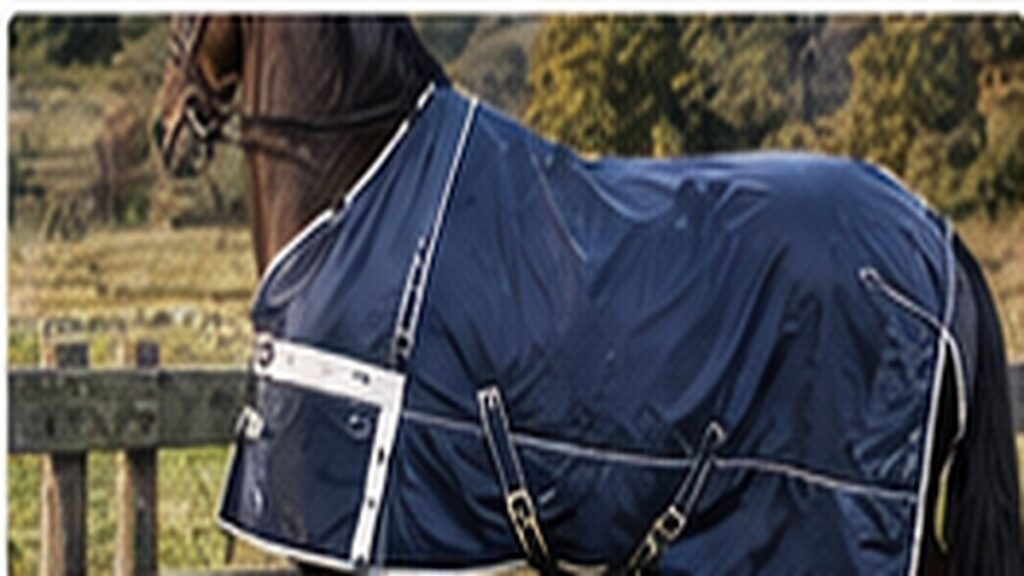
For equestrian textiles, durability is not one property. A turnout rug may experience repeated rubbing at the shoulder, withers, chest and hindquarters; a saddle pad may be compressed and sheared beneath a moving saddle; breeches may be exposed to perspiration, washing and friction from tack; and a stable garment may encounter mud, grooming equipment, fasteners and rough timber. These conditions create several different failure mechanisms, of which abrasion and colour loss are only two.
Testing is therefore most useful when it is treated as a performance investigation rather than a search for a single headline number. Abrasion resistance concerns physical damage caused by rubbing. Colourfastness concerns resistance to colour change and to transfer or staining. The properties can be related, but they are not interchangeable. A fabric can remain structurally intact while losing colour, or retain colour while developing holes, fuzzing, pilling, coating failure or seam damage.
What abrasion resistance means
Abrasion is the progressive removal, fracture or deformation of fibres, yarns, coatings or surface finishes caused by contact and relative movement. In a woven fabric, repeated rubbing may break individual fibres, loosen yarns and eventually produce a hole. In a knitted fabric, loops may distort or break. In a coated textile, the coating may crack, thin, delaminate or expose the base cloth before the underlying yarns fail.
In equestrian use, abrasion is rarely a simple, uniform rubbing action. It may involve:
- Flat rubbing: for example, a rug body moving against the horse’s coat or a saddle pad against a saddle panel.
- Edge or fold abrasion: concentrated wear at binding, darts, gussets, seams, pocket openings and folded hems.
- Pressure-assisted rubbing: where body weight, tack tension or a tight strap increases contact pressure.
- Wet abrasion: where rain, sweat, washing water or mud changes friction and fibre behaviour.
- Particulate abrasion: where sand, dried mud or stable dust becomes trapped between surfaces.
- Three-dimensional wear: where a fabric flexes, stretches and recovers while it is being rubbed.
Laboratory tests simplify these conditions so that materials can be compared under controlled parameters. They do not reproduce the complete life of a garment or rug. Test results should consequently be read as evidence about a defined test method, not as a direct promise of a particular service life.
The Martindale method
The Martindale method is widely used for textile abrasion assessment. In the general principle described by SATRA, circular specimens are rubbed against a standard abradant under a controlled contact force. The relative movement follows a repeating multi-directional pattern, and testing is stopped at a prescribed stage or when defined damage is observed. Dry and wet conditions may be included where the specification requires them. ([satra.com](https://www.satra.com/test_methods/detail.php?id=30&utm_source=openai))
The ISO 12947 series covers apparatus and procedures for determining textile abrasion resistance by the Martindale method. Different parts address matters including the equipment, specimen rupture and assessment of appearance change. The exact result is meaningful only when the report identifies the applicable part, pressure, abradant, number of specimens, conditioning, inspection intervals and end point.
People commonly describe a result as a number of “Martindale rubs” or “cycles”. That number is not a universal unit of product life. It is the number of specified cycles completed before a defined failure or assessment point under a particular procedure. A result obtained using one pressure, abradant and end point cannot automatically be compared with a result obtained using another.
What may count as failure?
Possible end points include yarn breakage, hole formation, coating damage, unacceptable appearance change or a specified degree of surface wear. These end points are not equivalent. A fabric that has reached a visible appearance-change threshold may still be physically serviceable, while a fabric that has not changed appearance may have suffered hidden coating damage.
For this reason, a responsible specification should state what matters for the intended product. A lightweight base-layer fabric may be assessed for appearance, pilling and strength retention. A rug outer fabric may require inspection for rupture, coating integrity, water resistance after abrasion and seam performance. A saddle-pad face may need attention to surface glazing, fibre migration, dye transfer and compression-related wear.
Why a high abrasion number is not enough
There is no generally valid rule that a higher Martindale result makes one equestrian product better in every respect. Test severity and product construction strongly influence the result. Fibre type, yarn linear density, twist, weave or knit structure, fabric mass, finish, coating, backing, colour, moisture and specimen direction can all affect measured performance.
Several limitations are particularly important:
- Laboratory abradant versus horse hair, tack and mud: a standard fabric abradant provides repeatability but may not reproduce the friction, contamination or geometry of actual use.
- Fabric versus finished product: a flat swatch result does not necessarily predict wear at a seam, zip, binding, embroidery, hook-and-loop closure or shaped panel.
- Warp and weft direction: woven fabrics may behave differently along the two principal directions. A report should identify specimen orientation where relevant.
- Wet and dry differences: moisture can increase or reduce friction and can alter the strength of fibres, finishes and coatings.
- Appearance versus rupture: pilling, glazing, fuzzing, colour change and structural failure are different observations.
- Sampling variation: fabric lots, dye lots, coating thickness, printing and finishing can vary. A result from one small sample is not automatically representative of all production.
SATRA specifically describes the Martindale method as applicable to fabrics, coated fabrics and leathers, while also noting that the severity can be varied by changing cycle count and contact pressure. That flexibility is useful, but it also means that an apparently precise figure needs its test conditions alongside it. ([satra.com](https://www.satra.com/test_methods/detail.php?id=30&utm_source=openai))
Colourfastness: two different questions
Colourfastness testing generally considers two related but distinct outcomes:
- Colour change: whether the tested material becomes lighter, darker, duller, yellower or otherwise visibly different.
- Colour transfer or staining: whether colour moves from the test specimen onto an adjacent material, such as a multifibre strip or rubbing cloth.
A material may score reasonably for colour change but poorly for staining. This matters in equestrian products because dye transfer can affect a pale horse coat, a saddle, a shirt, a saddle pad, lining materials or other textiles. Conversely, a product may show little staining while still fading noticeably in sunlight.
Colourfastness grades are commonly assessed using grey scales. ISO 105-A02 concerns the grey scale for assessing change in colour, while related procedures assess staining. The numerical scale should not be treated as a percentage of colour retained, and grades from different test methods should not be treated as directly interchangeable.
Important colourfastness tests for equestrian products
Colourfastness to rubbing
ISO 105-X12 is used for colourfastness to rubbing and distinguishes dry and wet rubbing assessments. The test uses a rubbing device and a specified rubbing cloth, after which colour transferred to the cloth and colour change in the specimen are assessed. The test is particularly relevant to breeches, gloves, saddle pads, rug linings and dark or highly saturated fabrics that contact lighter materials.
Wet rubbing is not simply a more realistic version of dry rubbing. It is a separate condition with its own behaviour. Water, sweat or cleaning solution may mobilise unfixed dye, and pressure may force moisture and colour into adjacent materials. A product that passes dry rubbing but performs poorly when wet may still stain during rain, washing or heavy work.
Colourfastness to perspiration
ISO 105-E04 addresses colourfastness to perspiration and includes acidic and alkaline conditions. BSI lists BS EN ISO 105-E04:2013 as the British adoption of this test method. ([landingpage.bsigroup.com](https://landingpage.bsigroup.com/LandingPage/Standard?UPI=000000000030240216&utm_source=openai))
Perspiration testing is relevant to garments worn next to the skin, gloves, base layers, saddle pads and any textile exposed to sweat. It is not a complete simulation of a ridden session: real sweat varies in composition, temperature, duration and distribution, and is combined with pressure, detergent residues, sunscreen, grooming products and repeated washing. Nevertheless, the test can reveal whether dyes or finishes are vulnerable to acidic or alkaline perspiration conditions.
Colourfastness to washing
Washing can cause colour change, staining of adjacent fabrics, migration of loose dye, surface whitening and damage to coatings or prints. The relevant ISO 105 series includes methods for domestic and commercial laundering, including ISO 105-C06 and ISO 105-C12. The selected method should correspond to the product’s care instructions and anticipated washing regime.
For manufacturers, the care label is part of the performance context. A textile tested under a gentle wash should not be marketed as though the result proved resistance to harsher laundering. Likewise, a rug labelled for a particular cleaning process should be evaluated after the process that consumers are expected to use, including drying where appropriate.
Colourfastness to light
Sunlight can fade dyes and pigments, particularly during prolonged outdoor exposure. ISO 105-B02 is the recognised xenon-arc artificial-light method within the ISO 105 colourfastness family. BSI identifies ISO 105-B02 as the method for colourfastness to artificial light using a xenon arc. ([landingpage.bsigroup.com](https://landingpage.bsigroup.com/LandingPage/Series?UPI=BS+EN+ISO+105&utm_source=openai))
Lightfastness is especially relevant to turnout rugs, fly rugs, hi-vis products, outdoor clothing and stable textiles stored or dried in strong sunlight. A lightfastness result is not a guarantee against every outdoor fading mechanism. Natural sunlight, moisture, atmospheric pollutants, heat and soiling can interact, and product geometry may expose different panels unevenly.
Colourfastness to water and weather-related exposure
ISO 105 includes methods for colourfastness to water, seawater, chlorinated water and weathering-related exposure. The appropriate test depends on the intended use. Plain water exposure may be relevant to rain and wet storage; perspiration is relevant to garments and pads; artificial weathering may be more informative for products intended to remain outdoors for long periods.
Water resistance and colourfastness to water are different properties. A fabric can resist water penetration yet release dye when wet, or it can remain colourfast while its water-repellent finish fails. Both properties should be specified separately.
How abrasion and colourfastness interact
Repeated abrasion can expose new fibre surfaces, remove pigment-containing finishes, roughen a coated face or increase the area from which dye can migrate. Wet abrasion may be particularly informative where the product is used in rain or exposed to sweat. However, an abrasion test is not automatically a colourfastness test, and a colourfastness test is not automatically a durability test.
A practical development programme may therefore include:
- dry abrasion to a defined end point;
- wet abrasion where moisture is expected;
- colourfastness to dry and wet rubbing;
- colourfastness to perspiration for skin-contact or sweat-exposed products;
- colourfastness to washing using the intended care cycle;
- lightfastness for outdoor exposure;
- assessment of colour transfer after laundering or abrasion;
- inspection of coating, seam, binding and print integrity.
Where colour transfer onto the horse or tack is a concern, a product-specific contact test may be useful in addition to standard methods. Such a test should be documented carefully, because an in-house contact test is not equivalent to an ISO grade unless it follows the relevant standard.
Construction and material factors
Fibre and yarn
Polyester, polyamide, polypropylene, cotton, wool, elastane and blends have different responses to rubbing, moisture, heat and dyeing. Fibre identity alone does not determine performance. Yarn twist, filament or staple construction, yarn count and blend ratio affect how a fabric distributes load and how quickly broken fibres become visible.
Woven, knitted and laminated structures
Woven fabrics commonly provide dimensional stability through interlaced warp and weft yarns, while knitted fabrics provide loop-based stretch and recovery. A knit may be comfortable and conformable but require careful evaluation for snagging, loop breakage and edge stability. Laminated or coated fabrics introduce additional interfaces: the face fabric, adhesive or membrane and backing can fail in different ways.
Dyeing, printing and finishing
Colourfastness depends on the colourant, fibre, dye-fibre interaction, concentration, fixation and finishing process. Dark and highly saturated shades can present greater challenges because more colourant is present and any loss may be more visible. Prints may wear at their surface even when the base textile remains sound.
Water repellents, softeners, anti-static treatments, antimicrobial finishes and coating systems may improve one performance property while affecting another. A finish can alter friction, handle, breathability, wet abrasion or laundering behaviour. Finished-goods testing is therefore important where a fabric is cut, sewn, laminated, printed or treated after the greige or dyed-fabric stage.
Testing an equestrian product rather than just its fabric
Material testing should be complemented by finished-product inspection. Risk-based sampling should focus on high-load and high-contact areas, including shoulder gussets, chest closures, surcingles, girth channels, saddle-pad quilting, knee panels, seat seams, glove palms and garment hems.
Where feasible, test panels should represent the production construction, including seams, embroidery, quilting, bonded areas, coatings and labels. If a product contains multiple fabrics or colourways, the worst-case combination may need separate evaluation. A pale lining against a dark shell can create a different staining risk from a same-colour construction.
Quality assurance should also record:
- supplier and fabric identification;
- lot, dye-lot or batch information;
- fabric mass, construction and finish;
- conditioning and pre-treatment;
- test standard and edition;
- apparatus, abradant and applied pressure;
- number of specimens and specimen orientation;
- failure definition and inspection intervals;
- colourfastness grade for both colour change and staining where applicable;
- photographs or instrumental colour data where useful;
- any deviation from the standard method.
Interpreting supplier claims and test reports
A credible report should identify the material, construction, test method and result clearly. “Tested to Martindale” is incomplete without the relevant standard or internal method, pressure, abradant and end point. “Colourfast” is similarly incomplete unless the exposure condition and assessment grade are stated.
Buyers and product developers should ask:
- Was the test performed on the finished product or only on a fabric swatch?
- Which standard and edition were used?
- Was the result based on rupture, appearance change or another end point?
- Were dry and wet conditions both tested?
- Were colour change and staining assessed separately?
- Was the sample representative of production, including coating and finishing?
- What care process was used before or after testing?
- Are the reported figures comparable with the specification for the intended use?
Third-party laboratory testing can strengthen confidence, but laboratory accreditation, scope and competence should be considered rather than assumed. A test report demonstrates what was tested under stated conditions; it does not remove the need for design review, production control and field feedback.
GB market and product information
For products supplied in Great Britain, textile fibre composition labelling is a legal requirement for covered textile products. GOV.UK guidance states that manufacturers and retailers are responsible for complying with textile labelling requirements and that labels must show fibre content, including relevant animal-derived materials. ([gov.uk](https://www.gov.uk/guidance/textile-labelling?utm_source=openai))
That labelling requirement is separate from abrasion or colourfastness performance. A legally correct fibre label does not establish durability, and a strong test result does not replace required fibre information. Product descriptions and claims should also be accurate: a retailer should not convert a laboratory result into an unsupported promise such as “will not fade” or “guaranteed for life”.
General product-safety responsibilities also remain relevant. GOV.UK advises manufacturers and importers to assess compliance with applicable product-safety requirements and to act on known risks. For equestrian goods, this supports a documented approach to foreseeable use, misuse, cleaning, storage and foreseeable contact with people, animals and equipment. ([gov.uk](https://www.gov.uk/guidance/product-safety-law-compliance-advice-for-manufacturers-and-importers?utm_source=openai))
Common misconceptions
“More rubs always means better quality.”
Not necessarily. The number is method-specific, and a fabric optimised for abrasion may compromise breathability, softness, stretch, weight or handle. The correct question is whether it meets the product’s defined performance requirement.
“Colourfast means the colour cannot fade.”
Colourfastness is conditional. A grade applies to a specified exposure and assessment method. Light, perspiration, washing, rubbing and water are separate stresses and should not be collapsed into one claim.
“A test on the shell proves the whole rug is durable.”
The lining, binding, seams, closures, quilting, reinforcements and coating may fail earlier than the shell. Finished-product construction must be considered.
“Wet rubbing is the same as rain exposure.”
Wet rubbing is a controlled laboratory condition. Rain exposure includes wetting, drying, temperature variation, soiling, flexing and potentially prolonged contact. It is informative but not identical to field use.
Practical specification framework
A useful specification begins with the product’s actual use environment. Define the principal contact surfaces, likely moisture, washing regime, expected exposure to sunlight, acceptable appearance change and unacceptable structural failure. Then select test methods and thresholds that reflect those risks.
For example, a turnout rug specification might separate outer-shell rupture resistance, wet abrasion, lightfastness, wet rubbing, laundering stability, coating integrity and seam performance. A pair of breeches might prioritise seat and knee abrasion, wet and dry rubbing, perspiration, washing, stretch recovery and dimensional stability. A saddle pad might need face-fabric wear, dye transfer to tack or clothing, washing, quilting durability and compression-related appearance change.
The most defensible quality system combines standardised laboratory tests with production checks and controlled field evaluation. Laboratory evidence provides comparability; inspection identifies construction defects; field feedback reveals conditions that the laboratory programme did not capture. None of these alone is a complete substitute for the others.
Related industry reference: For businesses moving from technical research into trade sourcing, explore equestrian suppliers and manufacturers on EquiGuild.
Sources and further reading
- SATRA TM31: Abrasion resistance – Martindale method
- BSI: BS EN ISO 105-E04:2013 – Colourfastness to perspiration
- BSI: BS EN ISO 105 series – Tests for colourfastness
- GOV.UK: Textile labelling
- GOV.UK: Product safety law – advice for manufacturers and importers
- EN ISO 12947-2:2016 summary – Martindale abrasion method
Research note
Automatically researched source pack — editorial review required:
• www.gov.uk — https://www.gov.uk/guidance/textile-labelling
• www.satra.com — https://www.satra.com/test_methods/detail.php?id=30
• www.legislation.gov.uk — https://www.legislation.gov.uk/eudn/2002/371/pdfs/eudn_20020371_adopted_en.pdf
• landingpage.bsigroup.com — https://landingpage.bsigroup.com/LandingPage/Standard?UPI=000000000030240216
• landingpage.bsigroup.com — https://landingpage.bsigroup.com/LandingPage/Series?UPI=BS+EN+ISO+105
• lenard.tech — https://lenard.tech/en/producto/une-en-iso-12947-22016/
• www.gov.uk — https://www.gov.uk/guidance/classifying-textile-apparel
• www.bromley.gov.uk — https://www.bromley.gov.uk/leaflet/122629/4/675/d
• en.wikipedia.org — https://en.wikipedia.org/wiki/Martindale_%28unit%29
• www.scribd.com — https://www.scribd.com/document/939451413/BS-EN-ISO-12947-4-1998-2008
• www.hse.gov.uk — https://www.hse.gov.uk/textiles/fabric-finishes.htm
• www.gov.uk — https://www.gov.uk/guidance/product-safety-law-compliance-advice-for-manufacturers-and-importers
• www.hse.gov.uk — https://www.hse.gov.uk/chemical-classification/classification/mcl-list.htm
• www.roaches.co.uk — https://www.roaches.co.uk/textile-testing-equipment/martindale-rub-test/
• standardsclub.com — https://standardsclub.com/wp-content/uploads/pdf/2064084.pdf
• assets.publishing.service.gov.uk — https://assets.publishing.service.gov.uk/government/uploads/system/uploads/attachment_data/file/949146/withdrawn-textile-labelling-regulations-guidance.pdf
• memberportal.bsigroup.com — https://memberportal.bsigroup.com/globalassets/bsi-update-standards---march-2017.pdf
• www.jamesheal.com — https://www.jamesheal.com/sites/default/files/brochures/2025-12/Brochure-Martindale_Product_Range-251230.pdf
• www.woolsafe.org — https://www.woolsafe.org/wp-content/uploads/2023/08/WoolSafe-News-2023-August.pdf
• de.wikipedia.org — https://de.wikipedia.org/wiki/Martindale-Methode
Cite this article
Stable research ID: ERA-2026-000274
The Equestrian Research Atlas (2026) ‘Abrasion and Colourfastness Testing for Equestrian Textiles’. The Equestrian Research Atlas. Available at: https://equestrianresearchatlas.co.uk/research/abrasion-and-colourfastness-testing-for-equestrian-textiles/ (Accessed: 3 November 2026).
The Equestrian Research Atlas. (2026). Abrasion and Colourfastness Testing for Equestrian Textiles. The Equestrian Research Atlas. https://equestrianresearchatlas.co.uk/research/abrasion-and-colourfastness-testing-for-equestrian-textiles/
The Equestrian Research Atlas. “Abrasion and Colourfastness Testing for Equestrian Textiles.” The Equestrian Research Atlas, 2026, https://equestrianresearchatlas.co.uk/research/abrasion-and-colourfastness-testing-for-equestrian-textiles/. Accessed 3 November 2026.
Research references (30)
- www.gov.uk
- www.satra.com
- www.legislation.gov.uk
- landingpage.bsigroup.com
- landingpage.bsigroup.com
- lenard.tech
- www.gov.uk
- www.bromley.gov.uk
- en.wikipedia.org
- www.scribd.com
- www.hse.gov.uk
- www.gov.uk
- www.hse.gov.uk
- www.roaches.co.uk
- standardsclub.com
- assets.publishing.service.gov.uk
- memberportal.bsigroup.com
- www.jamesheal.com
- www.woolsafe.org
- de.wikipedia.org
- fr.wikipedia.org
- it.wikipedia.org
- www.reddit.com
- en.wikipedia.org
- en.wikipedia.org
- www.satra.com
- landingpage.bsigroup.com
- landingpage.bsigroup.com
- www.gov.uk
- www.gov.uk
Related research
 Cyclic Fatigue Testing for Equestrian Straps, Buckles and Attachment PointsContinue research →
 Sampling Plans and Final Inspection in Equestrian ManufacturingContinue research →
 Tensile and Load Testing of Straps and WebbingContinue research →Incoming Material Inspection for Equestrian ProductsContinue research →