
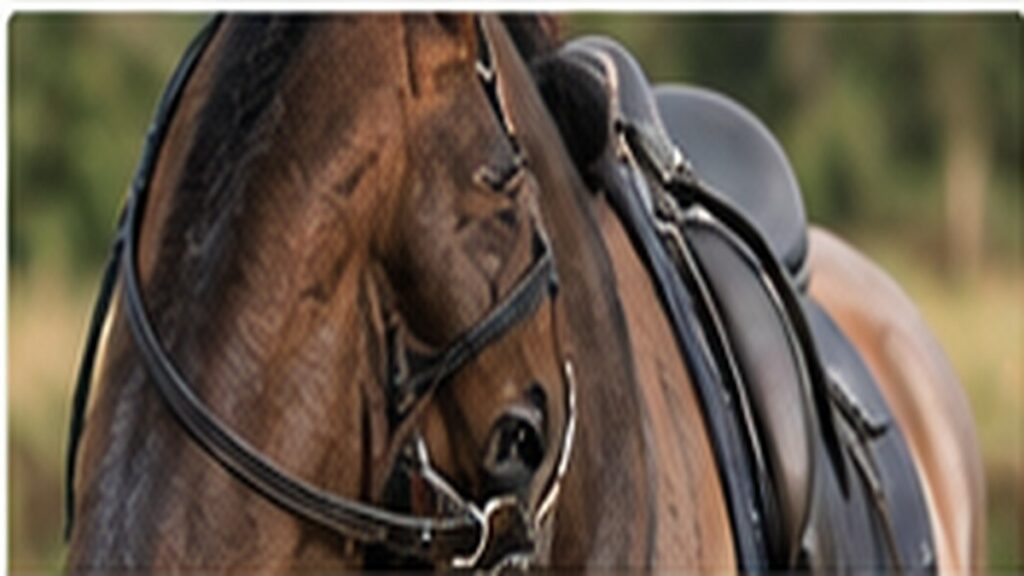
Why waterproof horse equipment is a system, not a single fabric
In equestrian equipment, “waterproof” is often used as though it describes a complete rug, sheet or garment. Technically, it usually describes a material’s resistance to liquid-water penetration under a specified laboratory test. The finished product is more complicated. A turnout rug may contain a woven polyester or nylon outer, a water-repellent finish, a polymer coating or membrane, insulation, a lining, stitched seams, hook-and-loop fasteners, buckles, elastic, gussets and tail or neck components. Water can enter through any weak point.
The practical objective is normally a compromise between several properties:
- resistance to rain, spray and wet vegetation;
- adequate water-vapour transport when the horse produces heat and moisture;
- resistance to tearing, abrasion, flexing and rubbing;
- flexibility and freedom of movement;
- cleanability and retention of performance after washing;
- safe, durable closures and correct fit; and
- reasonable repairability and service life.
A rug can therefore have a highly water-resistant fabric but still allow wetting at a seam, neck opening, damaged surface, failed tape or compressed area. Conversely, a fabric that is vapour-permeable may feel damp inside when the surrounding conditions do not allow moisture to escape quickly enough.
Core terminology
Waterproof, water-resistant and water-repellent
Water-repellent generally describes a surface that causes droplets to bead and run off rather than spread and wet the face. This is commonly produced by a durable water-repellent finish, often abbreviated to DWR. It helps reduce surface wetting, dirt retention and drying time, but it is not normally the primary liquid-water barrier.
Water-resistant is a broad commercial term. It may indicate resistance to light rain or a measurable performance below a manufacturer’s definition of “waterproof”. It has no universal meaning unless the test method and threshold are stated.
Waterproof should be treated as a claim requiring context. A credible specification identifies the test method, the material or finished product tested, the result, and sometimes the condition after laundering or abrasion. ISO 811:2018, for example, specifies a hydrostatic-pressure method for determining a textile’s resistance to water penetration. It applies to fabrics intended to resist water, whether or not they have a water-repellent finish.
Breathability and water-vapour resistance
In outdoor textiles, “breathability” is usually shorthand for the movement of water vapour from the warmer, more humid side of a material to the cooler, drier side. It does not mean that liquid water can pass freely, nor does it guarantee that a horse will remain dry under all conditions.
ISO 11092 expresses water-vapour resistance as Ret, measured using a sweating guarded-hotplate method. A lower water-vapour resistance indicates easier vapour transport under the test conditions. Some manufacturers instead report a water-vapour transmission rate, commonly expressed in grams per square metre per 24 hours. These are not interchangeable numbers without knowing the method, conditioning, specimen construction and reporting convention.
Breathability is strongly affected by the complete assembly. A waterproof outer, membrane, insulation, lining and dirt layer operate in series. A low-resistance membrane may contribute little to comfort if the outer face is saturated, the lining is compressed against the horse, the rug is heavily insulated, or the air outside is already humid and still.
Coatings: a polymer barrier applied to fabric
A coated textile is made by applying a polymer formulation to one side of a fabric, or sometimes to both sides. Common coating polymers include polyurethane (PU), polyvinyl chloride (PVC), silicone-based systems and other specialised elastomers. The coating may be continuous, microporous, foamed, printed or applied as a very thin layer.
A continuous coating forms a relatively unbroken film. It can offer strong resistance to liquid water and wind, but a dense film may also restrict water-vapour transfer. PVC-coated fabrics, for example, can be highly protective and durable in some applications, but the formulation, thickness, flexibility and construction determine the actual result. A PU coating can be engineered for flexibility and, in some formulations, vapour transport. “PU-coated” alone is therefore not a complete performance description.
Microporous coatings contain very small pathways that can assist vapour movement while limiting liquid-water penetration. Their performance depends on pore structure, surface tension, contamination, coating integrity and pressure. They should not be assumed to perform identically to a separate membrane laminate.
Coatings are often attractive to manufacturers because they can be applied directly to a woven or knitted shell, adding relatively little construction complexity. They can also be used as a back coating that is protected by the outer fabric. The disadvantages may include vulnerability to abrasion, hydrolysis, flex cracking, delamination, contamination and degradation from unsuitable washing or storage.
Membranes: a distinct barrier layer
A membrane is a thin functional film or layer incorporated into a textile assembly. It may be bonded to the face fabric, attached to the lining, or sandwiched between outer and inner textiles. Membranes can be microporous or non-porous and hydrophilic.
Microporous membranes
Microporous membranes contain interconnected pores. The pores are designed to be sufficiently small to resist liquid water under specified conditions while allowing water vapour to pass. Expanded polytetrafluoroethylene (ePTFE) is a well-known example in outdoor clothing technology, although other fluoropolymer and non-fluoropolymer systems are used. A microporous membrane is not a simple sieve operating independently of the rest of the product: surface contamination, wetting, pressure and the backing layers all influence performance.
Hydrophilic, non-porous membranes
Hydrophilic membranes do not rely on visible or interconnected pores. Instead, water molecules are transported through hydrophilic regions of the polymer by absorption and diffusion. They can remain windproof and liquid-water resistant while moving vapour, although the rate depends on temperature, humidity gradient, film chemistry and thickness.
In simple terms, microporous systems use pathways through the film, while hydrophilic systems transport moisture through the polymer. Both approaches can work well; the product’s construction and the test evidence matter more than the label alone.
What is a laminate?
A laminate is a composite made by bonding two or more layers. A common two-layer arrangement places a membrane or coating behind the outer textile. A three-layer arrangement bonds the outer fabric, membrane and protective inner layer into one composite. Some products use a two-and-a-half-layer construction in which the membrane receives a printed or sprayed protective pattern rather than a full inner fabric.
Laminate construction can protect a delicate barrier from rubbing, simplify handling and improve dimensional stability. However, every adhesive, backing and seam can affect vapour resistance, flexibility and durability. A three-layer fabric is not automatically superior to a two-layer fabric for a horse rug; weight, flex, abrasion, drape, repairability and cost may be more important in field use.
In a rug, the membrane may be hidden beneath the outer shell or between the shell and lining. Product descriptions sometimes use “laminated”, “membrane”, “barrier fabric” and “coated” loosely. Manufacturers and retailers should specify which layer performs which function rather than presenting these terms as interchangeable technology grades.
Face finishes: useful but frequently misunderstood
A water-repellent face finish encourages rain to run off the outer fabric. This helps prevent the shell from becoming saturated. A saturated face can increase weight, reduce drying speed and impede vapour movement, even if the underlying membrane remains intact.
Loss of beading does not necessarily mean that the waterproof barrier has failed. It may mean that the outer finish has been contaminated or worn while the coating or membrane remains functional. The reverse is also possible: droplets may still bead on a face while a seam, coating or membrane has developed a leak.
Fluorocarbon-based finishes have historically been used for water and oil repellency, but product chemistry and regulatory expectations are changing. “PFC-free” describes a chemical approach to the finish, not a guarantee of greater waterproofness or durability. A non-fluorinated finish may perform well, but the relevant evidence is the measured result on the finished product and after realistic use or care cycles.
How waterproof performance is measured
Hydrostatic-pressure testing
Hydrostatic testing applies increasing water pressure to one side of a specimen until penetration is detected, or measures the pressure reached at a defined endpoint. Results are commonly reported as millimetres of water column or an equivalent pressure. A higher number indicates greater resistance in that test, but it is not a universal prediction of field life.
ISO 811:2018 is an established international method for hydrostatic resistance. AATCC TM127 is another recognised textile test method for water resistance by hydrostatic pressure. Results should not be compared casually when the methods, specimen conditioning, endpoint or reporting units differ.
A stated figure also needs a subject:
- Was the test performed on the fabric supplied by the mill?
- Was it performed on the finished rug, including seams and stitched areas?
- Was the specimen new, washed, abraded or flexed first?
- Were the face, reverse or both sides tested?
- Was the result a minimum, average, nominal or marketing target?
For trade buyers, a fabric certificate can be useful but is not equivalent to finished-product validation. A rug’s seam design, needle holes, thread, tape, hardware and pattern pieces create conditions that a flat fabric test may not represent.
Spray and surface-wetting tests
Spray tests assess how readily water wets or runs off a textile face. They are useful for evaluating a water-repellent finish, but they do not by themselves establish that a fabric is waterproof. A textile can show good spray repellency while allowing water through under pressure, or show reduced beading while retaining an intact waterproof coating.
Water-vapour tests
Water-vapour resistance and transmission tests assess a different property from hydrostatic resistance. ISO 11092 covers thermal and water-vapour resistance under steady-state conditions for textiles, films, coatings and multilayer assemblies. The result is influenced by test temperature, humidity, air movement, specimen thickness and layer arrangement.
Commercial “breathability” figures should therefore be accompanied by the method and unit. A large numerical value is not automatically better than a smaller one if the two values were generated by different methods.
Why laboratory ratings do not equal field performance
Horse equipment is exposed to conditions that are difficult to reproduce in a single fabric test. A horse may lie on wet ground, roll, rub against fencing, push through hedges, sweat under exertion, carry mud under the rug, or wear the same item through repeated wetting and drying. These actions create local pressure, flexing, contamination and abrasion.
Water can also enter from below or through the garment’s geometry. A horse lying down may compress the fabric against wet ground. Rain may run from the neck, mane or tail onto an opening. Wind can drive water beneath a flap. A poorly adjusted chest or surcingle can create folds where water pools. A waterproof panel may be irrelevant if the seam joining it to another panel is unprotected.
Breathability is similarly contextual. Vapour transport requires a gradient. If the outside air is cold and dry, movement may be effective. If it is warm, saturated and windless, the gradient is smaller. A rug can also feel wet inside because of sweat or condensation rather than rain penetration. Distinguishing those causes requires inspection of weather, use, fit, surface condition and the actual construction.
Seams, closures and component design
The weakest part of a waterproof assembly is often not the broad fabric panel. Needle holes, seam allowances, stitch tension, thread swelling, seam tape, welded joins and patch repairs can all affect water entry.
Related industry reference: For businesses moving from technical research into trade sourcing, explore equestrian suppliers and manufacturers on EquiGuild.
Common approaches include:
- sealed seams: a tape or liquid seal is applied over the seam on the water-exposed side;
- welded or bonded seams: panels are joined with heat, pressure or adhesive rather than conventional stitching;
- storm flaps: overlapping fabric shields zips, buckles or openings;
- water-resistant construction: seams are positioned, folded or covered to reduce direct exposure without being fully sealed.
Seam taping adds weight, cost and manufacturing complexity, and poor adhesion can lead to peeling. A taped seam is not necessarily durable if the tape is incompatible with the textile, repeatedly flexed, contaminated or exposed to unsuitable heat.
Closures need to balance security, adjustability and safety. Hook-and-loop fasteners can collect bedding and vegetation; elastic can fatigue; buckles can damage surrounding fabric; and exposed hardware may rub. Waterproofness must not be pursued at the expense of correct fit, freedom of movement or safe release where a component becomes caught.
Durability and common failure modes
Abrasion and flex cracking
A membrane or coating can be damaged by rubbing against the horse, tack, fencing, stable surfaces or itself during washing. Repeated folding can produce flex cracking, particularly in a brittle or aged coating. A heavy outer fabric may improve tear resistance but can still abrade a hidden membrane.
Delamination
Delamination occurs when bonded layers separate. It may appear as bubbling, peeling, a sticky surface, flaking, unusual stiffness or localised leakage. Causes may include ageing, moisture, heat, chemical attack, manufacturing defects or excessive mechanical stress.
Hydrolysis
Some polyurethane systems can undergo hydrolysis, a chemical breakdown associated with moisture, heat and time. The affected coating may become tacky, powdery or crack-like. Storage in a damp, warm environment can accelerate deterioration. This is one reason clean, thoroughly dry storage matters, but the exact resistance depends on the polymer formulation.
Contamination
Mud, grease, sweat, detergent residues and fabric conditioners can alter surface wetting and interfere with vapour transport. Contamination may also conceal small tears and make inspection difficult.
Care, washing and repair
Care instructions are part of the performance specification. BETA guidance for outdoor rugs recommends removing excess dirt, following the manufacturer’s washing instructions, using a cool wash with mild non-biological soap, and drip- or line-drying rather than tumble-drying or dry-cleaning. Individual products may have different requirements, so the care label takes priority.
Harsh detergents, biological products, fabric softeners, bleach, high heat and aggressive brushing may damage face finishes, adhesives, coatings or membranes. Even an appropriate wash can reduce surface repellency over time. Reproofing products should be compatible with the textile and should not block a vapour-permeable construction.
Repairs should be assessed by location and construction. A small outer-shell tear away from a seam may be repairable with a compatible patch. Damage to a membrane, seam tape, binding or load-bearing closure may require specialist repair or replacement. A generic adhesive patch can restore apparent appearance without restoring reliable waterproofness or safe strength.
After washing or repair, inspect the item in good light. Look for pinholes, worn high-contact zones, peeling tape, loose stitching, stretched elastic, damaged buckles, compromised bindings and areas where the lining has become rough. A rug that remains wet internally or has lost structural integrity should not be judged solely by whether its outer surface still beads water.
Selection guidance for horse owners and buyers
For a GB turnout application, begin with the horse, environment and use rather than the headline fabric number.
- Define the exposure. Consider rainfall, wind, shelter, mud, hedges, lying behaviour, turnout duration and whether the horse sweats under the intended conditions.
- Check construction. Ask whether the product uses a coating, membrane or laminate; which side contains it; and whether critical seams are sealed, taped, bonded or simply stitched.
- Ask for test information. A credible supplier should identify the test method and whether the result applies to the fabric or finished article. Treat an unexplained “10,000 mm” or “20,000 mm” as incomplete information.
- Assess fit and movement. A technically excellent fabric cannot compensate for rubbing, exposed gaps, displaced panels or restricted shoulder movement.
- Consider maintenance. Check washing limits, drying requirements, reproofing advice, repair arrangements and warranty terms.
- Inspect after use. Look especially at withers, shoulders, chest, surcingles, tail area, neck joins and any place exposed to rubbing or pressure.
Denier is relevant but limited. It describes yarn linear density, not waterproofness. A 1200-denier shell is not automatically more waterproof, breathable, better fitting or longer-lived than a 600-denier shell. Ripstop construction can help limit tear propagation, but the yarn, weave, coating, membrane, seam and finishing system still determine the complete result.
Welfare and operational context in GB
Waterproof performance is a welfare issue only as part of the wider management decision. The GB Code of Practice for the Welfare of Horses, Ponies, Donkeys and their Hybrids notes that not all horses need rugs and that some hardy horses may become too hot. It also advises having more than one rug available so wet rugs can be removed and dried, and removing turnout rugs when weather, particularly temperature, improves.
The practical implication is that a rug should not be treated as a permanent substitute for shelter, observation, appropriate nutrition, coat management or sensible turnout decisions. GOV.UK guidance places responsibility on the person caring for the horse to provide a suitable environment and protect welfare. Commercial yards should also maintain inspection and care systems appropriate to the horses and equipment in their care.
For businesses, records can be valuable: product specification, purchase date, washing history, repairs, inspections and recurring failure locations. Patterns may reveal a design or supply-chain issue that a single consumer complaint would not identify.
Common misconceptions
- “Breathable means it cannot get wet inside.” Vapour transport does not prevent sweat, condensation or liquid leakage under pressure.
- “A DWR finish is the waterproof layer.” It usually improves surface wetting behaviour; it is not necessarily the main water barrier.
- “A membrane is always better than a coating.” Both can be effective. Durability and suitability depend on formulation and construction.
- “The highest waterproof rating is always the best buy.” Fit, seams, abrasion resistance, care and finished-product testing may matter more.
- “If droplets bead, the rug is waterproof.” Beading is a surface observation, not a complete hydrostatic or seam assessment.
- “Denier tells you everything.” Denier describes yarn size, not the complete performance of the textile assembly.
- “Any waterproof repair tape is suitable.” Adhesive compatibility, flexibility, surface preparation and load location matter.
Quality indicators for manufacturers and trade professionals
Strong technical documentation should distinguish fabric properties from finished-product properties. Useful information includes the fibre and yarn specification, construction type, coating or membrane chemistry at an appropriate level, seam treatment, test methods, results before and after care or abrasion where relevant, restricted substances information, care instructions, repair policy and warranty scope.
Sampling should include production garments or rugs rather than relying only on roll-goods testing. Quality control can combine visual inspection, seam checks, dimensional checks, hydrostatic testing, water-vapour testing and controlled laundering. Testing should reflect the intended product category and be interpreted alongside field returns and failure analysis.
Claims should be precise. “Waterproof and breathable” is more useful when accompanied by “tested to [method], result [unit], specimen [description]”. It is also responsible to state what is not covered: for example, whether the rating excludes seams, damage, ageing or laundering.
Conclusion
Laminates, membranes and coatings are different ways of engineering a barrier within a flexible textile system. Coatings are applied films; membranes are functional barrier layers; laminates are bonded combinations of layers. None should be considered in isolation from the outer fabric, face finish, lining, seams, closures, fit, maintenance and service environment.
For horse equipment, the most meaningful question is not simply “What waterproof rating does it have?” It is “How was the complete product constructed, tested, cared for and designed to behave under the pressure, movement, contamination and weather that this horse will encounter?” That approach produces more reliable purchasing decisions and more honest technical communication.
Sources and further reading
- ISO 811:2018 — Textiles: Determination of resistance to water penetration: Hydrostatic pressure test.
- ISO 11092:2026 — Textiles: Measurement of thermal and water-vapour resistance under steady-state conditions.
- AATCC — Standard Test Methods, including TM127 Water Resistance: Hydrostatic Pressure.
- British Equestrian Trade Association — Guide to Purchasing Your Outdoor Rug.
- GOV.UK / DEFRA — Code of Practice for the Welfare of Horses, Ponies, Donkeys and Their Hybrids.
- GOV.UK — Keeping horses: Looking after horses.
- W. L. Gore & Associates — Technical and responsibility information on GORE-TEX product technologies.
Research note
Automatically researched source pack — editorial review required:
• www.iso.org — https://www.iso.org/standard/65149.html
• www.aatcc.org — https://www.aatcc.org/testing/standards
• committee.iso.org — https://committee.iso.org/committee/48198/x/catalogue/
• equestrianresearchatlas.co.uk — https://equestrianresearchatlas.co.uk/research/technical-textiles-used-in-horse-equipment/
• equestrianresearchatlas.co.uk — https://equestrianresearchatlas.co.uk/research/turnout-rug-waterproofing-and-breathability/
• www.aatcc.org — https://www.aatcc.org/news-read/insights/let-it-rain-high-tech-tent-textiles-for-festival-goers-and-glampers
• www.aatcc.org — https://www.aatcc.org/wp-content/uploads/2025/01/AATCC_Quality-Control-Catalog__2025_Final_Digital.pdf
• equestrianresearchatlas.co.uk — https://equestrianresearchatlas.co.uk/research/horse-rug-denier-explained/
• www.premierequine.co.uk — https://www.premierequine.co.uk/blogs/news/horse-rug-waterproof-ratings-explained
• www.iso.org — https://www.iso.org/obp/ui?_escaped_fragment_=iso%3Astd%3Aiso%3A11610%3Aed-1%3Av1%3Aen
• www.aatcc.org — https://www.aatcc.org/about/history
• www.viovet.co.uk — https://www.viovet.co.uk/Premier-Equine-Buster-Hardy-100g-Half-Neck-Turnout-Rug-Black/c183156/
• www.iso.org — https://www.iso.org/fr/standard/65149.html
• beta-uk.org — https://beta-uk.org/wp-content/uploads/2024/11/35174-BETA-Outdoor-Rug-Leaflet_17782-BETA-rug-leaflet-3-reduced-size.pdf
• equirex.pl — https://equirex.pl/public/assets/katalogi%20PDF/aw15-rugs-en.pdf
• e-space.mmu.ac.uk — https://e-space.mmu.ac.uk/626259/2/Masters%20by%20Research%20Thesis%20by%20Tanya%20Perkins%202019%20%281%29.pdf
• www.ipo.gov.uk — https://www.ipo.gov.uk/t-tmj/tm-journals/2024-051/jnl.pdf
• crespovet.com — https://crespovet.com/docs/Equine-Surfaces-White-Paper.pdf
• en.wikipedia.org — https://en.wikipedia.org/wiki/Rug_%28animal_covering%29
• www.horseandhound.co.uk — https://www.horseandhound.co.uk//buyers-guides/best-rain-sheets-for-horses-778941
Cite this article
Stable research ID: ERA-2026-000425
The Equestrian Research Atlas (2026) ‘Laminates, Membranes and Coatings in Waterproof Horse Equipment’. The Equestrian Research Atlas. Available at: https://equestrianresearchatlas.co.uk/research/laminates-membranes-and-coatings-in-waterproof-horse-equipment/ (Accessed: 3 November 2026).
The Equestrian Research Atlas. (2026). Laminates, Membranes and Coatings in Waterproof Horse Equipment. The Equestrian Research Atlas. https://equestrianresearchatlas.co.uk/research/laminates-membranes-and-coatings-in-waterproof-horse-equipment/
The Equestrian Research Atlas. “Laminates, Membranes and Coatings in Waterproof Horse Equipment.” The Equestrian Research Atlas, 2026, https://equestrianresearchatlas.co.uk/research/laminates-membranes-and-coatings-in-waterproof-horse-equipment/. Accessed 3 November 2026.
Research references (42)
- www.iso.org
- www.aatcc.org
- committee.iso.org
- equestrianresearchatlas.co.uk
- equestrianresearchatlas.co.uk
- www.aatcc.org
- www.aatcc.org
- equestrianresearchatlas.co.uk
- www.premierequine.co.uk
- www.iso.org
- www.aatcc.org
- www.viovet.co.uk
- www.iso.org
- beta-uk.org
- equirex.pl
- e-space.mmu.ac.uk
- www.ipo.gov.uk
- crespovet.com
- en.wikipedia.org
- www.horseandhound.co.uk
- en.wikipedia.org
- en.wikipedia.org
- en.wikipedia.org
- arxiv.org
- en.wikipedia.org
- en.wikipedia.org
- assets.publishing.service.gov.uk
- www.gov.uk
- www.iso.org
- www.iso.org
- www.gov.uk
- www.gov.uk
- www.gov.uk
- www.gov.uk
- www.bromley.gov.uk
- www.iso.org
- www.gov.uk
- www.gov.uk
- www.stockton.gov.uk
- www.rugby.gov.uk
Related research
 Foams and Padding Materials in TackContinue research →
 Technical Textiles Used in Horse EquipmentContinue research →Stainless Steel Hardware in Equestrian ProductsContinue research →Polyester and Nylon Webbing ComparedContinue research →BioThane as an Equestrian MaterialContinue research →Vegetable Tanned vs Chrome Tanned LeatherContinue research →