
Research snapshot
Key areas covered
- What a horse rug wholesaler supplies
- GB wholesale routes and supplier types
- Established branded suppliers
- Specialist equestrian distributors
- Direct manufacturers and factories
- Private-label and white-label programmes
Referenced source footprint (11)
- GOV.UK: Textile labelling — www.gov.uk
- The Textile Products (Labelling and Fibre Composition) Regulations 2012 — www.legislation.gov.uk
- GOV.UK: Environmental claims in fashion retail — www.gov.uk
- WeatherBeeta: Official Wholesale Portal — b2b.weatherbeeta.co.uk
- WeatherBeeta: Horse rug materials, testing and range information — www.weatherbeeta.co.uk
- Horseware Ireland: Horse product technology and innovation — www.horseware.com
- Bucas: Freedom range technical information — bucas.com
- Horze: Example product specification and measurement guidance — www.horze.co.uk
- Plus 3 more source links within the article.
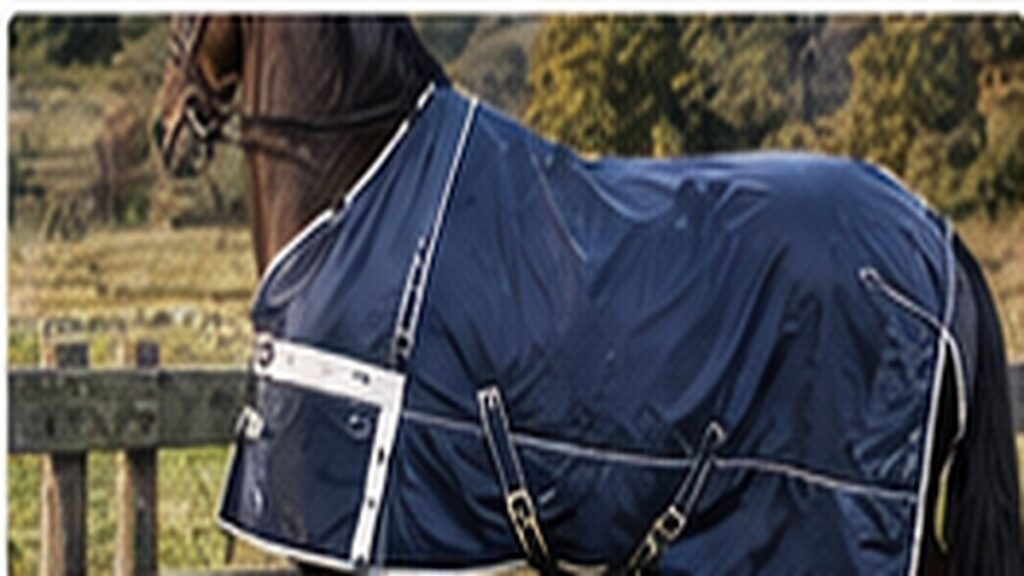
Horse rug wholesalers sit between manufacturers and the businesses that sell, fit, launder or use horsewear. In Great Britain, the market includes specialist equestrian distributors, brand-owned trade portals, manufacturers supplying retailers directly, importers, private-label factories and general saddlery wholesalers. These channels can look similar from a catalogue, but they differ materially in stock ownership, technical support, minimum order quantities, exclusivity, warranty responsibility and the quality of information supplied with each product.
For a tack shop, online retailer, riding school, livery yard or emerging equestrian brand, the best supplier is not automatically the one offering the lowest unit price. Horse rugs are fit-sensitive, seasonal, relatively bulky to store and exposed to demanding use. A poor specification can create returns, warranty claims and reputational damage even when the purchase price appears attractive. Supplier selection should therefore combine commercial assessment with textile, construction and product-information checks.
Technical specifications are easier to interpret when viewed against real products. For a practical cross-check of weights, neck styles and seasonal options, see the JSM Equestrian Supplies horse rugs range.
What a horse rug wholesaler supplies
A wholesaler normally buys or represents products in volume and resells them to trade customers rather than primarily to individual horse owners. The range may include turnout rugs, stable rugs, sheets, fly rugs, coolers, exercise rugs, travel rugs, liners, neck covers and replacement accessories. Some suppliers carry several brands; others are the exclusive or appointed distributor for one manufacturer. A brand’s own business-to-business portal is another common route. WeatherBeeta, for example, operates an official wholesale portal with account application and trade onboarding information.
The distinction between a wholesaler, distributor and manufacturer is useful:
- Manufacturer: makes the finished rug, or controls its production, specifications and quality system. Manufacturing may take place in the manufacturer’s own facility or through contracted factories.
- Brand owner: owns the design, branding and product documentation. It may not physically manufacture every component.
- Distributor: imports or represents one or more brands and manages territory, stock and trade accounts.
- Wholesaler: sells trade quantities, often from held stock, and may offer a broader but less exclusive catalogue.
- Private-label supplier: produces goods carrying the buyer’s brand. This may involve an existing pattern with revised colours and labels, or a genuinely developed specification.
These categories overlap. A retailer should ask who actually controls the pattern, fabric specification, testing records, warranty decision and replacement-stock policy. The name on the invoice may not be the party best placed to answer technical questions.
GB wholesale routes and supplier types
Established branded suppliers
Established brands generally offer a defined size system, seasonal catalogues, product photography, care instructions and a recognisable warranty process. Their strengths are consistency, consumer demand and documented product architecture. Their limitations can include higher opening orders, less flexibility over colour or branding, and competition with the brand’s own direct-to-consumer website.
WeatherBeeta’s trade portal illustrates the type of information a serious account application may request: business activity, premises, current equestrian investment, existing suppliers, intended product categories and estimated purchases. That level of qualification is not necessarily a barrier; it indicates that the supplier is managing a structured trade channel rather than simply accepting anonymous bulk orders.
Specialist equestrian distributors
Distributors can be useful where a retailer wants several complementary brands or a consolidated order. They may provide sales representatives, point-of-sale material, regional knowledge and mixed-brand logistics. Check, however, whether the distributor holds UK stock or simply forwards orders. UK-held stock can shorten replenishment times and simplify returns; direct import may offer better pricing but introduces customs, currency, lead-time and documentation risks.
Direct manufacturers and factories
Direct sourcing can make sense for larger retailers or brands with enough volume to specify construction, packaging and inspection requirements. It can also create more responsibility. The buyer may need to approve pre-production samples, verify fibre and component information, arrange independent testing, manage shipping and maintain traceability. A factory’s ability to sew a sample is not evidence that it can maintain consistent production at scale.
Private-label and white-label programmes
White-label usually means an existing product sold under another name with limited changes. Private label may include a buyer-owned label, selected colours, packaging, logo application and sometimes altered materials or fit. The commercial distinction matters because changing the outer fabric, coating, fill, fastenings or pattern can change performance and should trigger renewed sample approval and quality checks.
Do not describe a product as “custom” merely because a logo has been added. A genuinely controlled private-label programme should define the approved specification, tolerances, packaging, labelling, inspection method, defect classification, delivery terms and ownership of patterns and artwork.
Understanding rug construction
A rug is a system rather than a single fabric. Typical elements include an outer shell, waterproof or water-resistant treatment, membrane or coating, lining, insulation, seam construction, fastenings, elastic or webbing, reinforcement patches and fitting features. Performance in the field depends on how these elements work together.
Related industry reference: For businesses moving from technical research into trade sourcing, explore horse-rug and textile suppliers on EquiGuild.
Outer fabrics and denier
Polyester and nylon are common synthetic fibres. They can be woven in plain, Oxford, ripstop, diamond or other structures, then coated or laminated. Nylon is often selected for high strength relative to weight, while polyester may offer useful dimensional stability, colour performance and cost advantages. Neither fibre name alone proves that a rug is superior.
Denier describes the linear mass of the yarn or filament and is commonly used in rug marketing as a rough indication of outer-fabric substance. It is not a complete durability rating. A 1200D fabric may differ substantially from another 1200D fabric in polymer, yarn construction, weave, coating, abrasion resistance and tear strength. A lower-denier ripstop can be more practical than a heavier plain weave in a particular application, while a high-denier outer can add weight and drying time.
Ask suppliers to distinguish marketing denier from test data. Useful technical information may include tear strength, tensile strength, abrasion performance, coating adhesion, hydrostatic-head result, seam performance and colourfastness. Test methods and laboratory conditions should be identified; a number without a method is difficult to compare.
Ripstop, reinforcements and seams
Ripstop construction introduces stronger yarns at intervals to help limit the spread of a tear. It does not make fabric puncture-proof. Reinforcement is particularly relevant at the chest, withers, surcingles, leg-strap points and areas that contact fencing or another horse’s teeth. The reinforcement must be joined without creating uncomfortable ridges or leakage paths.
Seams can be stitched, bound, taped or sealed through combinations of these methods. A waterproof shell can still leak through needle holes, poorly finished seam allowances, damaged tape or water entry around fastenings. During sample inspection, turn the rug inside out and examine seam consistency, skipped stitches, loose threads, uneven binding and abrupt stress points.
Linings and insulation
Linings may be polyester, cotton blends, fleece, smooth synthetic fabric or specialist moisture-managing textiles. Their practical functions include reducing friction, allowing the rug to slide over the coat, managing moisture and protecting insulation or membrane layers.
Fill is generally expressed in grams per square metre, such as 0g, 50g, 100g, 200g or 300g. It describes the mass of insulating fill, not a guaranteed temperature range. The appropriate level depends on the horse’s coat, body condition, clipping, age, workload, shelter, wind exposure, rainfall and individual heat production. A supplier that presents fill weight as a universal weather prescription is oversimplifying the product.
Waterproofness and breathability
“Waterproof” normally refers to resistance to liquid water passing from the outside through the fabric system. “Breathability” refers to the movement of water vapour away from the horse. These are related but different properties. A rug can resist rain effectively yet allow limited vapour transfer, particularly if the horse is working, the air is humid, the outer becomes saturated or the garment is dirty.
Manufacturers use different technical measures. Hydrostatic head is commonly expressed in millimetres and indicates the pressure of water a material withstands in a specified test. Moisture-vapour transmission may be expressed in grams per square metre over 24 hours. Horseware publishes figures of more than 3000mm waterproofness and 3000g/m² breathability for its stated rug technology, while Bucas publishes a hydrostatic-head figure above 5000mm and breathability above 3000g/24h/m² for the Freedom range. These figures should not be treated as a universal league table because test methods, sample preparation and finished-product construction may differ.
Ask whether the claim applies to the fabric, a laboratory swatch or the complete finished rug. A fabric can test well while the finished product performs less well because of seams, needle holes, damaged coating, pressure from straps, contamination or wear. WeatherBeeta describes field testing in varied climates, which is useful evidence of development practice, but it is still different from an independently comparable laboratory test.
Water repellency is also not identical to waterproofness. A durable water-repellent finish may help droplets bead and run off the surface, but it can deteriorate through abrasion, washing and contamination. If the supplier claims long-term performance, request care instructions and any reproofing guidance. Never assume that a rug can be restored by applying an unspecified household product.
Fit, pattern and horse welfare
Fit is one of the most important quality indicators. A technically advanced fabric cannot compensate for a pattern that restricts the shoulder, shifts backwards, presses on the withers, exposes the hindquarters or allows the rug to twist. The same nominal size can fit differently between brands because measuring conventions, shoulder shape, depth and neck design vary.
Trade buyers should obtain a measurement chart that clearly states whether measurements refer to the horse or the finished rug. A useful chart should identify the measuring points and explain how to compare centimetres, feet and inches. Horze’s published guidance, for example, distinguishes horse-body measurements from actual rug measurements and gives chest-to-rump and withers-to-tail approaches.
Important construction questions include:
- Does the front closure suit narrow, average or broad chests?
- Is there enough shoulder expansion for walking, grazing and rolling?
- Does the gusset open in a useful direction or pull against the chest?
- Is the neck line appropriate for the horse’s wither and neck shape?
- Are surcingles adjustable enough to secure the rug without excessive pressure?
- Are leg straps replaceable and correctly positioned?
- Does the tail flap protect without catching or dragging the rug backwards?
- Are detachable neck covers and liners genuinely compatible across the stated range?
Sample fitting should be performed on representative horses where possible, not only on a mannequin. Record observations for narrow, broad, high-withered, round and cob-type horses. A retailer that sells several brands should not imply that one size conversion works across the whole catalogue.
How to assess a wholesale supplier
Commercial questions
- What is the opening order and minimum reorder value?
- Are prices quoted net of VAT, and what delivery charges apply?
- Which lines are core stock and which are seasonal or limited?
- What is the normal replenishment lead time for popular sizes?
- How are back orders, discontinued colours and end-of-line goods handled?
- Does the supplier hold UK stock or ship from overseas?
- What credit, payment and account-review terms apply?
- Is territory or online-channel exclusivity available, and is it contractual?
Technical and quality questions
- What are the shell, lining and fill materials?
- What does the denier figure describe?
- Is the product coated, laminated or membrane-based?
- Are waterproofness and breathability claims supported by named test methods?
- Are seams taped or otherwise sealed, and which areas are not?
- What tolerances apply to size, fill weight and component placement?
- How are production batches identified?
- Can the supplier provide pre-production and post-production samples?
- Which components are replaceable, such as buckles, straps and liners?
Returns, warranty and after-sales
A trade account should define who handles a leaking rug, failed fastening, colour problem, incorrect size label or suspected manufacturing fault. Ask whether the supplier requires photographs, batch numbers, inspection of the physical product or a return sample. Warranty wording should identify exclusions for misuse, chewing, abrasion, unsuitable washing, normal wear and accidental damage. A warranty is not a substitute for a realistic repair and replacement process.
For professional yards, repairability can be commercially important. A replacement buckle or leg strap may keep a serviceable rug in use and reduce waste, whereas a disposable approach can increase lifetime cost. Suppliers should state whether parts are available and whether repairs are supported directly or through approved repairers.
GB compliance and product information
Textile products placed on the GB market are subject to fibre-composition labelling requirements. GOV.UK guidance states that labels must show fibre content, including relevant non-textile parts of animal origin, and that manufacturers and retailers share responsibility for accurate information. The Textile Products (Labelling and Fibre Composition) Regulations 2012 provide the UK legal framework and enforcement powers.
For horse rugs, the practical implication is that a supplier should provide accurate composition information for the relevant textile components, using permitted fibre names and percentages where required. Do not rely on catalogue shorthand such as “technical fabric”, “silk feel” or “eco material” as a substitute for composition.
Environmental claims need separate care. Claims such as “recycled”, “organic”, “sustainable” or “eco-friendly” should be specific, proportionate and supported by evidence. The UK government’s consumer-law guidance recommends identifying the relevant fibre and percentage rather than using an ambiguous overall impression. Ask for certificates, chain-of-custody evidence or appropriate testing where a claim depends on recycled or otherwise characterised fibre content.
Other product-information responsibilities may include safe-use instructions, washing and drying directions, warnings about detachable parts, packaging information, importer details and traceability. The exact legal position can depend on the product and business model, so a supplier should not be treated as a substitute for the buyer’s own compliance review.
Stock planning for the GB market
Horse rugs are seasonal but not purely seasonal. Turnouts, lightweight sheets, fly rugs and coolers may move in spring and summer; waterproof turnouts, liners and stable rugs typically become more important from autumn into winter. Weather variability, regional differences and late cold snaps make a narrow seasonal buy risky.
A balanced range usually combines:
- Core sizes with reliable replenishment.
- At least one dependable turnout construction in several fill weights.
- Lightweight, stable and fly options rather than only heavy winter products.
- Compatible liners or neck covers where the system is commercially coherent.
- Shapes for different horse types, not just a single “standard” pattern.
- Repairable accessories and replacement components.
Analyse sales by size, fit, weight, colour and return reason, not only total units. A rug that sells quickly but generates high fit-related returns may be less profitable than a slower line with better customer satisfaction. Online retailers should publish brand-specific measurement guidance and avoid presenting every manufacturer’s size as interchangeable.
Common misconceptions
Higher denier always means better
Higher denier may indicate a heavier or more substantial yarn, but durability depends on fibre, weave, coating, seams, reinforcement and use. It can also add weight and reduce drying convenience.
More fill is always kinder in cold weather
Insulation is not automatically beneficial in every condition. Excess warmth, a wet coat, poor fit or inadequate ventilation can compromise comfort. Fill should be considered alongside the individual horse and environment, not sold as a universal temperature chart.
Waterproof and breathable means the rug cannot become wet inside
Moisture may come from sweat, condensation, rain entering at openings, a saturated outer, damaged seams or incorrect care. Breathability is a rate of vapour transfer, not a guarantee of dryness under every condition.
A familiar logo proves quality
Brand recognition can indicate established demand and support, but each model still needs its own specification. Product ranges change, factories change and a budget line may not share the construction of a premium line.
Private label is simply cheaper branded stock
It can be cheaper at volume, but the buyer assumes more responsibility for specification control, labelling, claims, quality inspection and customer support. The apparent margin should be assessed against development, freight, storage, defects and returns.
A practical supplier due-diligence checklist
- Define the customer and use case: field turnout, stable, travel, fly protection, exercise or layering.
- Request a complete specification sheet, not only a sales catalogue.
- Confirm shell, lining, fill, construction, size convention and compatibility information.
- Ask how waterproofness and breathability claims were measured.
- Order or inspect samples from more than one batch if possible.
- Fit samples to representative horses and record pressure, rubbing and movement issues.
- Review labels, care instructions, claims and importer or manufacturer details.
- Agree defect definitions, inspection windows, warranty routes and replacement-part availability.
- Model landed cost, storage, markdown exposure, returns and seasonal replenishment.
- Start with a controlled order and review sales and warranty data before expanding.
The strongest horse rug suppliers combine dependable stock with transparent technical information and realistic after-sales support. For GB trade buyers, a good decision is therefore a specification-and-service decision, not merely a price comparison. Fit, construction, care, traceability and replenishment should be assessed together because weakness in any one of them can undermine the commercial value of the whole range.
Sources and further reading
- GOV.UK: Textile labelling — UK guidance on fibre content and responsibilities.
- The Textile Products (Labelling and Fibre Composition) Regulations 2012.
- GOV.UK: Environmental claims in fashion retail.
- WeatherBeeta: Official Wholesale Portal.
- WeatherBeeta: Horse rug materials, testing and range information.
- Horseware Ireland: Horse product technology and innovation.
- Bucas: Freedom range technical information.
- Horze: Example product specification and measurement guidance.
- Premier Equine: Rug technology.
- British Equestrian Trade Association.
Research note
Automatically researched source pack — editorial review required:
• www.gov.uk — https://www.gov.uk/guidance/textile-labelling
• www.legislation.gov.uk — https://www.legislation.gov.uk/uksi/2012/1102/pdfs/uksiod_20121102_en.pdf
• www.gov.uk — https://www.gov.uk/government/publications/complying-with-consumer-law-when-making-environmental-claims-in-the-fashion-retail-sector/complying-with-consumer-law-when-making-environmental-claims-in-the-fashion-retail-sector
• www.horseware.com — https://www.horseware.com/en-gb/technology-innovation
• equiguild.co.uk — https://equiguild.co.uk/equestrian-suppliers/horse-rugs-horsewear/horse-rug-wholesalers/
• www.britishequestrian.org.uk — https://www.britishequestrian.org.uk/team/team-suppliers
• www.premierequine.co.uk — https://www.premierequine.co.uk/pages/lookbook-rug-technology
• horze.co.uk — https://horze.co.uk/products/glasgow-turnout-rug-100g-choclate-plum?color=DB
• bucas.com — https://bucas.com/c/freedom-range/
• weatherbeeta-uk.zendesk.com — https://weatherbeeta-uk.zendesk.com/hc/en-gb/articles/8413899688093-Waterproof-and-Fault-Guide
• convixion.es — https://convixion.es/en/convixion-textile/
• www.weatherbeeta.co.uk — https://www.weatherbeeta.co.uk/essential-rug-landing-page
• beta-uk.org — https://beta-uk.org/?show=1
• www.britishequestrian.org.uk — https://www.britishequestrian.org.uk/assets/Annual%20report/BritishEquestian_AnnualReport2024_FINAL.pdf
• assets.publishing.service.gov.uk — https://assets.publishing.service.gov.uk/government/uploads/system/uploads/attachment_data/file/949146/withdrawn-textile-labelling-regulations-guidance.pdf
• www.ipo.gov.uk — https://www.ipo.gov.uk/t-challenge-decision-results/o114824.pdf
• www.agrihealth.ie — https://www.agrihealth.ie/wp-content/uploads/2019/01/2019MackeyUK.pdf
• www.ipo.gov.uk — https://www.ipo.gov.uk/t-challenge-decision-results/o06916.pdf
• en.wikipedia.org — https://en.wikipedia.org/wiki/British_Equestrian_Trade_Association
• en.wikipedia.org — https://en.wikipedia.org/wiki/British_Equestrian
Cite this article
Stable research ID: ERA-2026-000401
The Equestrian Research Atlas (2026) ‘Horse Rug Wholesalers Suppliers’. The Equestrian Research Atlas. Available at: https://equestrianresearchatlas.co.uk/research/horse-rug-wholesalers-suppliers/ (Accessed: 3 November 2026).
The Equestrian Research Atlas. (2026). Horse Rug Wholesalers Suppliers. The Equestrian Research Atlas. https://equestrianresearchatlas.co.uk/research/horse-rug-wholesalers-suppliers/
The Equestrian Research Atlas. “Horse Rug Wholesalers Suppliers.” The Equestrian Research Atlas, 2026, https://equestrianresearchatlas.co.uk/research/horse-rug-wholesalers-suppliers/. Accessed 3 November 2026.
Research references (39)
- www.gov.uk
- www.legislation.gov.uk
- www.gov.uk
- www.horseware.com
- equiguild.co.uk
- www.britishequestrian.org.uk
- www.premierequine.co.uk
- horze.co.uk
- bucas.com
- weatherbeeta-uk.zendesk.com
- convixion.es
- www.weatherbeeta.co.uk
- beta-uk.org
- www.britishequestrian.org.uk
- assets.publishing.service.gov.uk
- www.ipo.gov.uk
- www.agrihealth.ie
- www.ipo.gov.uk
- en.wikipedia.org
- en.wikipedia.org
- en.wikipedia.org
- www.reddit.com
- www.reddit.com
- en.wikipedia.org
- www.reddit.com
- en.wikipedia.org
- www.premierequine.co.uk
- www.premierequine.co.uk
- b2b.weatherbeeta.co.uk
- b2b.weatherbeeta.co.uk
- www.weatherbeeta.co.uk
- www.premierequine.co.uk
- www.weatherbeeta.co.uk
- www.premierequine.co.uk
- www.premierequine.co.uk
- www.horseware.com
- www.weatherbeeta.co.uk
- www.horseware.com
- upload.horseware.com
Related research
 Horse Rug Seam Construction, Stress Points and Failure ModesContinue research →How Horse Rug Liners WorkContinue research →Horse Rug Sizing and FitContinue research →Detachable Neck vs Combo Turnout RugsContinue research →Horse Rug Fill Weights ExplainedContinue research →Turnout Rug Waterproofing and BreathabilityContinue research →