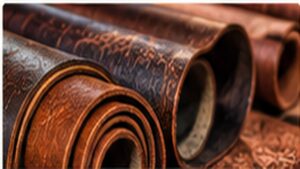
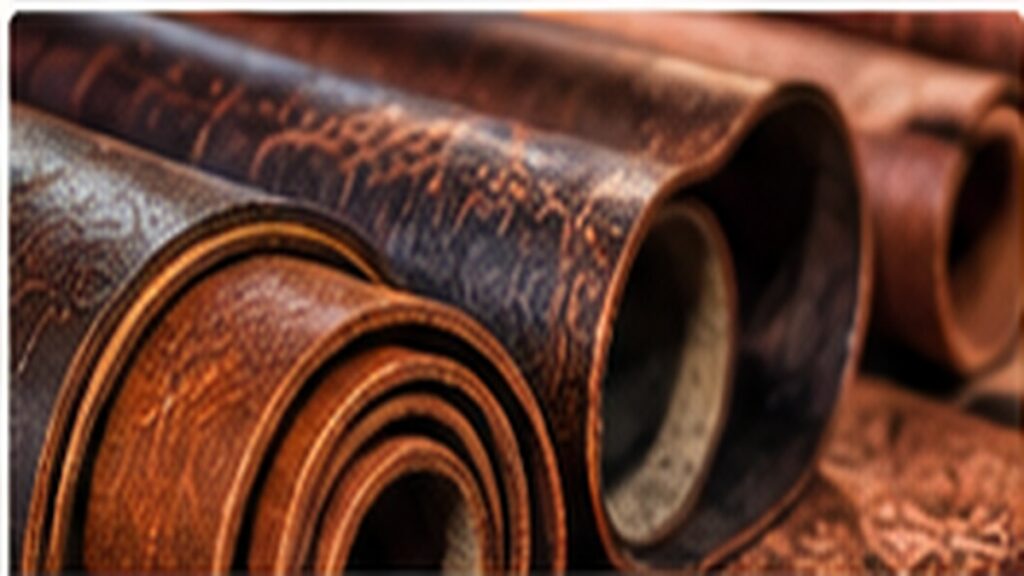
In equestrian equipment, the choice between vegetable-tanned and chrome-tanned leather is often presented as a simple contest: vegetable tannage is described as natural, durable and traditional, while chrome tannage is described as fast, flexible and industrial. Both descriptions contain some truth, but neither is sufficient for purchasing, manufacturing or maintenance decisions.
Tannage is only one part of a leather’s identity. Animal species, hide selection, fibre density, location within the hide, thickness, splitting, temper, retanning, fatliquoring, dyeing, finishing, stitching and hardware all affect performance. A well-made chrome-tanned leather may be more appropriate for a soft, flexible rein or padded lining than a poorly selected vegetable-tanned leather. Conversely, a properly specified vegetable-tanned butt may be the better material for a rigid strap, traditional bridle component or harness part that must hold its shape.
For equestrian use, the most useful question is not “Which tannage is best?” but “Which combination of tannage, construction and finish is appropriate for the load, movement, moisture exposure, contact surface and service life required?”
Where the research concerns stable warmth, clipped horses or post-exercise drying, it is helpful to distinguish insulating stable rugs from moisture-wicking coolers. JSM provides examples across its fleece and cooler rug collection for further comparison.
What tanning does
Raw hide and skin are largely composed of collagen fibres. In its untreated state, collagen is vulnerable to putrefaction, swelling, shrinkage and structural breakdown when exposed to water, heat and microorganisms. Tanning stabilises the collagen network by allowing tanning agents to interact with the fibre structure. The result is a durable material that can be dried, softened, dyed and finished without reverting to raw hide.
Commercial leather production normally involves much more than the tanning step. Hides may be preserved, soaked, limed, unhaired, fleshed, delimed, bated, pickled, tanned, sammed, split, shaved, neutralised, retanned, dyed, fatliquored, dried, softened and finished. Consequently, the words “vegetable-tanned” and “chrome-tanned” identify the principal tanning system, not every chemical or mechanical treatment used in manufacture.
The Leather Working Group’s terminology, aligned with international definitions, describes chrome-tanned leather as hide or skin converted into leather using chromium salts, either alone or with a small amount of another tanning agent that does not change its essential chrome-tanned character. Vegetable tannage uses plant-derived tannins, commonly extracted from materials such as mimosa, quebracho, chestnut or tara. Modern leather may also be aldehyde-tanned, synthetically tanned, metal-free tanned, chrome-free tanned or produced using combinations of systems.
Vegetable-tanned leather
Vegetable tanning uses polyphenolic compounds known as tannins. These are extracted from plant materials and bind to collagen. The process is usually slower than chrome tanning and may involve pits, drums or a combination of methods. Traditional pit tanning can take weeks or months, although modern vegetable tannage can be considerably faster.
Vegetable tanning does not produce one uniform type of leather. The result depends on the tannin sources, concentration, liquor movement, temperature, pH, duration, hide type and subsequent finishing. A firm, dense oak- or bark-tanned harness leather is materially different from a soft vegetable-retanned upholstery or bag leather, even though both may be described as vegetable tanned.
Typical characteristics
- Firmness and body: vegetable-tanned leather is often available in firm, boardy or mouldable grades, which can be useful where a strap must retain shape.
- Surface development: many vegetable-tanned leathers show visible grain variation and may darken or develop a patina with handling, light, oils and abrasion.
- Tooling and moulding: suitable unfinished vegetable-tanned leather can accept stamping, carving, creasing and moulding more readily than many soft chrome-tanned leathers.
- Edge behaviour: dense vegetable-tanned leather can produce clean, burnishable edges, although the result depends on fibre density, splitting and finishing.
- Water sensitivity: untreated or lightly finished vegetable-tanned leather can absorb water readily and may darken, swell, stain or change shape when repeatedly wetted and dried.
- Break-in: a firm grade may initially feel stiff and require controlled use before reaching its intended flex and handle.
These are tendencies rather than universal rules. Vegetable-tanned leather can be soft, heavily oiled, embossed, pigmented or laminated. It is therefore unsafe to identify tannage solely by colour, stiffness or smell.
Why it is used in saddlery and harness
Traditional English bridle leather, harness leather, some reins, breastplates, martingales and other strap goods may use vegetable-tanned or vegetable-retanned material because the tannage can provide body, predictable edge behaviour and a surface that responds well to finishing. Dense vegetable-tanned leather is also valued in components where controlled shape and a polished appearance matter.
However, load-bearing suitability depends on more than tannage. A strap’s strength is influenced by the quality and orientation of the hide’s fibre network, its position in the butt or shoulder, thickness, skiving, holes, stitching, edge damage and hardware geometry. A thick leather with poor fibre structure or an incorrectly placed buckle hole can be less reliable than a thinner, better-selected component.
Chrome-tanned leather
Chrome tanning uses chromium salts, normally trivalent chromium compounds, to stabilise collagen. Basic chromium sulphate is widely used in conventional chrome tanning. The process is comparatively rapid and can produce leather with a broad range of softness, stretch, fullness and finish.
Chrome tanning became dominant in many sectors because it offers efficient processing and useful technical performance. Chrome-tanned leather can be soft, supple, lightweight and resistant to heat-related shrinkage. Its versatility makes it common in footwear, garments, upholstery, automotive trim, gloves, bags and many equestrian components.
Typical characteristics
- Softness and flexibility: chrome-tanned leather can be engineered for a supple handle and repeated flexing.
- Efficient production: the principal tanning stage is generally much faster than traditional pit vegetable tanning.
- Broad finishing range: it can be dyed, pigmented, embossed, buffed, printed, milled or finished to produce many appearances and handles.
- Good dimensional and heat stability: chrome-tanned leather commonly has favourable hydrothermal stability, although actual performance depends on the full recipe and processing.
- Variable stretch: chrome-tanned leather may be designed to have useful flexibility, but excessive stretch can be undesirable in a precision strap.
- Moisture and finish dependence: a finished chrome-tanned leather may resist surface wetting well, while an unfinished or absorbent grade may not.
Chrome tanning is not synonymous with thin, weak or low-quality leather. Nor is every flexible leather chrome tanned. Softness may result from shaving, milling, fatliquoring, retanning, splitting or finishing. Conversely, chrome-tanned leather can be made firm enough for particular strap and saddle applications.
Vegetable versus chrome: a practical comparison
| Factor | Vegetable-tanned leather | Chrome-tanned leather |
|---|---|---|
| Primary tanning agent | Plant-derived tannins | Chromium salts, principally trivalent chromium compounds in conventional production |
| Typical handle | Often firmer or more mouldable, but can be softened by retanning and finishing | Often supple and flexible, but can also be made firm |
| Shape retention | Often advantageous in firm grades | Depends strongly on construction and finishing; soft grades may stretch more |
| Water response | Can absorb water and change colour or shape if inadequately protected | Varies by finish; not waterproof merely because it is chrome tanned |
| Patina | Often conspicuous in natural or lightly finished grades | Usually less pronounced where heavily pigmented or coated, but not absent |
| Tooling and moulding | Generally more suitable in appropriate unfinished grades | Usually less suitable for traditional tooling, particularly in soft or heavily finished grades |
| Production time | Can be relatively long, especially in pit systems | Principal tanning stage is generally faster |
| Colour range | Natural tan and dyed colours are common; very pale natural appearance is characteristic of some grades | Very broad colour and finish range, including highly uniform pigmented surfaces |
| Common equestrian relevance | Firm bridle, harness and traditional strap goods; selected saddle and accessory leathers | Soft reins, linings, padded components, garment-style details and flexible accessories; also some firm strap goods |
Is vegetable-tanned leather stronger?
This is one of the most persistent misconceptions. Tannage affects mechanical behaviour, but “strength” is not a single property. Relevant measures may include tensile strength, tear strength, stitch tear resistance, flex resistance, abrasion resistance, elongation, grain crack resistance and dimensional stability.
Research comparing vegetable-tanned and chrome-free systems shows that results depend substantially on the particular tannin source and processing recipe. A 2025 meta-analysis of studies on vegetable tannage reported no statistically significant overall differences in several measured properties, including tensile strength, tear strength, elongation at break and shrinkage temperature, while finding that the specific plant tannins used influenced performance. This supports a cautious conclusion: tannage class alone cannot predict the strength of a finished leather.
For equestrian equipment, fibre orientation and cutting pattern are especially important. The strongest direction is generally associated with the main butt fibre structure, while shoulders, bellies, neck areas and damaged regions may behave differently. A manufacturer specifying leather for reins, billets or girths should assess the actual grade and test data rather than rely on the label “vegetable” or “chrome”.
Dimensional stability, stretch and creep
Some components require controlled flexibility; others must resist permanent extension. A rein needs to flex repeatedly without becoming unpredictably long. A girth billet or bridle cheek piece must preserve its functional adjustment. A throatlash or decorative keeper has different requirements from a stirrup leather.
Firm vegetable-tanned leather is often selected where low stretch and shape retention are desirable. Yet excessive stiffness can create other problems, including uncomfortable edges, localised pressure, poor conformity around curves and premature cracking if the leather is bent sharply. Chrome-tanned leather can provide excellent flex performance, but a soft or highly fatliquored grade may not be suitable where dimensional stability is critical.
Stretch is also affected by the cut direction. Straps cut across or near the backbone may perform differently from straps cut along the backbone. The number and position of holes, the radius of bends, the presence of keepers and the way hardware bears on the leather can dominate real-world performance.
Water, sweat and stable management
Neither tannage should be treated as waterproof. Equestrian leather is exposed to rain, sweat, damp storage, dust, arena surfaces, grooming products and repeated drying. Water can alter both the leather and the finish. Repeated wetting and drying may remove lubricants, stiffen fibres, encourage surface cracking or change dimensions.
Vegetable-tanned leather often shows water marks more readily, particularly when natural and lightly finished. This is partly an appearance issue and partly a dimensional-control issue. Chrome-tanned leather may have a more protective finish, but a finished surface can still crack, peel or permit moisture to enter through edges, stitch holes and uncoated flesh areas.
Sweat contains water, salts and organic compounds. Salt deposits can be abrasive and may contribute to drying and finish deterioration. The correct maintenance approach depends on the manufacturer’s finish and product instructions. Applying large amounts of oil or conditioner is not a substitute for cleaning, drying and correct storage; over-conditioning can soften a structural strap, attract dirt or alter grip.
Chromium, chromium VI and safety
Chrome-tanned leather normally uses chromium in the trivalent state, Cr(III), as part of the tanning chemistry. This should not be confused with hexavalent chromium, Cr(VI), which is a separate chemical form associated with sensitisation concerns.
Under EU REACH restrictions, leather articles and articles containing leather parts that come into contact with skin must not be placed on the market when they contain Cr(VI) at or above the specified limit of 3 mg/kg of the total dry weight of the leather. The restriction is relevant to products supplied in Great Britain through the wider context of chemical compliance, importer responsibilities and applicable UK regulations; businesses should obtain current specialist regulatory advice for their exact supply chain and product category.
Properly controlled chrome tanning is not equivalent to deliberately putting Cr(VI) into a finished article. Cr(VI) can arise through oxidation of Cr(III) under unfavourable conditions, including certain combinations of heat, light, alkalinity, ageing and chemical residues. Responsible tanneries control process chemistry and test finished leather where required.
“Chrome-free” and “metal-free” are also technical terms rather than automatic quality guarantees. The Leather Working Group definitions identify chrome-free leather as leather made without chromium salts with total chromium at or below a specified threshold, while metal-free leather has limits covering several tanning metals. A chrome-free leather may still use other synthetic or mineral tanning systems and may have its own environmental or performance considerations.
Environmental considerations
It is inaccurate to assume that vegetable tanning is automatically environmentally benign or that chrome tanning is automatically unacceptable. Environmental performance depends on the entire production system: raw material sourcing, water consumption, energy, chemical management, wastewater treatment, solid waste, air emissions, transport, finishing and product life.
Vegetable tanning avoids chromium salts, but plant extracts require land, harvesting, processing and transport. Vegetable-tanned production can involve longer processing times and may require substantial water and energy. Tannin-rich wastewater and other organic loads still require effective treatment.
Chrome tanning presents particular requirements for chromium management, wastewater treatment, sludge handling and prevention of Cr(VI) formation. At the same time, chrome tanning is a highly developed industrial process capable of producing durable leather efficiently. A long-lived product with good repairability may have a different environmental profile from a short-lived product, regardless of tannage.
Environmental claims should therefore be specific. More useful questions include:
- Is the hide a by-product of the meat industry or is the supply chain documented in another way?
- How are wastewater and chromium-bearing residues managed?
- Is the tannery independently audited or able to provide relevant process and test information?
- What is the leather’s expected service life under the intended use?
- Can the product be repaired, re-stitched, re-lined or otherwise maintained?
- Does the finished article meet applicable chemical and product-safety requirements?
The Leather Working Group assesses aspects of tannery environmental management, traceability and chemical controls, but an audit rating should not be treated as a complete life-cycle assessment or as a guarantee that every article made from a tannery’s leather is appropriate for a particular equestrian application.
Mixed and retanned leathers
Many commercial leathers do not fit a strict either-or category. Semi-chrome leather may be vegetable tanned first and then retanned with chromium salts. A chrome-tanned leather may be vegetable retanned to modify fullness, firmness, colour response or handle. Other systems use synthetic, aldehyde, aluminium or zirconium chemistry, either alone or in combination.
Descriptions such as “combination tan”, “chrome retan”, “vegetable retan”, “chrome-free” and “metal-free” should be confirmed with the supplier. A leather may be marketed with a traditional appearance while having a chrome-tanned base. Conversely, a vegetable-tanned leather may be heavily finished and look unlike the natural tan material associated with craft work.
How to assess leather for an equestrian product
Start with the component, not the tannage label
Define the function first. A saddle seat, stirrup leather, bridle cheek piece, rein, breastplate, girth keeper, lining, padding cover and decorative strap each require different combinations of firmness, flex, abrasion resistance, grip, comfort and dimensional stability.
Ask for a meaningful specification
A useful specification may include animal species, leather type, tannage or retannage, thickness range, temper, finish, colour fastness, tear or tensile requirements, flex performance, restricted-substance compliance and the intended cutting area. For load-bearing products, the manufacturer should understand how the leather will be cut and assembled rather than specifying thickness alone.
Inspect the cut edge and flesh side
Look for consistent fibre structure, excessive loose fibres, spongy bellies, weak splits, deep scars, grain looseness and abrupt changes in thickness. A dense, even cut is generally more predictable, but appearance alone cannot replace testing.
Evaluate stretch in the intended direction
Pulling a sample by hand is only a screening check. It may reveal excessive give or unevenness, but it is not a substitute for controlled testing. If the product is safety-critical or load-bearing, establish acceptance criteria and use appropriate laboratory or production testing.
Check finish and edge compatibility
Some finishes resist burnishing, adhesives or edge paint. Others may transfer colour, become slippery with oil or crack when folded. A supplier should state whether the leather is suitable for skiving, folding, stitching, creasing, cementing, edge painting or moulding as required by the product design.
Common misconceptions
- “Vegetable tanned means stronger.” Not necessarily. Strength depends on hide quality, fibre structure, tannage, finishing, thickness and construction.
- “Chrome tanned means cheap or inferior.” Chrome tanning is used in many high-performance leathers and can provide excellent flexibility, stability and finish quality.
- “Vegetable tanned means chemical-free.” All modern tanning involves chemistry, and vegetable tannins are themselves chemically active materials. Finishes, dyes, preservatives and retanning agents may also be present.
- “Chrome tanned leather contains dangerous hexavalent chromium.” Conventional chrome tanning uses Cr(III). Cr(VI) is a separate concern controlled through process management, testing and regulation.
- “Natural colour proves vegetable tannage.” Colour is not a reliable identification method. Chrome-tanned leather can be pale or natural-looking, and vegetable-tanned leather can be dyed or pigmented.
- “A shiny finish proves good quality.” Shine may result from coating or polishing. It does not establish fibre quality, durability or suitability for load-bearing use.
- “More oil always means better care.” Excess oil can soften leather too much, reduce dimensional stability, attract abrasive dirt and change the intended handle.
Selection guide for equestrian applications
| Application | Potentially suitable characteristics | Points to verify |
|---|---|---|
| Traditional bridle straps | Firm vegetable-tanned or suitable vegetable-retanned leather; controlled stretch and clean edges | Flexibility around bends, hole tear resistance, finish compatibility and comfort |
| Reins | Balanced grip, flex and dimensional stability; tannage may be vegetable, chrome or combination | Stretch, wet grip, colour fastness, buckle areas and hand comfort |
| Stirrup leathers | Dense, consistent leather with predictable extension and strong holes | Direction of cut, lamination if used, stitch or buckle construction and proof testing |
| Harness | Firm, durable leather with appropriate bend and abrasion resistance | Load path, edge condition, moisture exposure and hardware bearing areas |
| Padding and linings | Soft, flexible leather with suitable breathability and colour fastness | Sweat contact, dye transfer, seam comfort and cleaning requirements |
| Decorative accessories | Appearance, tooling response and finish may take priority over high structural strength | Colour transfer, cracking, edge wear and compatibility with metal fittings |
Bottom line
Vegetable-tanned and chrome-tanned leathers are distinct material families, but neither is universally superior. Vegetable tannage is often selected for firm handle, mouldability, traditional appearance and shape retention. Chrome tannage offers a broad performance range, efficient production and excellent potential for softness, flexibility and thermal stability.
For knowledgeable equestrian buyers and manufacturers, the decisive information is usually more specific than the tannage name: hide selection, cut location, thickness, temper, finish, stretch, tear performance, sweat and water behaviour, chemical compliance and construction quality. A responsible specification matches those properties to the component’s actual load and environment.
Where the product is safety-relevant, ask the supplier for documented specifications and test evidence. Where the product is exposed to sweat or prolonged skin contact, confirm chemical compliance rather than relying on marketing language. Where environmental performance matters, examine the tannery’s controls and traceability rather than assuming that one tanning method provides the answer by itself.
Related industry reference: For businesses moving from technical research into trade sourcing, explore leather-goods manufacturers on EquiGuild.
Related industry reference: For broader leather sourcing and manufacturing research, explore LeatherTradeHub.
Sources and further reading
- Leather Working Group, List of Definitions, version 1.1 — terminology for chrome-tanned, semi-chrome, chrome-free and metal-free leather.
- European Commission, Commission Regulation (EU) No 301/2014 — REACH restriction concerning Cr(VI) in leather articles and articles containing leather parts.
- European Chemicals Agency, Skin-sensitising chemicals — regulatory context for chromium VI and skin sensitisation.
- Nugraha et al., “The Mechanical and Physical Properties of Leather Tanned by Vegetable Tannin: A Meta-Analysis Study” — review of mechanical and physical properties reported for vegetable-tanned leather.
- Valeika, Širvaitytė and Beleška, “Estimation of Chrome-free Tanning Method Suitability in Conformity with Physical and Chemical Properties of Leather” — study of tanning chemistry, thermal stability and the influence of vegetable tannins.
- Tannin Fingerprinting in Vegetable Tanned Leather by Solid State NMR Spectroscopy — analytical comparison of vegetable-tanned leather and other tanning processes.
- United Nations Economic Commission for Europe, leather value-chain guidance — overview of tanning methods, commercial performance and environmental considerations.
- European Commission, Best Available Techniques Reference Document for the Tanning of Hides and Skins — industrial tanning processes and environmental controls.
Research note
Automatically researched source pack — editorial review required:
• journal.ipb.ac.id — https://journal.ipb.ac.id/jurnaltin/article/view/62334
• www.leatherworkinggroup.com — https://www.leatherworkinggroup.com/fileadmin/uploads/lwg/Knowledge/LWG_List_of_Definitions_v1.1.pdf
• eur-lex.europa.eu — https://eur-lex.europa.eu/legal-content/EN/TXT/?uri=CELEX%3A32014R0301
• echa.europa.eu — https://echa.europa.eu/en/hot-topics/skin-sensitising-chemicals
• matsc.ktu.lt — https://matsc.ktu.lt/index.php/MatSc/article/view/26095
• www.leatherworkinggroup.com — https://www.leatherworkinggroup.com/fileadmin/uploads/lwg/Audit_and_Standards/Tannery_of_the_Future/LWG_Tannery_of_the_Future_V2.pdf
• www.leatherworkinggroup.com — https://www.leatherworkinggroup.com/search/?cHash=f3c463af75b3cd07fc6f32bbfca64287&query=Chrome
• unece.org — https://unece.org/sites/default/files/2022-06/E320_BPA-SVC-leather.pdf
• single-market-economy.ec.europa.eu — https://single-market-economy.ec.europa.eu/news/reach-commission-imposes-strict-conditions-over-use-hazardous-chemicals-used-automotive-aerospace-2019-02-15_en
• tech.kering.net — https://tech.kering.net/Demeter/Media_Library/KERING_Standards_EN.pdf
• pmc.ncbi.nlm.nih.gov — https://pmc.ncbi.nlm.nih.gov/articles/PMC6259749/
• eur-lex.europa.eu — https://eur-lex.europa.eu/legal-content/EN/TXT/PDF/?uri=OJ%3AL%3A2014%3A090%3AFULL
• www.scribd.com — https://www.scribd.com/document/550762011/LWG-1052-Parte1
• doi.org — https://doi.org/10.1155%2F2023%2F6220778
• link.springer.com — https://link.springer.com/article/10.1186/s42825-022-00108-0
• ejournal.uin-suska.ac.id — https://ejournal.uin-suska.ac.id/index.php/peternakan/article/view/28919
• finance.ec.europa.eu — https://finance.ec.europa.eu/system/files/2021-09/210803-sustainable-finance-platform-report-technical-screening-criteria-taxonomy-annex_en.pdf
• environment.ec.europa.eu — https://environment.ec.europa.eu/topics/chemicals/reach-regulation_en
• www.reddit.com — https://www.reddit.com/r/LeatherClassifieds/comments/1ijuc4s
• www.reddit.com — https://www.reddit.com/r/Leathercraft/comments/119j6b3