
Research snapshot
Key areas covered
- Why durability matters in equestrian products
- What durability means—and what it does not mean
- Durability is relative to the job
- How equestrian products commonly fail
- Textiles and rugs
- Leather and synthetic leather
Referenced source footprint (11)
- ISO 59004:2024, Circular economy — Vocabulary, principles and guidance for implementation — www.iso.org
- ISO, The circular economy: building trust through conformity assessment — www.iso.org
- European Environment Agency, Textiles and the environment: the role of design in Europe’s circular economy — www.eea.europa.eu
- European Environment Agency, Textiles in Europe — www.eea.europa.eu
- UK Government, Waste Prevention Programme for England — www.gov.uk
- Competition and Markets Authority, Green Claims Code — www.gov.uk
- British Equestrian Trade Association, Body Protectors — beta-uk.org
- British Equestrian Trade Association, Guide to Riding Helmets — beta-uk.org
- Plus 3 more source links within the article.
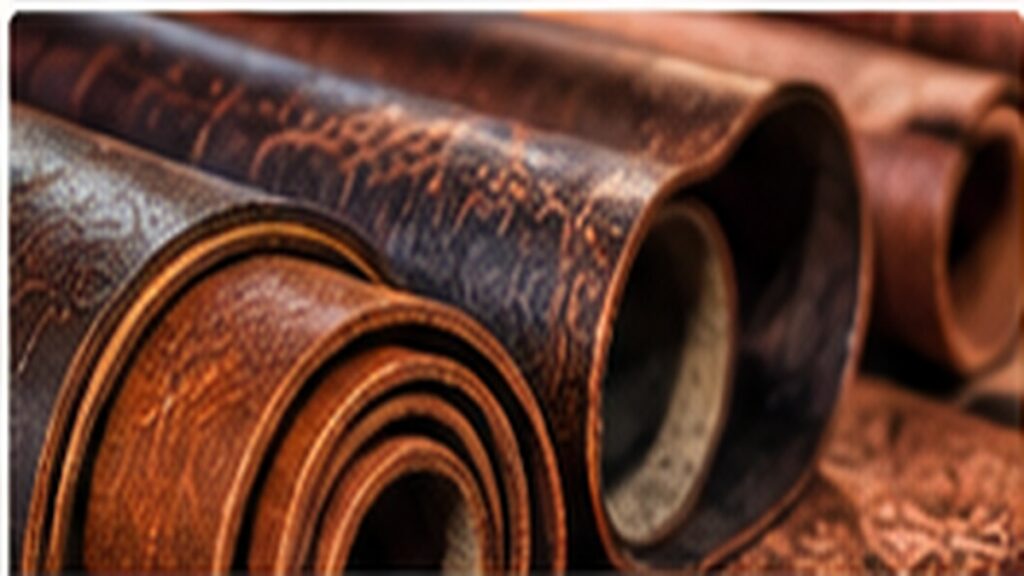
Why durability matters in equestrian products
Durability is often treated as a quality attribute, but it is also a sustainability measure. If a rug, pair of riding breeches, leather girth, grooming tool or yard component remains useful for longer, the demand for a replacement is postponed. That can reduce the environmental burden associated with extracting materials, manufacturing, packaging, transport and disposal. The effect is not automatic: a product that lasts longer but is rarely used, cannot be repaired, requires unusually intensive cleaning, or creates avoidable impacts through hazardous finishes may not deliver the expected sustainability benefit. Durability must therefore be assessed as part of the product’s whole life cycle.
The European Environment Agency identifies longer use, reuse and circular design as important pathways for reducing the environmental pressures associated with textiles. Its analysis describes durability and repairability as design characteristics that help keep products in use. Although the EEA evidence concerns textiles broadly rather than equestrian goods specifically, the principle transfers well to horse rugs, technical riding clothing, stable wear and other textile-heavy products.
For equestrian users, durability has an additional practical dimension. Products are commonly exposed to mud, urine, manure, sweat, rain, ultraviolet radiation, repeated laundering, abrasion from stable fittings, sharp fencing, friction from tack and substantial mechanical loading. The relevant question is not simply whether an item is “hard-wearing”, but whether it continues to perform its required function safely and acceptably in the conditions for which it was designed.
What durability means—and what it does not mean
Durability is the ability of a product to retain its required performance over time and use. The required performance may include strength, weather resistance, fit, hygiene, dimensional stability, insulation, water vapour transmission, protection, appearance or ease of operation. The expected service life should be linked to a defined use profile rather than presented as a universal promise.
Several related terms should be distinguished:
- Service life: the period during which a product remains fit for its intended purpose under specified conditions.
- Reliability: the probability that a product will perform without failure over a defined period or number of cycles.
- Repairability: the extent to which faults can be diagnosed and corrected using available parts, tools, skills and information.
- Maintainability: the ease and resources required to inspect, clean, adjust, lubricate or otherwise maintain the product.
- Emotional or aesthetic durability: the likelihood that a user will continue to value and use an item rather than replace it because of styling, appearance or perceived obsolescence.
- Reusability: the ability to use the product again, potentially by another owner, without unacceptable loss of function or safety.
A product may be physically strong but difficult to repair. Conversely, a product may be straightforward to repair but poorly designed in its original construction. Long service life is most credible where durability, maintainability, repairability and continued user acceptance reinforce one another.
Durability is relative to the job
There is no single durability level that is best for every equestrian product. A lightweight summer sheet, a turnout rug for a mud-prone horse, a competition jacket and a stable door hinge face different stresses. A product designed for occasional leisure use should not necessarily be judged against one intended for daily professional use, but its published claims should make the intended use clear.
Important variables include:
- frequency and duration of use;
- load, tension, impact and cyclic movement;
- abrasion from the horse, rider, tack, stable surfaces or fencing;
- exposure to rain, immersion, mud, sweat, urine, manure, detergents, sunlight and temperature changes;
- the user’s maintenance routine and storage conditions;
- fit, sizing and adjustment;
- whether failure is merely cosmetic, affects function, or creates a safety risk.
A 1,200-denier fabric specification, a thicker leather, a reinforced seam or a metal fitting may indicate resistance to one type of stress, but none proves overall durability. Product performance is a system property. Design geometry, seam placement, thread choice, stitch density, reinforcement, component interfaces, tolerances and finishing can matter as much as the headline material.
How equestrian products commonly fail
Textiles and rugs
Textile products may fail through tearing, seam slippage, abrasion, loss of coating, delamination, broken fasteners, distorted fit, colour loss, odour retention, wicking changes or reduced insulation. A rug can remain visually intact while its waterproof coating has degraded or its filling has become compressed. Conversely, a small tear may be repairable without materially reducing performance if it is located away from a load-bearing or waterproof-critical area.
Fabric weight is not the same as durability. Denier describes the linear mass of a fibre or yarn and can be useful when comparing broadly similar constructions, but it does not describe weave, yarn quality, coating adhesion, tear strength, seam strength or resistance to laundering. A lighter fabric with a well-engineered construction may outperform a heavier fabric in a different design.
High-performance finishes also require scrutiny. Waterproofing, stain resistance and flame or oil resistance may depend on chemical treatments that can lose effectiveness with washing and wear. The EEA notes that PFAS have been widely used in some textile products for properties including waterproofing, oil and dirt protection and durability, while also identifying them as highly persistent substances. A durability claim should not be used to obscure material or chemical trade-offs. Businesses should be able to explain what finish is used, how long the claimed performance is expected to last, and what care process is compatible with it.
Leather and synthetic leather
Leather durability depends on hide quality, fibre structure, tanning, thickness, finishing, cutting, stitching, edge treatment and exposure to moisture and drying cycles. A thick piece of leather is not automatically better if it is poorly finished, excessively stiff, or placed where it folds and concentrates stress. Stitching, holes and buckles often become the limiting components in bridles, girths and reins.
Leather can be maintained and repaired, but maintenance is not neutral. Excessive oiling or unsuitable products can soften, swell or weaken leather, while neglect can cause drying and cracking. Manufacturers should specify appropriate cleaning and conditioning practices rather than assuming that more product always provides more protection.
Synthetic leather and coated textiles can offer consistent dimensions, lower maintenance requirements and resistance to some forms of moisture. Their failure modes may include surface cracking, hydrolysis, peeling or loss of adhesion, which can be difficult to repair invisibly. The environmental assessment should consider the actual service life, maintenance needs and end-of-life route rather than treating natural or synthetic material categories as automatically superior.
Metal, plastic and composite components
Bits, buckles, snaps, stirrup irons, clips, stable fittings and grooming tools may fail through corrosion, fatigue, cracking, deformation or loosening. Stainless steel is not a single performance category: alloy, manufacturing quality, surface finish and exposure conditions affect corrosion resistance. Plastics can become brittle through ultraviolet exposure, temperature cycling, chemical attack or ageing. Composite products may be strong and light but difficult to inspect or repair after hidden damage.
For businesses, component compatibility is important. Replacing a failed buckle with a visually similar but weaker component may compromise the product. Spare parts should be dimensionally and mechanically appropriate, and repair instructions should identify which repairs are user-serviceable and which require a competent specialist.
Testing and evidence: what should count as a quality indicator?
Durability evidence is strongest when it describes a test method, sample, failure criterion, environmental conditioning and intended use. A statement such as “tested for durability” is incomplete without explaining what was tested and what pass level was applied. Laboratory testing can compare products under controlled conditions, but it cannot reproduce every stable, field or laundering environment.
Useful evidence may include:
- abrasion, tear, tensile, seam-slippage or burst testing for textiles;
- water penetration and water vapour tests for waterproof or breathable products;
- colour-fastness and dimensional-stability testing;
- fatigue, corrosion, load or cycle testing for hardware;
- accelerated weathering or ultraviolet exposure where outdoor use is claimed;
- laundering protocols that reflect the product’s care label;
- field trials using a defined number of products, users and use cycles;
- documented warranty, repair and returns data.
Test results should be interpreted carefully. A pass on abrasion does not prove resistance to tearing. A waterproofness result does not prove seam or fastener performance. Accelerated ageing can be useful, but it is a model rather than a guarantee of an exact outdoor lifetime. Strong technical communication identifies the test’s scope and limitations.
Relevant product standards can be especially important for protective equipment. For example, BS EN 1384:2023 sets safety requirements and test methods for helmets for equestrian activities. Compliance demonstrates performance against the specified standard; it does not mean that a helmet is indestructible or suitable after a significant impact. Standards are minimum or defined performance requirements, not blanket claims of infinite life.
Safety-critical products are a special case
Sustainability principles must not encourage continued use of equipment that has reached the end of its safe service life. Riding helmets, body protectors, airbag systems, safety stirrups and certain load-bearing or fall-protection products require decisions based on safety guidance, inspection and manufacturer instructions.
BETA’s guidance for body protectors states that the BETA 2018 standard meets the requirements of the relevant European standard and notes a recommended lifespan of three to five years, depending on the product and care. It also emphasises fitting and care. Such guidance should not be generalised to every protective product, but it illustrates the distinction between durability and safe longevity: an item can appear usable while materials, fit or protective performance have changed.
The same principle applies to helmets. BETA identifies current accepted riding-helmet standards and advises users on fitting and care. A helmet involved in a significant impact should be treated according to the manufacturer’s replacement guidance, even if there is no obvious external damage. Reusing a safety-critical product after an impact may save material in the short term while increasing risk in the next incident. In circular-economy terms, safety takes priority over maximum physical utilisation.
Second-hand purchasing requires particular care. UK government guidance notes that commercially sold used products must be safe but may present increased risks from worn components, outdated safety features or modifications that are not visible. For non-safety-critical items, second-hand use can be an effective way to extend product life. For safety equipment, provenance, age, impact history, fit and current standard status are essential.
Durability, repair and the circular economy
ISO 59004:2024 provides vocabulary, principles and implementation guidance for the circular economy. In practical terms, circularity is not synonymous with recycling. Keeping a product in use through long life, maintenance, repair, refurbishment, reuse and, only later, material recovery can preserve more of the value embedded in the original product than immediate disposal and replacement.
Repairability is therefore a critical companion to durability. Designers can improve it by:
- using replaceable fasteners, straps, liners, buckles and panels where practical;
- avoiding unnecessary permanent bonding between dissimilar materials;
- making wear zones accessible for reinforcement or replacement;
- using standardised components and clearly specified dimensions;
- providing spare parts, care instructions and repair information;
- designing products so that common faults can be repaired without damaging sound components;
- recording material composition and construction details for future repair or recycling.
Repair is not always environmentally preferable. A repair that requires long-distance transport, hazardous chemicals, extensive new material or repeated failure may compare poorly with a well-designed replacement. The relevant comparison is between realistic alternatives, not repair in the abstract.
Businesses can support longer lives through repair services, refurbishment schemes, trade-in arrangements, rental or shared-use models, and resale channels. These models work best when products are designed for inspection, cleaning, grading and traceability. They also need clear boundaries: a used rug may be straightforward to grade, while a used helmet may be unsuitable for resale because impact history cannot be reliably established.
How owners can assess durability before buying
- Define the use case. Consider how often the product will be used, by whom, in what weather and against what surfaces or loads.
- Inspect construction. Look for clean seam lines, appropriate reinforcement, secure edge finishing, consistent stitching, robust but correctly sized hardware and components that can be replaced where likely to wear.
- Check fit and adjustment. Poor fit increases movement, rubbing, concentrated loads and premature failure. In protective equipment, fit is also a safety requirement.
- Read the care instructions. A product requiring specialist cleaning or delicate storage may be less durable in a busy yard if those conditions are unrealistic.
- Ask what is repairable. Establish whether the manufacturer or retailer supplies buckles, liners, straps, panels or replacement parts, and who performs the work.
- Look for specific evidence. Prefer defined test information, warranty terms, spare-part availability and transparent limitations over vague claims such as “built to last”.
- Consider the whole product. A durable main fabric does not compensate for weak fasteners, poor fit, non-replaceable wear parts or a coating that fails after a small number of washes.
- Assess future use. Could the item be passed to another horse or rider, resold, refurbished or repurposed if the original use changes?
How businesses should make durability claims
In Great Britain, environmental marketing must be accurate, clear and substantiated. The Competition and Markets Authority’s Green Claims Code warns that businesses must not create an overall impression that is greener than the evidence supports. A claim about one durable component should not imply that the entire product is environmentally superior.
Claims should specify the basis and scope. Examples of more defensible wording include “the buckle was tested to 10,000 opening and closing cycles under the stated laboratory conditions” or “the outer fabric passed the manufacturer’s specified abrasion test”. Claims such as “eco-friendly”, “made to last forever” or “sustainable rug” are much less meaningful unless supported by a clear definition, evidence and comparison.
Manufacturers should distinguish:
- Design intent: what the product was designed to withstand;
- test performance: what controlled testing demonstrated;
- field performance: what user or returns data shows;
- warranty: the contractual remedy and conditions offered;
- expected life: an estimate that depends on use, care and environment.
A warranty is not proof of total product durability. It may exclude misuse, normal wear, accidental damage, unsuitable washing, alterations or consumable parts. Nevertheless, warranty and repair data can help a manufacturer identify recurring weak points and improve future designs.
Common misconceptions
“More expensive means more durable”
Price may reflect better materials, testing, labour, design, warranty or ethical sourcing, but it is not a durability test. Compare construction, evidence, repair provision and fit rather than relying on price as a proxy.
“Natural materials are always more sustainable”
Natural materials can be renewable or repairable, but their impacts depend on production, processing, land and water use, tanning, transport, care and service life. Synthetic materials may have different impacts and can sometimes offer long service life or lower maintenance. Material choice should be evaluated against the complete product and use pattern.
“Recycled content makes a product sustainable”
Recycled content can reduce demand for virgin material in some circumstances, but it does not compensate for poor construction, short use, difficult repair or rapid replacement. A recycled polyester rug that fails after one season may be less resource-efficient than a well-maintained product with a longer life, even if the latter contains no recycled fibre.
“Recyclable means circular”
Recyclability is a potential end-of-life route, not evidence that the product will actually be collected, sorted and processed. Mixed fibres, coatings, metal trims, adhesives and contamination can restrict recycling. Extending useful life usually deserves attention before end-of-life claims.
“A visibly worn item is unusable”
Cosmetic wear does not always equal functional failure. A faded turnout rug may be suitable for a second use if waterproofing, fit and structural integrity remain adequate. Conversely, hidden degradation can be serious. Inspection should focus on function and safety, not appearance alone.
A practical framework for equestrian product durability
| Question | What to examine |
|---|---|
| What must the product do? | Protection, weather resistance, load-bearing, fit, hygiene, comfort or appearance. |
| What stresses will it face? | Abrasion, cyclic loading, impact, moisture, chemicals, ultraviolet exposure, laundering and temperature change. |
| Where is failure most likely? | Seams, fasteners, edges, holes, coatings, interfaces, adjustment points and high-contact zones. |
| Can the user maintain it? | Cleaning, drying, storage, inspection and replacement of routine wear parts. |
| Can it be repaired? | Availability of parts, skills, tools, instructions and economically realistic repair services. |
| What evidence exists? | Standards, test methods, field data, warranty data and transparent limitations. |
| What happens at end of use? | Reuse, refurbishment, resale, component recovery or material recycling. |
Conclusion
Durability is a strong sustainability measure because it connects environmental performance with a product’s real purpose: useful service. It is most meaningful when measured against a defined use case and considered alongside repairability, maintainability, reuse, material impacts and end-of-life options.
For horse owners, the best purchase is rarely the item with the most impressive isolated specification. It is the product that fits correctly, performs the required job, can be cared for within the realities of the yard, has credible evidence behind its claims and can be repaired or responsibly retired. For manufacturers and retailers, durable design means more than stronger materials. It requires understanding failure modes, publishing honest limitations, supplying parts, learning from returns and avoiding environmental claims that exceed the evidence.
The central principle is simple: buy less often, use products appropriately, maintain them well, repair them where safe and practical, and never extend the life of safety-critical equipment beyond its defensible safe service period.
Sources and further reading
- ISO 59004:2024, Circular economy — Vocabulary, principles and guidance for implementation
- ISO, The circular economy: building trust through conformity assessment
- European Environment Agency, Textiles and the environment: the role of design in Europe’s circular economy
- European Environment Agency, Textiles in Europe
- UK Government, Waste Prevention Programme for England
- Competition and Markets Authority, Green Claims Code
- British Equestrian Trade Association, Body Protectors
- British Equestrian Trade Association, Guide to Riding Helmets
- BSI, BS EN 1384:2023 Helmets for equestrian activities
- UK Government, Consumer products: buying second-hand goods
- International Journal of Life Cycle Assessment, Reducing environmental impacts from garments through best practice garment use and care
Research note
Automatically researched source pack — editorial review required:
• www.iso.org — https://www.iso.org/standard/80648.html
• beta-uk.org — https://beta-uk.org/wp-content/uploads/2025/04/46765-BETA-Riding-Hat-Poster-oct-2024.pdf
• knowledge.bsigroup.com — https://knowledge.bsigroup.com/products/helmets-for-equestrian-activities-3
• www.gov.uk — https://www.gov.uk/government/publications/waste-prevention-programme-for-england-maximising-resources-minimising-waste/the-waste-prevention-programme-for-england-maximising-resources-minimising-waste
• www.gov.uk — https://www.gov.uk/government/publications/net-zero-strategy/4-supporting-the-transition-across-the-economy
• landingpage.bsigroup.com — https://landingpage.bsigroup.com/LandingPage/Undated?UPI=000000000030061431
• cdn.standards.iteh.ai — https://cdn.standards.iteh.ai/samples/73966/a4615c6da1ae41b4a125088629b8c8d9/SIST-EN-1384-2023.pdf
• www.gov.uk — https://www.gov.uk/guidance/consumer-products-buying-second-hand-goods
• consult.defra.gov.uk — https://consult.defra.gov.uk/waste-and-recycling/waste-prevention-programme-for-england-2021/supporting_documents/Waste%20Prevention%20Programme%20for%20England%20%20consultation%20document.pdf
• www.gov.uk — https://www.gov.uk/accepting-returns-and-giving-refunds
• beta-uk.org — https://beta-uk.org/body-protectors/
• www.gov.uk — https://www.gov.uk/guidance/product-safety-law-compliance-advice-for-manufacturers-and-importers
• www.iso.org — https://www.iso.org/insights/circular-economy-building-trust
• www.bhs.org.uk — https://www.bhs.org.uk/media/mwcjkbbi/2026-bhs-eag-hat-guide.pdf
• www.gov.uk — https://www.gov.uk/government/publications/environmental-sustainability-and-the-uk-competition-and-consumer-regimes-cma-advice-to-the-government/environmental-sustainability-and-the-uk-competition-and-consumer-regimes-cma-advice-to-the-government
• standards.iteh.ai — https://standards.iteh.ai/catalog/standards/cen/e761dbf0-f54c-4c02-b8b6-49e07d7b45c5/en-1384-2023
• assets.publishing.service.gov.uk — https://assets.publishing.service.gov.uk/government/uploads/system/uploads/attachment_data/file/1021364/CFI_-_sustainability_advice_.pdf
• assets.publishing.service.gov.uk — https://assets.publishing.service.gov.uk/media/6231f29bd3bf7f5a87809261/Which.pdf
• en.wikipedia.org — https://en.wikipedia.org/wiki/Equestrian_helmet
• www.reddit.com — https://www.reddit.com/r/Equestrian/comments/1jxq9m4
Cite this article
Stable research ID: ERA-2026-000242
The Equestrian Research Atlas (2026) ‘Durability as a Sustainability Measure in Equestrian Products’. The Equestrian Research Atlas. Available at: https://equestrianresearchatlas.co.uk/research/durability-as-a-sustainability-measure-in-equestrian-products/ (Accessed: 3 November 2026).
The Equestrian Research Atlas. (2026). Durability as a Sustainability Measure in Equestrian Products. The Equestrian Research Atlas. https://equestrianresearchatlas.co.uk/research/durability-as-a-sustainability-measure-in-equestrian-products/
The Equestrian Research Atlas. “Durability as a Sustainability Measure in Equestrian Products.” The Equestrian Research Atlas, 2026, https://equestrianresearchatlas.co.uk/research/durability-as-a-sustainability-measure-in-equestrian-products/. Accessed 3 November 2026.
Research references (61)
- www.iso.org
- beta-uk.org
- knowledge.bsigroup.com
- www.gov.uk
- www.gov.uk
- landingpage.bsigroup.com
- cdn.standards.iteh.ai
- www.gov.uk
- consult.defra.gov.uk
- www.gov.uk
- beta-uk.org
- www.gov.uk
- www.iso.org
- www.bhs.org.uk
- www.gov.uk
- standards.iteh.ai
- assets.publishing.service.gov.uk
- assets.publishing.service.gov.uk
- en.wikipedia.org
- www.reddit.com
- fr.wikipedia.org
- www.horseandhound.co.uk
- www.reddit.com
- www.horseandhound.co.uk
- www.reddit.com
- www.reddit.com
- en.wikipedia.org
- de.wikipedia.org
- www.reddit.com
- www.reddit.com
- www.reddit.com
- www.eea.europa.eu
- greenclaims.campaign.gov.uk
- www.gov.uk
- www.sciencedirect.com
- www.eea.europa.eu
- link.springer.com
- www.gov.uk
- www.gov.uk
- www.sciencedirect.com
Related research
 Designing Equestrian Equipment for Disassembly, Repair and Material RecoveryContinue research →End-of-Life Options for Leather, Webbing and Synthetic TackContinue research →
 Packaging Choices for Equestrian BrandsContinue research →Environmental Claims and Greenwashing in Equestrian RetailContinue research →
 Recycled Textiles in Equestrian ProductsContinue research →
 Repairability of Saddlery, Rugs and Horse EquipmentContinue research →