
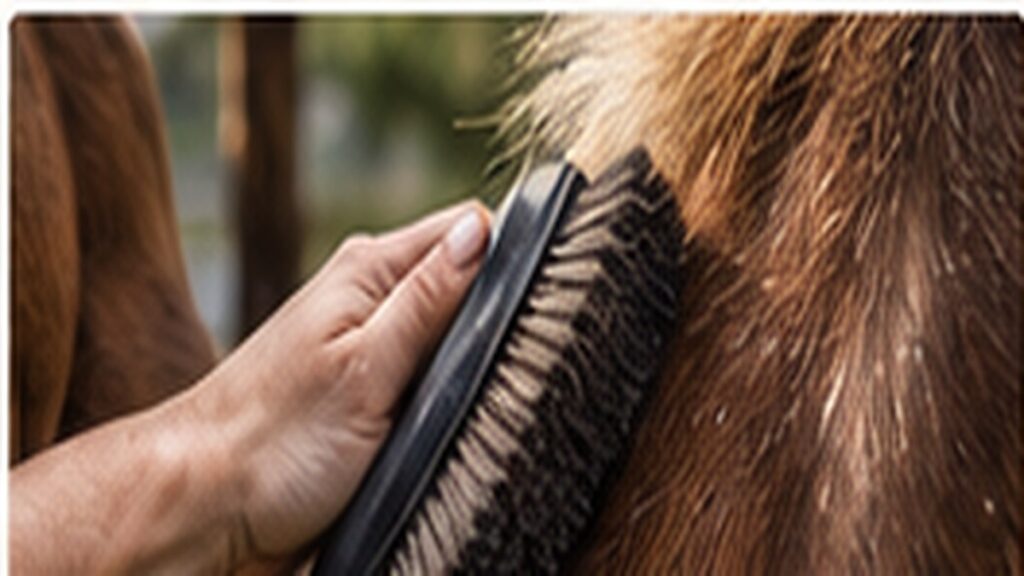
What hoof protection is intended to do
Hoof protection manages the relationship between the hoof and the ground. Its purposes may include reducing wear, protecting the sole and hoof wall from abrasive or irregular surfaces, improving comfort during a barefoot transition, supporting damaged or weakened structures, maintaining a dressing or pad in place, or altering the distribution of load during rehabilitation. These aims overlap, but they are not interchangeable. A boot that is useful for a two-hour hack is not automatically suitable for continuous turnout, and a device that protects a bruised sole is not necessarily appropriate for a horse with a mechanically unstable or painful foot.
The principal options are:
- Permanent or semi-permanent shoes, usually nailed or sometimes glued, which can provide wear protection, traction and mechanical support.
- Removable hoof boots, fitted over an unshod hoof for work, turnout or short-term protection.
- Pads and packing materials, used under shoes, inside boots or beneath casts to cushion or support the solar surface.
- Glue-on shoes and composite systems, which avoid or reduce the use of nails when hoof-wall quality or a clinical objective makes this desirable.
- Temporary dressings, casts and protective coverings, generally used under professional direction during injury management.
In the United Kingdom, hoof preparation for shoeing and the application of horseshoes are regulated activities reserved to registered farriers, subject to the statutory framework governing farriery. Barefoot trimming is not regulated in the same way. Whatever system is selected, competent hoof care and communication between owner, farrier, hoof-care provider and veterinary surgeon are more important than allegiance to a particular ideology or product.
Hoof boots: construction and operating principles
A hoof boot normally combines a protective sole, a wall or upper section, a retention system and, in some designs, a gaiter or pastern cuff. The sole is commonly made from a flexible or semi-flexible polymer such as polyurethane, thermoplastic polyurethane or a rubber-like elastomer. Uppers may use moulded polymers, synthetic textiles, leather-like materials or combinations of these. The exact formulation, hardness and reinforcement vary considerably between models and manufacturers.
Related industry reference: For businesses moving from technical research into trade sourcing, explore equine rehabilitation and therapy providers on EquiGuild.
The boot must remain attached while the horse walks, turns, accelerates and moves over changing terrain. Retention may be provided by a close-fitting shell, straps, cables, buckles, hook-and-loop fasteners, gaiters, pastern cuffs or a combination. A boot can therefore fail in two distinct ways: it may provide insufficient protection because the sole or tread is inappropriate, or it may be mechanically unsuitable because it rotates, pulls off, rubs or accumulates debris.
Removable boots are usually designed around a particular hoof shape rather than a universal anatomical standard. Important variables include hoof length and width, heel-base width, heel height, wall flare, toe shape, quarter profile and the amount of capsule change expected before the next trim. A length-only measurement is often inadequate. Some boots tolerate a more rounded or flared capsule; others depend on close conformity and are less forgiving of distortion.
Materials and performance
Polymer materials offer useful combinations of abrasion resistance, flexibility, water resistance and relatively low mass. A softer compound may conform well and reduce transmitted impact, but may wear faster or deform under heavy work. A harder compound may last longer and provide a more stable platform, but can transmit more vibration and may be less forgiving if the fit is marginal. Manufacturers may combine materials: a durable tread, a flexible upper and a softer gaiter are common design objectives.
Material labels alone do not predict field performance. Two products both described as polyurethane may differ in hardness, reinforcement, moulding quality, temperature behaviour and resistance to abrasion. Technical data are most useful when accompanied by defined test methods, but consumer-facing hoof-boot performance claims are not generally supported by a single universally adopted equine boot standard. Purchasers should therefore treat statements such as “shock absorbing”, “orthopaedic”, “all-terrain” or “24-hour suitable” as design claims requiring context rather than as regulated performance classifications.
Impact, breakover and load distribution
A boot changes the effective ground-contact surface and may alter the timing and mechanics of the stride. In a controlled study of six non-lame Standardbreds, hoof boots increased stance duration by approximately 7% compared with the unmodified baseline and increased the length of sole contact with the ground. The study was small, involved walking and used a particular boot design; it should not be interpreted as evidence that all boots produce the same gait effect in all horses. It does, however, demonstrate why a boot is not biomechanically neutral.
Boot geometry may influence breakover, the point at which the hoof leaves the ground, as well as the amount of sole and heel contact. A rounded or rockered toe can facilitate earlier breakover. A thick, flat sole can increase protection on stones but may also raise the hoof and alter limb loading. Pads can further change the interface between hoof and ground, particularly when they fill the frog sulci or solar concavity.
Similar caution applies when comparing boots with shoes. Published research on horseshoes shows that shoe configuration can alter hoof-wall deformation, movement of the distal phalanx and pressure distribution. The evidence is not sufficiently uniform to support a simple hierarchy in which barefoot, boots or one shoe type is always mechanically superior. The appropriate question is whether the selected system produces acceptable comfort, stability and tissue loading for the individual horse and intended use.
Protection for work and exercise
For work, the strongest case for removable hoof boots is often intermittent protection: the horse is comfortable barefoot for ordinary movement but needs assistance on hard, stony, abrasive or unfamiliar surfaces. Boots can also be useful during a planned transition from shoes, when the hoof capsule has not yet developed the tolerance required for the intended workload. They permit protection to be applied only when needed, leaving the hoof uncovered for inspection, routine turnout or rest.
Performance requirements vary by activity:
| Use | Priority characteristics | Common limitations |
|---|---|---|
| Road hacking | Abrasion resistance, secure retention, predictable traction and sufficient sole protection | Road grit can enter through gaps; excessive grip may increase torsional loading |
| Hacking over mixed terrain | Close fit, debris resistance, flexible upper and durable tread | Water, mud and steep turns expose poor retention quickly |
| Endurance or long-distance work | Low rubbing risk, drainage, serviceability and proven retention over duration | Small fit errors become significant; wear and heat accumulate |
| Schooling and arena work | Stable attachment, predictable breakover and compatibility with the surface | Deep or heavily worked footing can pull at gaiters and retain debris |
| Jumping or fast work | Security, low snag risk and appropriate traction | A boot is not a substitute for discipline-specific limb protection or sound footing |
Traction requires particular restraint. More grip is not automatically safer. On a firm surface, a high-friction tread may reduce useful hoof slip and increase rotational forces through the limb. On mud, grass or loose material, insufficient tread may permit sliding. Traction is therefore a surface-and-speed interaction, not a simple product ranking.
Hoof boots should also be distinguished from brushing, fetlock, tendon and overreach boots. Those products protect the limb from interference injuries; a hoof boot primarily protects or modifies the hoof-ground interface. A horse may require both categories, but one does not replace the other.
Turnout and extended wear
Continuous or extended turnout is more demanding than ridden use. The horse may stand in wet bedding, move through mud, lie down, pivot sharply, cross uneven ground and remain unattended for many hours. Moisture, faecal contamination and trapped grit may soften the hoof horn or irritate the skin. A boot that remains secure on a clean, dry hoof for a short ride may be inappropriate for prolonged wear.
Before using a boot for turnout, establish whether the manufacturer permits that use and whether the design allows adequate inspection and cleaning. The hoof and surrounding skin should be checked frequently during initial trials. Particular attention is required at the heel bulbs, pastern, coronary band, quarters and any edge where a gaiter or strap moves repeatedly. Hair loss, broken skin, swelling, heat, damp macerated skin or a change in gait are reasons to remove the device and seek appropriate professional advice.
Extended wear also raises hygiene issues. Occlusion does not inevitably cause disease, but a warm, wet and contaminated interface is less forgiving of poor management. A boot used for rehabilitation should normally be removed at suitable intervals so the hoof can be inspected, cleaned and allowed to dry unless a veterinary professional has specified otherwise. “Waterproof” describes material behaviour, not a guarantee that the hoof environment will remain healthy.
Turnout with other horses introduces a retention and injury question. A loose boot may be lost, stepped on or become a source of interference. A boot with external straps, buckles or protruding edges may present a different snag risk from a close-fitting shell. There is no universal answer: the decision depends on the horse, field, companions, supervision and purpose of the device.
Hoof protection in rehabilitation
Rehabilitation is where hoof protection is most often misunderstood. A boot may reduce painful contact, protect a dressing, provide a soft or supportive interface, or allow controlled movement. It does not by itself diagnose the cause of pain or correct an underlying disease. Lameness, sudden foot pain, non-weight-bearing, marked digital pulses, heat, a draining tract, penetrating injury or suspected laminitis require veterinary assessment rather than experimentation with increasingly elaborate boot and pad combinations.
For a painful solar surface, a boot with a correctly selected pad may reduce direct pressure from stones and hard ground. For a horse with laminitis or compromised laminar support, support under the palmar or plantar structures may be part of a veterinary-led plan. The appropriate interface, degree of support, trim and movement programme are case-specific. A soft pad that is comfortable for one condition may be unsuitable for another, and a rigid platform may be helpful in one phase but counterproductive in a different phase.
Published evidence supports the general proposition that shoe and support configuration can alter internal hoof mechanics, but it does not establish a universal rehabilitation boot. A laboratory study of unaffected and experimentally characterised laminitic hooves found that egg-bar and heart-bar configurations reduced certain measures of distal phalanx displacement compared with unshod or open-heel conditions. Cadaveric and ex vivo findings are useful for understanding mechanics, but they should not be converted directly into instructions for a live clinical case.
Cooling boots are a separate category from protective hoof boots. In research comparing cooling methods, ice and water immersion extending over the foot and at least the pastern achieved substantially lower hoof-wall temperatures than some dry-interface products or devices that excluded the foot. This illustrates a wider principle: the visible form of a “boot” does not reveal its therapeutic performance. Coverage, contact, fluid movement, insulation and duration determine the result.
Rehabilitation devices should have a documented purpose and review point. The owner and professionals involved should be able to answer: what structure is being protected, what movement is permitted, what signs indicate failure, how often will the foot be inspected, and when will the plan be reassessed? Without those answers, a boot may simply conceal deterioration.
Fitting: the central quality issue
Fit is more important than brand reputation. The boot should be selected from a freshly maintained hoof, because excessive wall flare, long toes or an overdue trim can produce a misleading measurement. Follow the manufacturer’s measurement method, record both length and width, and do not assume that front and hind feet will use the same size or model.
A correctly fitted boot should sit squarely, resist rotation, maintain full intended contact and allow normal limb movement. It should not pinch the heel bulbs, press into the coronary band, catch the ground during breakover or permit the hoof to slide forward inside the shell. Gaiters and pastern cuffs should lie flat without cutting into the skin. Fit should be assessed at walk and, where appropriate, during the intended activity rather than only while the horse is standing still.
Trialling should be progressive. Begin in a controlled environment, inspect the hoof and skin immediately afterwards, and increase duration only when there is no evidence of rubbing, twisting, heat or altered movement. A horse that becomes more comfortable in a boot may still be compensating for a fit problem or an unresolved hoof issue; comfort is essential, but it is not the only criterion.
Common fitting failures
- Oversizing: the boot rotates, collects debris or comes off during turns.
- Undersizing: the quarters or heel bulbs are compressed and the gaiter rubs.
- Excessive hoof length: the boot appears too small even though the model would fit a correctly maintained capsule.
- Incorrect shape: a boot selected by width alone fails because the toe or heel profile does not match.
- Inadequate fastening: the shell is suitable, but straps or gaiters are not tensioned according to the design.
- Debris contamination: sand, grit or bedding changes the internal fit and causes abrasion.
Maintenance and quality control
After use, remove mud and grit, rinse according to the manufacturer’s instructions and allow the boot to dry thoroughly. Inspect the sole, tread, attachment points, gaiter, straps, stitching, rivets and shell edges. A worn tread may alter traction before the boot looks visibly damaged. Stretching, cracking, delamination or a distorted shell can compromise retention even if the fastening still closes.
Keep a record of the boot’s working hours, surfaces and any incidents of loss or rubbing. For professional yards and manufacturers, traceability is valuable: note the horse, hoof dimensions, trim date, boot model, batch or purchase information, use conditions and inspection findings. This makes it easier to identify whether a failure is associated with fit, wear, a particular terrain or a product defect.
Do not modify a boot casually. Cutting away a cuff, drilling ventilation holes or changing a strap may remove structural support, create sharp edges or invalidate the manufacturer’s instructions. Modifications should be made only where the design permits them and the consequences are understood.
Choosing between shoes, boots and barefoot management
The barefoot-versus-shod question is not resolved by declaring one system universally natural or universally harmful. A barefoot hoof may function well when its rate of wear, tissue tolerance, workload and terrain are compatible. A shoe may be appropriate where wear exceeds growth, traction is required, the hoof capsule needs support or a therapeutic objective has been identified. A removable boot occupies a different position: it can provide temporary or task-specific protection without being attached to the hoof between uses.
Factors to consider include:
- Workload and surface: frequency, speed, duration, road mileage, stones, abrasive arena surfaces and seasonal changes.
- Hoof condition: wall quality, sole depth, heel conformation, cracks, distortions, previous injury and rate of growth.
- Individual comfort: whether the horse is comfortable at rest and in motion, and whether comfort changes with surface or activity.
- Mechanical objective: simple wear protection is a different requirement from support of a compromised structure.
- Management capacity: time available for fitting, cleaning, inspection, replacement and record keeping.
- Turnout arrangements: mud, bedding, companions, fencing, supervision and the possibility of a lost device.
- Professional input: farrier and veterinary advice where pain, lameness or structural disease is involved.
The best system may be mixed: shoes for one phase, removable boots for selected work, or different protection on front and hind feet. The decision should be reviewed as the hoof grows, workload changes or rehabilitation progresses.
Common misconceptions
“A hoof boot is just a temporary horseshoe.”
It provides ground protection, but the attachment method, load distribution, height, flexibility and ability to move independently of the hoof differ from a nailed shoe. Its effects on gait and retention must be assessed separately.
“More cushioning is always better.”
Cushioning can reduce unpleasant impact, but excessive softness may reduce stability, increase internal movement or alter the intended support. Pad selection must match the purpose and be reviewed during use.
“If the horse stops objecting, the boot has solved the problem.”
Improved comfort is useful information, not a diagnosis. A boot may mask pain sufficiently to encourage movement while the underlying lesion remains active.
“A waterproof boot keeps the hoof healthier in wet conditions.”
Water resistance may protect the device and reduce external ingress, but it can also limit drying. Hygiene, inspection and appropriate wear duration remain essential.
“A boot that stays on is correctly fitted.”
Retention is necessary but not sufficient. A boot can remain attached while rubbing, restricting movement or causing pressure at the heel bulbs or coronary band.
“Published research proves which system is best.”
Research generally addresses a defined boot, shoe, surface, speed, population and outcome. Findings about stance duration, pressure or hoof motion are informative but cannot automatically be generalised to every product or horse.
Practical selection checklist
- Define the purpose: work, turnout, temporary protection, dressing retention, cooling or rehabilitation.
- Obtain current hoof measurements after appropriate trimming and assess shape as well as size.
- Confirm whether the design is intended for the proposed duration and surface.
- Check the manufacturer’s fitting, cleaning and replacement instructions.
- Trial at walk before increasing duration or speed.
- Inspect skin, hoof horn, sole, heel bulbs and gait after every early trial.
- Use pads only for a clear reason and monitor whether they move, compress or retain contamination.
- Remove and reassess if the horse becomes more uncomfortable, develops rubbing or changes its movement.
- Seek veterinary input for unexplained pain, acute lameness, suspected laminitis, penetrating injury or deteriorating comfort.
- Review the arrangement at each trim cycle rather than treating the original choice as permanent.
Conclusion
Hoof protection works best as part of a planned hoof-care system rather than as a stand-alone product purchase. Removable boots can be highly useful for task-specific protection, controlled barefoot transitions and selected rehabilitation contexts. Shoes, glue-on systems and therapeutic support devices may be more appropriate when continuous protection, mechanical alteration or clinical support is required. None removes the need for regular trimming, inspection, sound management, competent farriery or veterinary assessment when pain is present.
For GB owners and businesses, the most defensible approach is evidence-informed and individualised: define the mechanical or welfare objective, select a device whose construction matches that objective, fit it accurately, monitor the horse and review the result. Product claims should be weighed against independent evidence, the limitations of laboratory studies and the practical realities of mud, grit, workload and daily management.
Sources and further reading
- British Horse Society: Essential care for your horse’s hooves — practical UK guidance on hoof care, shoes, composite alternatives and hoof boots.
- World Horse Welfare: The importance of using appropriately trained hoof-care providers — welfare and professional-care considerations.
- GOV.UK: Code of practice for the welfare of horses, ponies, donkeys and their hybrids.
- Amitrano, Gutierrez-Nibeyro and Schaeffer: Effect of hoof boots and toe-extension shoes on forelimb kinetics, American Journal of Veterinary Research.
- Shoe configuration effects on third phalanx and capsule motion of unaffected and laminitic equine hooves, Equine Veterinary Journal.
- Brunsting et al.: Can the hoof be shod without limiting heel movement?, Veterinary and Comparative Orthopaedics and Traumatology.
- Kaneps et al.: A comparison of seven methods for continuous therapeutic cooling of the equine digit, Equine Veterinary Journal.
- Mechanical effect of performance pressure boots on cadaveric equine hindlimb fetlock biomechanics, open-access peer-reviewed study.
- Horseshoe effects on equine gait — a systematic scoping review, open-access peer-reviewed review.
For readers comparing current UK retail options relevant to 0g turnout rug, see John Whitaker Rastrick V2 Airflo Fixed Neck Turnout Horse Rug – Navy at JSM Equestrian Supplies.
Research note
Automatically researched source pack — editorial review required:
• www.beva.org.uk — https://www.beva.org.uk/resources/how-to-apply-bandages-and-splints/
• pubmed.ncbi.nlm.nih.gov — https://pubmed.ncbi.nlm.nih.gov/37155654/
• pubmed.ncbi.nlm.nih.gov — https://pubmed.ncbi.nlm.nih.gov/27111020/
• www.sciencedirect.com — https://www.sciencedirect.com/science/article/pii/S0737080621001210
• www.sciencedirect.com — https://www.sciencedirect.com/science/article/pii/S1090023326000705
• pubmed.ncbi.nlm.nih.gov — https://pubmed.ncbi.nlm.nih.gov/25385194/
• www.sciencedirect.com — https://www.sciencedirect.com/science/article/abs/pii/S0737080600702310
• pmc.ncbi.nlm.nih.gov — https://pmc.ncbi.nlm.nih.gov/articles/PMC8066513/
• pmc.ncbi.nlm.nih.gov — https://pmc.ncbi.nlm.nih.gov/articles/PMC11734879/
• aaep.org — https://aaep.org/wp-content/uploads/2024/02/Proceedings-61st-Annual-Convention-2015.pdf
• pubmed.ncbi.nlm.nih.gov — https://pubmed.ncbi.nlm.nih.gov/30902192/
• pmc.ncbi.nlm.nih.gov — https://pmc.ncbi.nlm.nih.gov/articles/PMC8223769/
• aaep.org — https://aaep.org/wp-content/uploads/2024/02/Proceedings-66th-Annual-Convention-2020.pdf
• aaep.org — https://aaep.org/wp-content/uploads/2024/02/Proceedings-69th-Annual-Convention-2023.pdf
• www.sciencedirect.com — https://www.sciencedirect.com/science/article/pii/S0737080617300217
• cavallo-inc.com — https://cavallo-inc.com/wp-content/uploads/2024/12/PDF-2020-Published-reasearch-paper-Western-Kentucky-University-Hoof-Boots-Study.pdf
• www.hoofrehab.com — https://www.hoofrehab.com/AFAhandout3.pdf
• en.wikipedia.org — https://en.wikipedia.org/wiki/Hoof_boot
• www.reddit.com — https://www.reddit.com/r/u_CavalloHoofBoots/comments/1srugqu/cavallo_case_study_laminitis_ems_and_hoof_capsule/
• www.reddit.com — https://www.reddit.com/r/u_CavalloHoofBoots/comments/1t7kswx/cavallo_case_study_barefoot_transition_in_a_7yo/
Cite this article
Stable research ID: ERA-2026-000240
The Equestrian Research Atlas (2026) ‘Hoof Protection for Work, Turnout and Rehabilitation’. The Equestrian Research Atlas. Available at: https://equestrianresearchatlas.co.uk/research/hoof-protection-for-work-turnout-and-rehabilitation/ (Accessed: 3 November 2026).
The Equestrian Research Atlas. (2026). Hoof Protection for Work, Turnout and Rehabilitation. The Equestrian Research Atlas. https://equestrianresearchatlas.co.uk/research/hoof-protection-for-work-turnout-and-rehabilitation/
The Equestrian Research Atlas. “Hoof Protection for Work, Turnout and Rehabilitation.” The Equestrian Research Atlas, 2026, https://equestrianresearchatlas.co.uk/research/hoof-protection-for-work-turnout-and-rehabilitation/. Accessed 3 November 2026.
Research references (77)
- www.beva.org.uk
- pubmed.ncbi.nlm.nih.gov
- pubmed.ncbi.nlm.nih.gov
- www.sciencedirect.com
- www.sciencedirect.com
- pubmed.ncbi.nlm.nih.gov
- www.sciencedirect.com
- pmc.ncbi.nlm.nih.gov
- pmc.ncbi.nlm.nih.gov
- aaep.org
- pubmed.ncbi.nlm.nih.gov
- pmc.ncbi.nlm.nih.gov
- aaep.org
- aaep.org
- www.sciencedirect.com
- cavallo-inc.com
- www.hoofrehab.com
- en.wikipedia.org
- www.reddit.com
- www.reddit.com
- www.reddit.com
- en.wikipedia.org
- en.wikipedia.org
- www.reddit.com
- en.wikipedia.org
- www.reddit.com
- www.reddit.com
- www.reddit.com
- en.wikipedia.org
- www.reddit.com
- www.reddit.com
- www.reddit.com
- en.wikipedia.org
- www.reddit.com
- www.reddit.com
- www.horseandhound.co.uk
- www.bhs.org.uk
- www.worldhorsewelfare.org
- www.bhs.org.uk
- prod.bhs.org.uk
Related research
 Maintaining, Sharpening and Replacing Farriery ToolsContinue research →Farriery Aprons, Stands and Workshop EquipmentContinue research →Hoof Rasp Design and Abrasive PerformanceContinue research →
 Horseshoe Materials ComparedContinue research →Hoof Boots: Materials, Fit and ConstructionContinue research →Farriery Tools and Their FunctionsContinue research →