
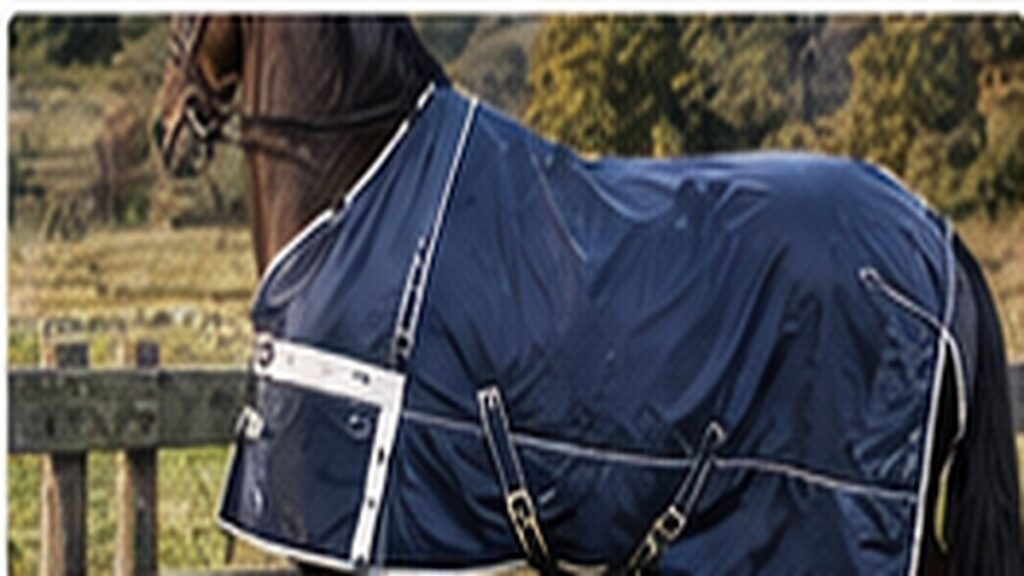
Rugging is best understood as a management intervention, not a seasonal ritual. A rug can protect a clipped horse from cold, wind and rain, help a horse remain dry in prolonged wet weather, reduce insect irritation, or assist short-term management after exercise. The same rug can also flatten the insulating coat, trap excessive heat, restrict normal behaviour, cause rubbing and conceal weight loss or skin problems.
For British horses, the correct decision is rarely determined by air temperature alone. The horse’s coat, body condition, age, health, workload, clipping pattern, shelter, access to forage, exposure to wind and rain, and the design and condition of the rug all matter. A native pony with a full winter coat, shelter and ad-lib forage may be comfortable without a rug in conditions that make a fully clipped competition horse uncomfortable. Conversely, a thin, elderly or chronically ill horse may need protection in relatively moderate weather.
The governing principle is thermal comfort: the horse should be able to maintain a stable body temperature without sustained shivering, sweating, dampness beneath the rug, excessive heat-seeking or cold-seeking behaviour, or loss of condition. Temperature charts may provide a starting point, but they cannot replace inspection of the individual horse.
Stable and recovery rugs serve a different purpose from turnout rugs: insulation and moisture management matter more than waterproofing. Readers can compare current fleece and cooler rug options from JSM Equestrian Supplies alongside the principles discussed here.
How horses regulate body temperature
Horses are homeothermic mammals. They continually balance heat production against heat loss through radiation, conduction, convection and evaporation. In cold conditions, heat production can increase through movement, muscle activity and the metabolic heat generated during digestion of fibre. In hot conditions, the horse relies heavily on sweating and respiratory heat loss.
The winter coat is an efficient natural insulator. Hair stands away from the skin, trapping relatively still air. The skin and coat also respond dynamically: hairs can be raised in cold conditions and flattened in warmer conditions. A rug placed over a full coat can compress this air layer, potentially reducing the coat’s insulating efficiency. This does not mean that every rug is harmful; it means that added insulation should have a clear management purpose and should be proportionate to the conditions.
The British Horse Society notes that horses lose relatively little heat through still air when their coat is able to stand up and trap insulation. It also identifies continuous access to forage as a major part of cold-weather management because fibre digestion generates heat. A horse’s first-line protection is therefore not simply a thicker rug: it is a functioning combination of coat, body condition, forage, movement, shelter and social opportunity. British Horse Society: Types of rugs and rugging a horse.
Thermal comfort is not the same as warmth
Owners often assess a rug by asking whether the horse feels warm. That is too narrow a test. The target is comfort, not maximum warmth. A horse that is sweating under a rug is not being protected successfully, even if its skin feels warm. Equally, a cool surface does not automatically indicate distress: the horse may be conserving heat effectively through its coat and peripheral circulation.
When checking a rugged horse, place a hand under the rug at the withers, shoulder and behind the elbow. Look for a comfortably warm, dry skin surface rather than heat, dampness or clamminess. Check the horse’s behaviour, posture, appetite, water intake and movement. A horse that is restless, repeatedly seeks shade, stands with its neck extended, sweats without exercise or feels hot and damp beneath the rug may be over-rugged. A horse that shivers persistently, holds its body tense, turns away from wind, appears tucked up or is losing condition may be experiencing excessive cold stress, although these observations are not diagnostic on their own.
Rugs can make observation more difficult. The rug should be removed during the daily inspection so that the horse’s skin, coat, body condition, pressure areas and any injuries can be assessed. UK government advisory standards for equines specifically state that rug weight and construction should suit the conditions, that fit should prevent rubbing, and that rugs should be removed during daily checks. UK Government advisory standards for equines.
Factors that change the rugging decision
Coat and clipping
Clipping removes some or much of the coat’s insulating capacity and changes the horse’s heat-loss profile. A full clip usually creates a greater need for protection than a trace, bib or blanket clip, particularly when the horse is stabled or exposed to cold rain and wind. The appropriate rugging plan may also change as clipped hair grows back.
Clipping is not a guarantee that a rug is required at all times. A clipped horse working hard in mild weather may overheat in a heavy rug, while the same horse may need additional protection when standing still overnight. The clip pattern, intensity of work and time spent outdoors should be considered together.
Body condition and type
Body fat provides insulation and energy reserves, but body condition should not be used to justify neglecting a horse that is cold, nor should rugging be used to prevent all seasonal weight change. Many horses naturally lose some weight during winter. The BHS cautions that excessive feeding and over-rugging can override this process, particularly in overweight horses, and that unnecessary weight gain increases the risk of obesity-associated laminitis. British Horse Society rugging guidance.
Lean horses, elderly horses, growing youngsters, horses with limited mobility and horses with health conditions may have less capacity to maintain thermal balance. That does not create a universal rug prescription; it means that closer monitoring and a more individualised plan are justified.
Weather and microclimate
Wind and rain can be more important than a low but dry air temperature. Wind increases convective heat loss, while rain wets the coat and reduces its insulating performance. A cold, exposed field is not equivalent to a sheltered yard or a well-bedded stable. A waterproof turnout rug may therefore be useful primarily as a weather barrier rather than as a source of insulation.
Humidity also affects evaporative cooling. In warm, humid conditions sweat evaporates less efficiently, increasing heat-load risk. A rug that is acceptable on a cool, dry day may be inappropriate during mild, humid weather or after exercise. The Department for Environment, Food and Rural Affairs advises owners to plan for extreme weather, inspect animals regularly and take reasonable steps to protect welfare during hot and cold conditions. DEFRA: Keeping farm animals and horses in extreme weather.
Forage, shelter and movement
Forage is a central part of cold-weather management. Eating forage over extended periods supports digestive heat production and reduces long periods without food. Shelter from hedges, trees or a field shelter reduces exposure to wind and rain. Movement also contributes to heat production, although a horse cannot be assumed to exercise freely enough to compensate for severe exposure, poor body condition or inadequate forage.
Rugging should not be used to compensate for inadequate shelter, insufficient forage, poor drainage or a management routine that leaves horses standing wet and cold. Nor should a rug be considered a substitute for checking water, maintaining body condition and providing suitable turnout or housing.
Choosing the type of rug
| Rug type | Primary function | Important limitation |
|---|---|---|
| Turnout rug | Protection from rain and wind, with or without thermal fill | Must remain waterproof, fit securely and allow movement; can overheat in changing weather |
| Stable rug | Indoor insulation, usually in a dry environment | Generally not designed for turnout or sustained rain |
| Rain sheet | Weather protection with little or no added insulation | A poor-quality or saturated sheet may leave the horse damp and cold |
| Cooler or wicking rug | Helps a sweaty horse dry while reducing chilling during recovery | Must be removed or replaced once the horse is dry; it is not a turnout rug unless specified |
| Fly rug | Insect protection and, in some designs, solar or dust protection | Can become hot; fit and ventilation remain important |
| Exercise sheet | Protects selected areas during ridden or driven work | Does not provide whole-body protection and must not interfere with aids or safety |
A rug’s fill weight, often expressed in grams per square metre, describes the quantity of insulating filling rather than a complete measure of warmth. Two rugs with the same nominal fill may perform differently because of shell fabric, quilting, fit, lining, compression, wind resistance and moisture management. “Light”, “medium” and “heavy” are industry terms rather than universal thermal standards.
Construction and performance
Waterproofing and breathability
Waterproofing is resistance to liquid water entering from outside. Breathability refers to the movement of water vapour, including sweat, from the horse-side environment through the fabric. These properties are related but not identical. A fabric can resist rain effectively while offering limited vapour transmission; a highly breathable fabric may perform poorly if its surface is damaged, contaminated or saturated.
Seams, stitching, fasteners and pressure points are common failure areas. A rug that was waterproof when new may leak after abrasion, repeated washing, inappropriate detergent, loss of surface treatment or damage to seam sealing. Claims should therefore be understood as product-performance claims under specified test conditions, not permanent guarantees in every field environment.
Some manufacturers publish waterproofing or breathability data, while others use descriptive labels without a comparable test method. Buyers should ask what has been measured, under which method, and whether the figure relates to the fabric alone or the finished rug. Marketing terms such as “storm proof” or “maximum breathability” do not by themselves establish performance.
The British Equestrian Trade Association explains that waterproofing concerns the outer fabric’s ability to prevent rain passing through, while breathability concerns the movement of perspiration vapour away from the horse. BETA: Understanding your outdoor rug.
Fit and freedom of movement
Fit is a welfare and durability issue, not merely an aesthetic one. The rug should lie smoothly without pulling across the withers, pressing into the shoulders, restricting the base of the neck or creating a tight point at the chest. It should allow the horse to lower its head, graze, lie down and move through normal postures.
Check that surcingles hang safely, leg straps are adjusted correctly, fastenings are secure and there is no loose material that could catch on fencing or stable fittings. The rug should not be so large that it slips sideways or so small that it rubs at the mane, withers, shoulder or tail. A neck cover can provide useful additional protection but may cause rubbing, mane damage or extra heat, particularly on horses with thick neck hair.
Design features such as shoulder gussets, shaped fronts, cross surcingles, tail flaps and lining materials affect performance. Their value depends on execution and the individual horse. More features are not automatically better: a complicated rug with poor adjustment can be less safe than a simpler, well-fitted design.
Over-rugging and under-rugging
Over-rugging is a significant concern because heat stress can develop without obvious dramatic signs. A horse may sweat beneath the rug, become damp and then chill when the rug is removed or the weather changes. Repeated overheating can also contribute to discomfort, reduced turnout quality and difficulty maintaining healthy body condition.
Research on blanketing is limited compared with the volume of commercial advice available. A peer-reviewed study examining different blanket weights in horses noted that evidence on how blankets affect body temperature was limited, illustrating why rigid universal temperature tables should be treated cautiously. Effect of Different Blanket Weights on Surface Temperature of Horses in Cold Climates.
Under-rugging is not simply the absence of a heavy rug. It may involve a leaking rug, insufficient shelter, inadequate forage, a clipped horse left exposed, or a rug whose design allows wind and rain to reach the coat. The practical response should address the limiting factor rather than automatically adding insulation.
When a horse is wet after exercise, a breathable cooler or wicking sheet may help it dry without becoming chilled. It is not appropriate to place a heavy, non-breathable rug over a hot, sweaty horse. The horse should be monitored until dry and then managed according to its normal conditions. The BHS specifically recommends a thin breathable rug for helping a sweaty horse dry in cold weather and warns that a rug should not be used as a substitute for veterinary advice. BHS seasonal rugging guidance.
A practical decision framework
- Define the purpose. Is the rug intended to provide rain protection, insulation, insect protection, post-exercise drying or protection for a clip? If there is no clear purpose, reconsider whether it is needed.
- Assess the horse. Consider coat, clip, body condition, age, health, workload, acclimatisation and previous response to similar weather.
- Assess the environment. Record wind, rain, humidity, shelter, turnout duration, ground conditions, forage availability and whether the horse can move freely.
- Select the minimum effective protection. Choose the lightest construction that meets the actual purpose, rather than selecting a heavier rug as insurance.
- Check the rug itself. Confirm that it is dry, waterproof where required, undamaged, correctly fitted and appropriate for turnout or stable use.
- Inspect and adjust. Remove the rug daily, check the horse’s skin and body condition, and reassess after weather changes, clipping, illness, changes in workload or alterations to turnout.
Businesses should document individual rugging plans, particularly where staff change shifts or horses are managed for owners. A useful record identifies the horse, clip, rug type and fill, weather triggers, inspection times, signs requiring a change and who is responsible. Licensed equine establishments must be able to demonstrate how they respond when a horse shows signs of heat or cold intolerance; this is a practical reminder that rugging should be an accountable welfare decision rather than an informal habit. Animal Activities Licensing statutory guidance.
Common misconceptions
“A horse needs a rug whenever people feel cold.”
Human comfort is a poor proxy for equine comfort. Horses differ in coat, acclimatisation, body condition, shelter and workload. Assess the horse and the conditions rather than copying the rider’s clothing choices.
“A thicker rug is always safer.”
Extra insulation can create overheating, sweating, flattened coat insulation and unnecessary weight. The safest rug is the one that meets the need without imposing excessive thermal load.
“A 0g rug cannot make a horse too warm.”
A no-fill waterproof shell can still reduce ventilation, flatten the coat and contribute to heat retention, especially in mild or sunny conditions. It may also become damp inside if condensation or sweat accumulates.
“The same temperature chart works for every horse.”
Charts simplify a complex decision. They may be useful as rough prompts, but they cannot account for wind, rain, shelter, coat, clip, body condition, forage, activity and rug construction. A horse’s observed response should carry greater weight.
“If the horse is sweating, it only needs a lighter rug.”
It may need no rug at that time, better ventilation, a different turnout arrangement or a review of workload and weather exposure. Persistent or unexplained sweating, lethargy, breathing difficulty or abnormal behaviour warrants professional assessment rather than repeated rug changes.
Conclusion
Good rugging is selective, observant and reversible. It uses rugs to solve identifiable problems while preserving the horse’s capacity for natural thermoregulation. In practice, the most reliable approach is to combine adequate forage, shelter, suitable turnout, sensible clipping and regular inspection with a rug that is correctly fitted, weather-appropriate and technically fit for purpose.
There is no single British temperature at which every horse should be rugged, nor a universal fill weight that guarantees comfort. The quality of the decision lies in matching the individual horse to the environment, monitoring the result and changing the plan when the evidence from the horse says that the plan is wrong.
Related industry reference: For businesses moving from technical research into trade sourcing, explore horse trainers and equine service providers on EquiGuild.
Sources and further reading
- British Horse Society — Types of rugs and rugging a horse
- British Horse Society — Winter horse care and routine
- DEFRA — Keeping farm animals and horses in extreme weather
- UK Government — Advisory standards for the care and accommodation of equines
- UK Government — Animal Activities Licensing statutory guidance
- British Equestrian Trade Association — Understanding your outdoor rug
- Journal of Equine Veterinary Science — Effect of Different Blanket Weights on Surface Temperature of Horses in Cold Climates
Research note
Automatically researched source pack — editorial review required:
• www.bhs.org.uk — https://www.bhs.org.uk/horse-care-and-welfare/health-care-management/seasonal-care/types-of-rugs-and-rugging-a-horse/
• app-bhswebsite10-internaldev-uksouth.azurewebsites.net — https://app-bhswebsite10-internaldev-uksouth.azurewebsites.net/horse-care-and-welfare/health-care-management/seasonal-care/types-of-rugs-and-rugging-a-horse/
• www.gov.uk — https://www.gov.uk/government/publications/care-and-accommodation-of-animals-in-science-advisory-standards/advisory-standards-for-the-care-and-accommodation-of-animals-bred-supplied-or-used-for-scientific-purposes-accessible
• www.gov.uk — https://www.gov.uk/guidance/keeping-farm-animals-and-horses-in-extreme-weather
• media.britishhorseracing.com — https://media.britishhorseracing.com/bha/Veterinary_Resources/BHA_Hot_Weather_Policy.pdf
• assets.publishing.service.gov.uk — https://assets.publishing.service.gov.uk/media/5a7d80bfe5274a6b89a50772/COPAnimalsFullPrint.pdf
• extension.uconn.edu — https://extension.uconn.edu/publication/equine-blanket/
• www.bhs.org.uk — https://www.bhs.org.uk/about-us/latest-news/hot-weather-safety-advice/
• www.gov.uk — https://www.gov.uk/government/publications/animal-activities-licensing-guidance-for-local-authorities/hiring-out-horses-licensing-statutory-guidance-for-local-authorities
• prod.bhs.org.uk — https://prod.bhs.org.uk/horse-care-and-welfare/health-care-management/seasonal-care/winter-care/
• www.sciencedirect.com — https://www.sciencedirect.com/science/article/pii/S0737080619305970
• www.britishhorseracing.com — https://www.britishhorseracing.com/regulation/making-horseracing-safer/
• weatherbeeta-uk.zendesk.com — https://weatherbeeta-uk.zendesk.com/hc/en-gb/articles/8413899688093-Waterproof-and-Fault-Guide
• weather.metoffice.gov.uk — https://weather.metoffice.gov.uk/warnings-and-advice/seasonal-advice/health-wellbeing/looking-after-your-pets-during-colder-weather
• s3.amazonaws.com — https://s3.amazonaws.com/kajabi-storefronts-production/file-uploads/sites/2147549522/themes/2149559392/downloads/61b6f-ccd1-bf8a-daa-a4e67fcaa0_9th_ISES_Proceedings.pdf
• www.bhs.org.uk — https://www.bhs.org.uk/media/awwnklj1/surfaces-1225.pdf
• beta-uk.org — https://beta-uk.org/wp-content/uploads/2024/11/35174-BETA-Outdoor-Rug-Leaflet_17782-BETA-rug-leaflet-3-reduced-size.pdf
• www.reddit.com — https://www.reddit.com/r/Equestrian/comments/1jtz9hu
• en.wikipedia.org — https://en.wikipedia.org/wiki/British_Horse_Society
• www.reddit.com — https://www.reddit.com/r/Horses/comments/1mlpjdd
Cite this article
Stable research ID: ERA-2026-000234
The Equestrian Research Atlas (2026) ‘Rugging Decisions and Equine Thermal Comfort’. The Equestrian Research Atlas. Available at: https://equestrianresearchatlas.co.uk/research/rugging-decisions-and-equine-thermal-comfort/ (Accessed: 3 November 2026).
The Equestrian Research Atlas. (2026). Rugging Decisions and Equine Thermal Comfort. The Equestrian Research Atlas. https://equestrianresearchatlas.co.uk/research/rugging-decisions-and-equine-thermal-comfort/
The Equestrian Research Atlas. “Rugging Decisions and Equine Thermal Comfort.” The Equestrian Research Atlas, 2026, https://equestrianresearchatlas.co.uk/research/rugging-decisions-and-equine-thermal-comfort/. Accessed 3 November 2026.
Research references (33)
- www.bhs.org.uk
- app-bhswebsite10-internaldev-uksouth.azurewebsites.net
- www.gov.uk
- www.gov.uk
- media.britishhorseracing.com
- assets.publishing.service.gov.uk
- extension.uconn.edu
- www.bhs.org.uk
- www.gov.uk
- prod.bhs.org.uk
- www.sciencedirect.com
- www.britishhorseracing.com
- weatherbeeta-uk.zendesk.com
- weather.metoffice.gov.uk
- s3.amazonaws.com
- www.bhs.org.uk
- beta-uk.org
- www.reddit.com
- en.wikipedia.org
- www.reddit.com
- www.reddit.com
- www.reddit.com
- en.wikipedia.org
- www.reddit.com
- www.reddit.com
- www.reddit.com
- www.reddit.com
- www.reddit.com
- www.reddit.com
- www.reddit.com
- en.wikipedia.org
- www.reddit.com
- arxiv.org
Related research
 Choosing Stable and Turnout Equipment Around Equine Agency and ChoiceContinue research →
 Welfare Considerations in Competition EquipmentContinue research →Handling Equipment and Low-Stress Horse ManagementContinue research →
 Equipment Fit and Behavioural Signs of DiscomfortContinue research →Stable Enrichment for Horses: Evidence and Practical DesignContinue research →Turnout, Social Contact and Equine WelfareContinue research →