
Why equipment fit belongs in welfare assessment
Equipment is an interface between horse, rider and task. A saddle distributes the rider’s load; a bridle and bit transmit rein and head-control signals; a girth stabilises the saddle; and breastplates, martingales, boots, rugs, muzzles and other items may add restraint, pressure, heat or restriction. Correct fit therefore has two dimensions: the equipment must be physically compatible with the horse’s anatomy, and it must be used in a way that does not create avoidable pain, fear, tissue damage or restriction of normal movement.
In practice, discomfort is rarely proved by one isolated observation. A horse that pins its ears when the girth is tightened may be reacting to a sore back, gastric or abdominal discomfort, previous aversive handling, an anticipated difficult session, or the girth itself. Conversely, a horse that stands quietly may still be experiencing pressure or pain. Behaviour is evidence, not a complete diagnosis.
Current UK welfare guidance places responsibility on the keeper and handler to recognise behavioural change, provide suitable equipment and seek appropriate professional help when welfare concerns arise. The Scottish Government’s 2026 Welfare of Equids: Guidance, for example, treats tack and equipment as part of humane handling and training, and emphasises calm interaction based on equine behaviour and learning theory. The same principle is applicable across GB: equipment should support communication and movement, not conceal or override signs that the horse is struggling.
Fit, function and performance are separate questions
A product can be well made and correctly adjusted yet unsuitable for an individual horse, rider or discipline. Conversely, equipment may appear to fit at rest but become problematic under load, during movement, or after the horse changes condition. A proper assessment asks four questions:
- Does the equipment clear vulnerable structures? This includes the spine, withers, shoulder, scapula, facial nerves, nasal bones, poll, tongue, bars of the mouth and girth-sensitive areas.
- Does it distribute rather than concentrate force? Localised pressure, friction, instability and repeated impact are more important than appearance alone.
- Does it preserve movement and breathing? The horse must be able to move the neck, open the jaw as appropriate, swallow, breathe and use the back and limbs without avoidable restriction.
- Does it remain suitable during the actual task? Ridden work, jumping, racing, carriage driving and prolonged turnout impose different forces and movement demands.
Fit is dynamic. Muscle development, weight loss or gain, seasonal coat, age, pregnancy, rehabilitation, changes in workload and the rider’s balance can all alter the relationship between horse and equipment. A saddle that was satisfactory at one examination is not permanently “fitted”. Bridle components may also need independent adjustment: a horse may require a different browband, cheekpiece length, noseband size or bit width rather than simply a larger or smaller complete bridle.
Behavioural signs that warrant investigation
Warning signs may occur before, during or after equipment is applied. The most useful information is a change from the horse’s established baseline, especially when the change is repeatable and linked to a particular item or phase of work.
| Context | Possible warning signs | Interpretation |
|---|---|---|
| Approaching or tacking up | Threatening to bite, kicking, tightening the abdomen, moving away, clamping the tail, pinning the ears, head tossing, reluctance to lower the head | May reflect equipment discomfort, pain elsewhere, fear, learned anticipation or handling conflict. Do not label it “naughtiness” without investigation. |
| Bridling | Raising or twisting the head, opening the mouth, avoiding the bit, striking, resisting the ears or poll, excessive chewing, tongue displacement | Consider bit, noseband, browband, poll pressure, dental or oral pain, and the handler’s technique. |
| Early ridden work | Sudden hollowing, reluctance to go forward, repeated transitions into resistance, tail swishing, ear-pinning, head tossing, irregular rhythm or difficulty turning | May indicate pain or restricted movement, but can also arise from training, balance, footing, rider influence or environmental stress. |
| More demanding work | Bucking, rearing, rushing, stopping, disuniting, reluctance to jump, repeated disobedience at one rein or in one movement | Patterns that emerge under load or in a specific direction deserve particular attention. They are not proof of saddle or bridle fault, but are not safely dismissed as attitude. |
| After work | Heat, swelling, rubs, hair disturbance, dry patches, tenderness, abnormal posture, reluctance to be touched or difficulty removing tack | Physical findings strengthen the case for stopping use of the item and arranging appropriate assessment. |
The World Horse Welfare guidance on tacking-up and ridden behaviours specifically identifies biting, kicking and other resistance as signs requiring investigation rather than automatic punishment. It highlights lameness, poor saddle fit and rider size, position and balance among common contributors. That does not mean every behavioural sign is caused by tack; it means that equipment-related discomfort is a reasonable welfare hypothesis that should be tested.
Reading ridden behaviour without overdiagnosing
The Ridden Horse Pain Ethogram (RHpE) is a research-based observation tool comprising 24 behaviours associated with musculoskeletal pain in ridden horses. In validation work, many of its behaviours were substantially more common in lame horses than in non-lame horses. Examples include repeated changes in head position, ears held back, repeated tail swishing, an unwillingness to go forward, an irregular or disunited canter, difficulty in transitions and resistance during ridden work.
The RHpE is valuable because it shifts attention from isolated “bad behaviour” to clusters and patterns. It is not, however, a tack-fitting certificate or a diagnostic test. A high score should prompt a systematic welfare and veterinary investigation; a low score does not certify comfort. Behavioural expression varies between individuals, riders, disciplines and environments, and some horses suppress obvious responses.
For businesses and professionals, video can improve the quality of information shared with a vet, saddle fitter or other qualified practitioner. Record the horse being handled, tacked up, mounted and ridden in walk, trot and canter where safe. Note the equipment, adjustments, rider, surface, weather, workload and whether signs occur on both reins. Comparison with previous footage can reveal change that is difficult to recall accurately.
Saddle fit: construction, loading and limitations of visual checks
An English saddle normally incorporates a tree or tree-like structure, panels, a channel or gullet, seat, girthing system and stirrup suspension. Trees determine much of the saddle’s width, curvature and stability; panels distribute load; flocking or synthetic materials influence contact and adjustability. Western, racing, endurance and other saddle designs distribute forces differently, but the same underlying questions remain: where is load applied, how stable is the saddle, and does it permit the horse’s shoulder, spine and back to move?
Related industry reference: For businesses moving from technical research into trade sourcing, explore horse trainers and equine service providers on EquiGuild.
A competent static examination considers clearance at the withers and spine, tree width and angle, panel contact, balance, bridging, rocking, symmetry, girthing position and the relationship between saddle and horse’s current shape. It must also consider the rider: a saddle can fit the horse but place the rider behind or ahead of the balance point, or constrain the rider into an unstable position. Rider asymmetry and poor balance can create uneven pressure even when the saddle itself is sound.
Published industry guidance often uses practical checks such as visible clearance over the spine, an open channel, a level seat and freedom for the shoulder. These are useful screening observations, not universal measurements. The traditional “two fingers” rule, for example, cannot account for every horse’s anatomy, saddle construction, rider weight, pad thickness or movement. Clearance that looks generous at rest may disappear when the horse is ridden; a saddle that looks symmetrical may create asymmetric pressure.
Research supports caution. In a study of Swiss riding horses, only 10% of saddles were free of the assessed fit problems. Some subjective fit problems corresponded with measured pressure patterns, but pressure magnitude showed limited association with back pain. This is important: a pressure mat can add information, but it cannot by itself establish comfort or exclude pain. Back pain has multiple causes, and pressure is influenced by saddle design, rider movement, speed, surface and the horse’s own posture.
Studies of tree width have also shown effects on saddle pressure distribution, thoracolumbar dimensions and locomotion. A nominal width or brand size should therefore not be treated as an anatomical specification. “Medium”, “wide” and numerical labels are not interchangeable across manufacturers, and flocking, tree geometry and panel shape may matter as much as the marked width.
Common saddle-fit problems
- Bridging: contact is concentrated at the front and rear while the middle of the panel has inadequate contact, potentially increasing local loading.
- Rocking: the saddle moves excessively during movement, often associated with mismatch in curvature, balance or rider influence.
- Pommel or tree-point pressure: excessive pressure near the front of the saddle can restrict the shoulder or cause focal discomfort.
- Insufficient spinal clearance: the saddle or pad contacts the dorsal midline or leaves inadequate space for the vertebral processes.
- Panel asymmetry: different contact on the two sides may reflect saddle construction, flocking, horse asymmetry or rider asymmetry.
- Overloading behind the saddle: a saddle that is too short, unstable or poorly balanced can concentrate load at the rear.
A thick or corrective pad is not a universal solution. It can sometimes improve a measured or identified interface problem, but it can also reduce clearance, alter balance, increase heat and create new pressure concentrations. Any pad, riser or shim should be assessed as part of the complete working system, not as an independent comfort product.
Bridles, bits and nosebands
Bridle fit involves more than achieving a conventional wrinkle at the corner of the mouth. The bit must be appropriate to the horse’s mouth conformation, the chosen cheekpieces must hold it in a stable and non-traumatic position, and the reins must be used with a level of contact the horse can tolerate. The bit’s mouthpiece, rings, shanks, port, joints and material alter how rein forces are transmitted. A bitless bridle is not automatically pressure-free: sidepulls, cross-under designs and mechanical hackamores apply force to different facial or poll areas and can cause discomfort if too tight, poorly positioned or used with excessive leverage.
The horse’s mouth contains sensitive soft tissues, teeth, bars, tongue and palate. Bit acceptance is affected by fit, mouth anatomy, hand stability, rein tension, noseband adjustment and training. Resistance to the bit can also arise from dental disease, oral injury, temporomandibular discomfort, poll pain or general musculoskeletal pain. Equipment changes should not be used to conceal a health problem.
Nosebands deserve particular care. Their legitimate functions vary by discipline, but tightening them to prevent the horse opening its mouth can restrict normal jaw movement and reduce the horse’s ability to respond behaviourally to an aversive bit or rein action. The International Society for Equitation Science identifies restrictive nosebands as a welfare concern and supports objective monitoring rather than relying solely on visual appearance. A noseband should not be used as a device to silence resistance.
Basic fit checks include avoiding contact with the eyes, facial prominences and the vulnerable soft tissues around the mouth; ensuring the browband does not pull the bridle into the eyes or ears; checking that cheekpieces are even; and ensuring the throatlash and noseband are not unnecessarily tight. “One wrinkle” is not a scientifically complete fitting standard, and the correct position varies with bit design and individual anatomy. The safest approach is to combine manufacturer guidance, discipline rules, direct inspection for rubs or lesions, observation during movement and professional review where acceptance or performance changes.
Girths, breastplates, martingales and protective equipment
Girth discomfort is often attributed to temperament because it occurs during a familiar routine. Yet the girth region is mechanically complex: the sternum, ribs, pectoral muscles, skin folds and the path of the forelimbs all interact with the girth. A girth that is too narrow, stiff, short, poorly shaped or tightened abruptly can create focal pressure or friction. Elastic inserts may improve conformity in some designs but can also allow uneven tightening or excessive movement. The girth should be tightened progressively, checked again after walking and assessed in the ridden position.
Breastplates and martingales should stabilise equipment without restricting the horse’s neck, shoulders or ability to extend the head in a fall. A breastplate that is too tight can draw the saddle forward or press on the shoulder; one that is too loose may catch or rub. Standing martingales require particular caution because they can limit head and neck movement and alter the consequences of a stumble or fall. Running martingales also change rein forces and should not be used to force a posture.
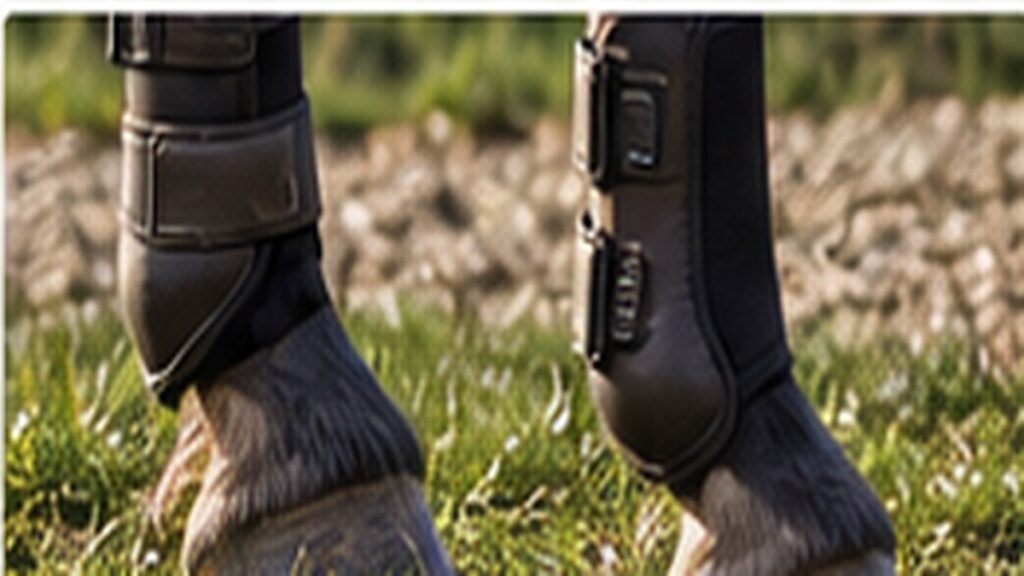
Boots and bandages need adequate clearance, secure fastening and regular inspection. Heat, retained moisture, slipping, grit and pressure at tendons or fetlocks can cause harm even where there is no initial behavioural reaction. Boots should be removed and the skin checked after work. A horse that repeatedly stamps, bites at a boot or becomes short-striding may be signalling a problem, but absence of such signs is not proof that the product is suitable.
Materials, construction and quality indicators
Material claims require context. Leather quality depends on hide selection, tanning, thickness, fibre structure, stitching and maintenance; synthetic materials vary widely in flexibility, surface friction, strength and heat retention. Metal bits differ in composition, finish, dimensions and surface condition. Rubber and polymer mouthpieces may be softer in feel but can be bulky, abrasive, heat-retentive or chewed into sharp edges. “Anatomical”, “ergonomic”, “pressure distributing” and “comfort” are useful design descriptions only when supported by clear construction information and appropriate testing.
Quality indicators include clean, consistent stitching; smooth edges; secure buckles and rings; correctly finished holes; absence of cracked leather, corrosion, sharp mould lines or exposed wire; and traceable sizing information. Manufacturers should provide fitting instructions, intended use, cleaning requirements, load or safety limitations where relevant, and warnings against incompatible combinations. Retailers and fitters should avoid presenting brand-specific geometry or marketing language as a universal welfare guarantee.
Regular inspection is a risk-control measure. Leather can weaken internally before failure is obvious; elastic loses resilience; flocking settles; synthetic materials crack under ultraviolet exposure; and bit surfaces can become rough. Retire equipment when structural integrity, adjustability or hygiene cannot be assured. A product that is technically safe in one setting may be inappropriate in another, such as using a stable-only item for ridden work or attaching a lead rope to a bit.
A proportionate investigation pathway
- Stop and observe. If the horse shows escalating distress, repeated dangerous resistance, acute lameness, collapse, marked breathing difficulty or evidence of injury, do not continue the activity merely to test the equipment.
- Record the pattern. Identify when the sign begins: approach, grooming, saddling, girthing, mounting, a particular gait, rein, jump, speed or duration.
- Inspect the equipment and the horse. Look for damaged components, uneven wear, rubs, swelling, heat, hair disruption and pressure marks. Avoid interpreting sweat patterns alone as a pressure map.
- Review the whole combination. Include saddle, pad, girth, bridle, bit, noseband, rider, clothing, surface, workload and recent changes.
- Seek appropriate professional input. A veterinary assessment may be needed for pain, lameness, oral or dental concerns; a suitably qualified saddle fitter can assess saddle and rider interaction; and a knowledgeable bridle or bit professional may help with fitting within a broader welfare assessment.
- Change one variable at a time where safe. Multiple simultaneous alterations make it difficult to identify what helped and may introduce new problems. Any trial should be conservative, monitored and stopped if signs worsen.
- Reassess dynamically. Fit should be checked during the task for which the equipment is intended, not solely on a stationary horse.
This process is not a substitute for diagnosis. Its purpose is to prevent avoidable repetition of a potentially harmful situation and to improve the quality of information available to qualified professionals.
Misconceptions worth retiring
- “The horse has always done it.” Long-standing resistance may reflect habituation, learned helplessness or an unresolved problem, not comfort.
- “There are no rubs, so the tack fits.” Pain can arise from deep pressure, restricted movement or dynamic loading without visible skin damage.
- “The saddle is level, so it fits.” Balance is only one component; clearance, curvature, panel contact, stability and movement also matter.
- “A more severe bit solves control.” Increased mechanical effect may suppress behaviour while increasing pain, fear or loss of trust. Control should be addressed through training, rider skill, fit and appropriate risk management.
- “Bitless means kinder.” Pressure is transferred, not eliminated, and some bitless designs can be severe when tight or used with strong rein forces.
- “A pressure mat gives the answer.” Pressure measurement is a useful tool with technical and interpretive limitations. It does not replace veterinary, saddle-fitting or behavioural assessment.
- “The horse must be made to accept it.” Acceptance achieved by increasing restraint or punishment is not evidence of comfort or ethical training.
Connecting equipment with the wider welfare picture
Equipment is one part of a larger system. Pain, fear, fatigue, restricted turnout, social isolation, inadequate forage, poor footing, rider imbalance and confusing training signals can interact. The Five Domains model is useful because it separates physical or functional factors from the resulting mental experience while recognising that they are connected. A horse’s behaviour around tack should therefore be considered alongside nutrition, environment, health, exercise, social contact and opportunities for choice.
For equestrian businesses, a written equipment policy should specify inspection intervals, fitting responsibilities, reporting routes for behavioural change, criteria for removing tack from service and records of adjustments. Training staff to recognise early signs is more effective than waiting for a fall, injury or dramatic refusal. Manufacturers can contribute by testing products under realistic loading, publishing limitations honestly, designing for adjustability and avoiding claims that imply comfort has been established merely because pressure is spread over a larger area.
The central professional principle is simple: behaviour is communication. It may communicate pain, fear, confusion, conflict or learned expectation, but it should not be ignored because the equipment is fashionable, expensive, competition-legal or familiar. Good fit is not demonstrated by a horse becoming quiet under restraint. It is demonstrated by appropriate movement, safe communication, absence of injury and a consistent pattern of relaxed, willing behaviour that remains credible when the complete horse–rider–equipment system is examined.
Sources and further reading
- Scottish Government, Welfare of Equids: Guidance — Handling, training and behaviour.
- World Horse Welfare, Tacking up and ridden behaviours.
- British Horse Society, Lameness Signs, Assessment and Diagnosis.
- Dyson and Pollard, Application of a Ridden Horse Pain Ethogram and Its Relationship with Gait, Animals, 2020.
- Dittmann et al., “Feel the Force”—Prevalence of Subjectively Assessed Saddle Fit Problems in Swiss Riding Horses, Journal of Equine Veterinary Science, 2021.
- Gunst et al., The Effect of Tree Width on Thoracolumbar and Limb Kinematics, Saddle Pressure Distribution, and Thoracolumbar Dimensions in Sports Horses.
- International Society for Equitation Science, Position Statement on Restrictive Nosebands.
- British Equine Veterinary Association, Clinical Catch-up: Bridle Fit.
- EU Platform on Animal Welfare, Guide to Good Animal Welfare Practice for the Keeping, Care, Training and Use of Horses.
Research note
Automatically researched source pack — editorial review required:
• www.horseandhound.co.uk — https://www.horseandhound.co.uk//industry-news/scottish-government-equine-welfare-guidance
• www.horseandhound.co.uk — https://www.horseandhound.co.uk//equine/pssm1-testing-british-appaloosa-society
• www.bhs.org.uk — https://www.bhs.org.uk/horse-care-and-welfare/health-care-management/horse-health/lameness-signs-assessment-and-diagnosis/
• eu.worldhorsewelfare.org — https://eu.worldhorsewelfare.org/index.php/advice/tacking-up-and-ridden-behaviours
• int.worldhorsewelfare.org — https://int.worldhorsewelfare.org/advice/the-five-domains-of-animal-welfare
• www.worldhorsewelfare.org — https://www.worldhorsewelfare.org/advice
• www.worldhorsewelfare.org — https://www.worldhorsewelfare.org/what-we-do/sport-and-leisure-horses/our-vision-for-the-responsible-involvement-of-horses-in-sport
• www.worldhorsewelfare.org — https://www.worldhorsewelfare.org/what-we-do/research/our-research/horses-in-our-hands
• pmc.ncbi.nlm.nih.gov — https://pmc.ncbi.nlm.nih.gov/articles/PMC12248743/
• doi.org — https://doi.org/10.1016/j.applanim.2023.105855
• food.ec.europa.eu — https://food.ec.europa.eu/system/files/2022-07/aw_platform_plat-conc_guide_equidae_en.pdf
• prod.bhs.org.uk — https://prod.bhs.org.uk/horse-care-and-welfare/behaviour/equine-stress/
• www.horseandhound.co.uk — https://www.horseandhound.co.uk/news/assessing-horses-welfare-919539
• www.gov.scot — https://www.gov.scot/publications/welfare-equids-guidance/pages/7/
• pmc.ncbi.nlm.nih.gov — https://pmc.ncbi.nlm.nih.gov/articles/PMC5483604/
• www.bhs.org.uk — https://www.bhs.org.uk/media/3rkbqegh/silver-about-the-horse-checklist-guidance.pdf
• en.wikipedia.org — https://en.wikipedia.org/wiki/Horse_welfare_reforms
• www.thetba.co.uk — https://www.thetba.co.uk/static/f04c3ba3-4ede-49a9-8ac39a78fc9287d4/TBAequinewelfareguidelinesA4Oct2022.pdf
• wwwprod.bhs.org.uk — https://wwwprod.bhs.org.uk/media/bfyfimbw/stage-1-care-qualification-structure-090919.pdf
• www.bhs.org.uk — https://www.bhs.org.uk/media/jfgftanb/unit-1-stage-4-senior-care-trainer-guide-v3.pdf
Cite this article
Stable research ID: ERA-2026-000232
The Equestrian Research Atlas (2026) ‘Equipment Fit and Behavioural Signs of Discomfort’. The Equestrian Research Atlas. Available at: https://equestrianresearchatlas.co.uk/research/equipment-fit-and-behavioural-signs-of-discomfort/ (Accessed: 3 November 2026).
The Equestrian Research Atlas. (2026). Equipment Fit and Behavioural Signs of Discomfort. The Equestrian Research Atlas. https://equestrianresearchatlas.co.uk/research/equipment-fit-and-behavioural-signs-of-discomfort/
The Equestrian Research Atlas. “Equipment Fit and Behavioural Signs of Discomfort.” The Equestrian Research Atlas, 2026, https://equestrianresearchatlas.co.uk/research/equipment-fit-and-behavioural-signs-of-discomfort/. Accessed 3 November 2026.
Research references (79)
- www.horseandhound.co.uk
- www.horseandhound.co.uk
- www.bhs.org.uk
- eu.worldhorsewelfare.org
- int.worldhorsewelfare.org
- www.worldhorsewelfare.org
- www.worldhorsewelfare.org
- www.worldhorsewelfare.org
- pmc.ncbi.nlm.nih.gov
- doi.org
- food.ec.europa.eu
- prod.bhs.org.uk
- www.horseandhound.co.uk
- www.gov.scot
- pmc.ncbi.nlm.nih.gov
- www.bhs.org.uk
- en.wikipedia.org
- www.thetba.co.uk
- wwwprod.bhs.org.uk
- www.bhs.org.uk
- wevaonline.org
- en.wikipedia.org
- en.wikipedia.org
- www.reddit.com
- en.wikipedia.org
- en.wikipedia.org
- en.wikipedia.org
- arxiv.org
- www.reddit.com
- www.reddit.com
- www.reddit.com
- www.reddit.com
- www.reddit.com
- www.horseandhound.co.uk
- www.horseandhound.co.uk
- www.horseandhound.co.uk
- www.reddit.com
- www.horseandhound.co.uk
- www.reddit.com
- www.reddit.com
Related research
 Choosing Stable and Turnout Equipment Around Equine Agency and ChoiceContinue research →
 Welfare Considerations in Competition EquipmentContinue research →
 Rugging Decisions and Equine Thermal ComfortContinue research →Handling Equipment and Low-Stress Horse ManagementContinue research →Stable Enrichment for Horses: Evidence and Practical DesignContinue research →Turnout, Social Contact and Equine WelfareContinue research →