Research snapshot
Key areas covered
- How to read an international manufacturing map
- Great Britain and Ireland: specialist knowledge, saddlery and service
- Italy, Spain and Portugal: leather, footwear and finishing expertise
- Germany, France, Austria and neighbouring central European regions
- North America: performance products, protective equipment and scale
- China and other East Asian manufacturing centres
Referenced source footprint (8)
- British Equestrian Trade Association (BETA): trade representation and sector information — beta-uk.org
- British Equestrian: research and insights on the UK equestrian sector — www.britishequestrian.org.uk
- ICAEW Library: Equine industry in the UK — www.icaew.com
- ASTM International: F1937-04(2023), body protectors used in horse sports and horseback riding — store.astm.org
- International Organization for Standardization: ICS 13.340, protective equipment — www.iso.org
- ISO/TC 94: personal safety and personal protective equipment standards catalogue — www.iso.org
- European Commission: textiles, clothing, leather and footwear manufacturing data — eur-lex.europa.eu
- Eurostat: textiles, clothing, leather and footwear industry background — ec.europa.eu
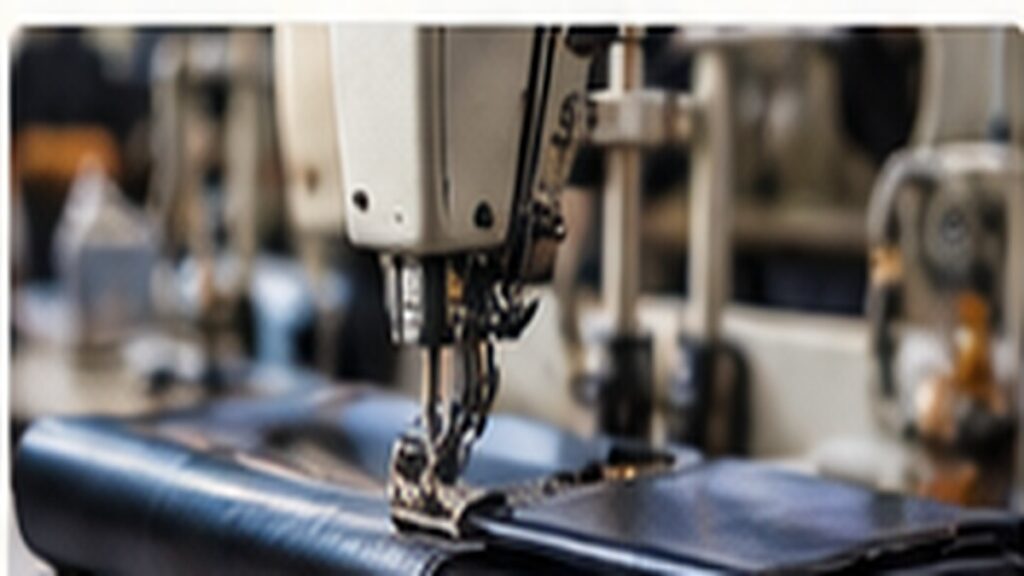
Equestrian equipment is made through a geographically dispersed value chain. A saddle may be designed in Britain, use a tree or synthetic components produced elsewhere, contain leather from a separate tannery, be assembled in a specialist workshop and be distributed through a British importer. A riding boot may combine Italian leather, European moulded components and assembly in another country. A body protector may be designed for a particular market, manufactured in Asia and tested by an independent laboratory against a recognised specification.
Consequently, “country of origin” is an incomplete description of manufacturing capability. It may refer to final assembly, substantial transformation, branding, design ownership or the origin of the principal material. These are not interchangeable. For trade buyers, the most useful analysis separates design and development, component manufacture, material processing, assembly, testing and certification, and distribution and service.
Great Britain remains an important market for international equestrian goods and a significant centre for specialist knowledge, saddlery services, riding-safety expectations and trade representation. The British Equestrian Trade Association represents manufacturers, wholesalers, retailers and associated businesses, and reports a membership of more than 800 companies. That breadth illustrates the structure of the sector: many businesses sell, specify or service products without manufacturing every component themselves. BETA is therefore a useful starting point for understanding the UK trade, but membership should not be treated as a universal product-quality certification. ([beta-uk.org](https://beta-uk.org/?utm_source=openai))
How to read an international manufacturing map
There is no single authoritative global database for “equestrian manufacturing regions”. Equestrian products are distributed across several industrial classifications, including leather goods, footwear, textiles, plastics, metal fabrication, sporting goods and personal protective equipment. Official production statistics generally do not isolate saddles, bridles, rugs or riding clothing as a complete category.
Related industry reference: For businesses moving from technical research into trade sourcing, explore equestrian suppliers and manufacturers on EquiGuild.
Regional reputation is therefore built from a combination of industrial history, supplier networks, specialist skills, export activity, recognised companies, trade associations, standards infrastructure and observed production practice. It should be treated as a guide to likely capabilities rather than proof of the quality of an individual product.
| Manufacturing factor | What it can indicate | What it does not prove |
|---|---|---|
| Long saddlery tradition | Availability of skilled cutting, stitching, skiving, fitting and repair labour | That every current factory uses traditional methods or high-grade materials |
| Strong footwear industry | Access to leather, lasts, soles, moulding, adhesives and weatherproof construction | That a riding boot has appropriate equestrian fit or durability |
| Technical-textile cluster | Expertise in coated fabrics, laminates, quilting, seam construction and performance finishes | That a garment is breathable, waterproof or durable without test evidence |
| Protective-equipment testing capacity | Potential access to laboratories and conformity-assessment services | That an individual helmet, body protector or air vest has passed a relevant test |
| Low-cost large-scale assembly | Capacity, flexibility and competitive unit costs | Inferior quality; process control and specification are decisive |
Great Britain and Ireland: specialist knowledge, saddlery and service
Britain has an unusually mature equestrian market, with established participation in racing, hunting, eventing, dressage, show jumping, hacking, carriage driving and leisure riding. Its manufacturing identity is strongest in specialist saddlery, bespoke and made-to-measure work, leather goods, riding clothing, boots, safety products and associated services. The region also has a deep network of saddle fitters, bridle makers, repairs businesses, retailers, competition organisers and professional users.
The importance of Britain is not limited to the volume of goods physically manufactured there. British firms have historically influenced product terminology, fit conventions, discipline-specific design and customer expectations. The Society of Master Saddlers, for example, represents a skilled trade concerned with saddle manufacture, fitting and repair. In practice, a British brand may operate a domestic workshop for premium or bespoke lines while outsourcing standardised products internationally. A British address and British design heritage therefore do not automatically mean British manufacture.
For buyers, the key strengths of a British-made or British-finished item may include access to skilled repair, direct communication with the maker, custom sizing, shorter feedback loops and clearer accountability. The possible limitations are price, production capacity, longer lead times for bespoke work and dependence on imported leather, hardware, foam, textiles or synthetic components.
Ireland has related strengths in leatherwork, riding culture, racing and rural outdoor products. Its manufacturing base is smaller than the combined British market, but Irish companies participate in a wider cross-border supply chain. For GB purchasers, customs treatment, importer responsibility, warranty arrangements and spare-parts availability may matter as much as the nominal place of manufacture.
Italy, Spain and Portugal: leather, footwear and finishing expertise
Southern Europe is particularly important for leather goods and footwear. Italy is associated with high-value leather processing, fashion-led product development, technical footwear, moulded components and premium finishing. Spain and Portugal have substantial footwear and leather-goods capabilities, ranging from large factories to specialist workshops. These countries benefit from established supplier networks covering hides, tanning, cutting, stitching, soles, lasts, buckles, adhesives, packaging and finishing.
That industrial base translates well to riding boots, paddock boots, half chaps, belts, gloves, leather competition accessories and selected tack. Footwear production requires more than attractive leather: fit depends on the last, pattern engineering, heel and sole construction, counter and toe reinforcement, lining, moisture management and compatibility with stirrups. A factory experienced in civilian footwear may still need a separate equestrian specification for secure stirrup interaction, ankle support, shaft shape and riding position.
European leather and footwear production is not uniform. Premium regional clusters coexist with contract manufacturing, imported components and multinational ownership. The European Commission has described textiles, clothing, leather and footwear as significant but pressured manufacturing sectors, with employment and production distributed unevenly between countries. Older EU material also shows that several European footwear countries have been concentrated in a small number of major producing states rather than evenly spread across the Union. ([eur-lex.europa.eu](https://eur-lex.europa.eu/legal-content/EN/ALL/?uri=CELEX%3A52015DC0591&utm_source=openai))
For trade professionals, the useful questions are whether the tannery and factory are identified, whether leather is full-grain, corrected-grain or split, whether the product uses a leather lining or synthetic lining, how the sole is attached, and whether replacement or repair is supported. “Made in Italy” or “European leather” is not itself a technical specification.
Germany, France, Austria and neighbouring central European regions
Central and western Europe contribute strongly to technical textiles, outdoor clothing, machinery, synthetic materials, metalwork, chemicals, footwear and protective equipment. Germany has a broad engineering and materials base, while France combines leather goods, luxury manufacture, technical textiles and specialist sports products. Austria, Switzerland, the Czech Republic, Slovakia, Poland and surrounding regions participate in footwear, textile, plastics, metal and contract-manufacturing supply chains.
These markets are often important where the product depends on controlled materials or complex construction rather than on hand stitching alone. Examples include waterproof-breathable riding garments, laminated fabrics, impact foams, moulded polymers, buckles, stirrup components, stable hardware and electrically controlled equipment.
European manufacture benefits from a dense regulatory and conformity environment, but compliance remains product-specific. A factory may meet quality-management or environmental requirements while a particular equestrian product still lacks the correct performance test. For protective equipment, the relevant standard, test scope, marking, certificate holder and model number should be checked rather than inferred from the country of manufacture.
North America: performance products, protective equipment and scale
The United States and Canada have substantial equestrian consumer markets and important capabilities in riding clothing, western equipment, protective products, synthetic materials, stable equipment and sporting-goods distribution. North American manufacturing is diverse: some firms maintain domestic specialist production, while others use international factories under their own specifications.
The US is especially relevant to safety-equipment development and testing. ASTM International publishes a specification for body protectors used in horse sports and horseback riding. ASTM F1937-04(2023) covers design and minimum performance criteria and describes tests involving shock attenuation, penetration and deformation, impact sites, padding separation and closures, including conditioning at different temperatures and after water immersion. ([store.astm.org](https://store.astm.org/f1937-04r23.html?utm_source=openai))
This illustrates an important distinction between a manufacturing region and a safety regime. A product manufactured in Asia can be tested to an ASTM specification; a product manufactured in Europe may be sold in North America after the appropriate conformity process; and a North American brand may manufacture elsewhere. The standard tells the buyer about the claimed performance framework, not necessarily the factory’s location.
Western saddles and associated equipment also form a distinct manufacturing ecosystem, with important production in the United States, Mexico and other regions. Western and English equipment share materials and techniques but differ in tree geometry, rigging, skirt design, leather weights, hardware and intended riding use. Cross-category assumptions are unsafe: a maker experienced in one discipline is not automatically expert in another.
China and other East Asian manufacturing centres
China is a major global manufacturing centre for textiles, footwear, plastics, metal components, sporting goods, luggage and assembled consumer products. Its importance to equestrian supply chains includes riding clothing, rugs, gloves, boots, synthetic tack, stable accessories, protective-equipment components, packaging and private-label production. Vietnam, India, Pakistan, Bangladesh, Indonesia, Cambodia and other Asian countries also participate in different parts of these chains.
It is misleading to treat Asian manufacture as a single quality category. The same country can contain small workshops, highly automated factories, specialist export plants and facilities producing to very low-cost specifications. Quality depends on the technical brief, approved materials, process controls, operator training, inspection regime, testing, traceability and the buyer’s willingness to reject non-conforming batches.
Large manufacturing clusters can offer advantages that smaller domestic workshops cannot easily match: automated cutting, high-volume quilting, moulding, digitally controlled embroidery, access to fabric mills, competitive minimum order quantities and established export logistics. They may also create risks around subcontracting, material substitution, inconsistent sizing, copied designs, weak documentation or limited repair support if the importer has not managed the supply chain carefully.
For private-label products, the importer or brand owner is often the critical quality-control point. A detailed technical pack should specify fibre content, fabric weight, coating, colour fastness, seam construction, reinforcement, hardware, dimensions, tolerances, packaging, labelling and test requirements. Pre-production samples and independent batch inspections are more informative than a generic statement that the product is “factory made”.
India, Pakistan and South Asian specialist production
South Asia is significant in leather goods, gloves, footwear, saddlery, sporting goods, textiles and metal accessories. Pakistan has a longstanding leather and sporting-goods manufacturing base, while India combines leather production, footwear, textiles, saddlery and a large domestic market. Bangladesh and other countries are more prominent in textile and garment manufacture, although individual equestrian suppliers may operate across several countries.
These regions can be competitive for bridles, reins, halters, belts, gloves, riding boots, textile garments and selected stable products. The strongest suppliers may combine traditional hand skills with modern cutting, stitching, inspection and export documentation. The main buyer risks are not geographical in themselves but relate to hide grading, tanning consistency, edge finishing, stitch density, hardware corrosion, labour subcontracting, chemical compliance and the ability to maintain specifications between shipments.
Leather terminology deserves particular care. Full-grain, top-grain, corrected-grain, split leather, bonded leather and synthetic leather are materially different categories. Grain correction can improve visual uniformity but may alter surface feel and ageing behaviour. A low-cost product made from a correctly specified split leather may be more honest and suitable than an expensive item using vague claims about “premium leather”.
Australia and New Zealand: niche capability and regional supply
Australia and New Zealand are major equestrian markets with strong riding, racing, stock-handling and outdoor traditions. Their manufacturing sectors are comparatively small relative to their geographic size, but they support niche leatherwork, stock saddles, boots, riding clothing, protective equipment, horse rugs, stable goods and specialist outdoor products.
Distance from European and North American supply centres makes import logistics, inventory planning and serviceability particularly important. Regional makers may compete through custom work, local knowledge, repair, climate suitability and direct customer relationships rather than through mass volume. Products designed for intense sun, dust, heat, wet conditions or stock work may be excellent for those uses but not automatically ideal for British winter turnout or English discipline-specific riding.
Materials and construction across regions
Leather
Leather quality is shaped by the hide, grading, tanning, finishing, thickness, fibre structure and cutting plan. In tack, the strength of a strap is affected by its orientation in the hide, edge treatment, holes, stitching, buckle design and load path. A visually flawless surface can reflect heavy finishing rather than superior structural quality.
Textiles and synthetic materials
Polyester, nylon, elastane, polyurethane coatings, thermoplastic films, neoprene, mesh and laminated composites are used throughout equestrian clothing and equipment. Performance claims should be tied to defined test methods. “Water resistant” is not equivalent to waterproof; “breathable” does not define a particular moisture-vapour transmission rate; and a high-denier fabric is not automatically abrasion-proof in every use.
Foams and impact materials
Protective products may use expanded polystyrene, expanded polypropylene, polyurethane foams, viscoelastic materials or layered combinations. Density, thickness, geometry, temperature sensitivity, ageing, attachment and coverage all influence performance. A soft-feeling protector is not necessarily safer, and a laboratory result cannot guarantee protection in every accident.
Metalwork and hardware
Stainless steel, plated steel, aluminium, brass and engineered polymers appear in bits, buckles, rings, stirrups, snaps and stable fittings. Important variables include alloy, heat treatment, section thickness, surface finish, weld quality, corrosion resistance and fatigue behaviour. Hardware that looks identical may differ significantly in working load and failure mode.
Standards, testing and claims
Standards are tools for defining requirements, test methods, dimensions, labelling or conformity procedures. They do not create a universal ranking of countries or brands. ISO’s classification for protective equipment places head, clothing, foot and other protective equipment into separate areas, demonstrating why “tested” is incomplete without identifying the applicable standard and product category. ([iso.org](https://www.iso.org/ics/13.340/x/?utm_source=openai))
Buyers should distinguish:
- Legal compliance: whether the product meets mandatory rules in the market where it is sold.
- Voluntary certification: whether an independent body has assessed the product against a defined scheme.
- Manufacturer testing: internal or commissioned testing, which may be useful but has to be understood in context.
- Marketing language: claims such as “international standard”, “impact tested” or “professional grade” that may lack a clearly stated test basis.
For helmets, body protectors, air vests and other safety-related products, record the exact model, size, standard, certification mark, date of manufacture where relevant, replacement guidance and compatibility limitations. Do not assume that two products are equivalent because both carry a familiar-looking label.
How GB buyers should evaluate international suppliers
- Define the intended use. Discipline, rider level, climate, frequency, cleaning regime and expected service life should be stated before comparing prices.
- Identify the manufacturing arrangement. Ask whether the supplier owns the factory, uses an approved contractor, permits subcontracting and controls the materials.
- Request a specification. For textiles this may include fibre, fabric weight, coating, seam type and colour-fastness requirements; for leather, grade, thickness, tanning and lining; for tack, stitch, edge and hardware details.
- Check testing and marking. Obtain the applicable standard, report or certificate, model coverage and laboratory identity where relevant.
- Assess consistency. A good sample does not prove that every batch will match it. Ask about incoming inspection, batch records, tolerances and non-conformance procedures.
- Consider service. Repairs, spare parts, fitting support, recalls, warranty handling and returns are central to whole-life value.
- Verify environmental and social claims. Look for scope, chain-of-custody information, audit limitations and measurable criteria rather than broad statements.
- Account for import risk. Landed cost includes freight, duty, VAT, brokerage, storage, currency movement, delays and the cost of defective stock.
Common misconceptions
- “Handmade” automatically means better. Hand skills can be valuable, but quality still depends on materials, design, consistency and inspection.
- “Made in Britain” means every component is British. Final assembly and component origin are separate questions.
- Asian manufacture means low quality. Factories vary widely, and many high-specification global products are made in Asia.
- European manufacture guarantees compliance. The correct product standard and conformity evidence still have to be checked.
- More expensive means more durable. Price may reflect brand positioning, retail structure, design, small production runs or marketing as well as material performance.
- A recognised brand removes the need for inspection. Fit, condition, batch, age and compatibility remain important, especially for safety equipment.
Conclusion
International equestrian manufacturing is best understood as a network of specialist regions rather than a hierarchy of “good” and “bad” countries. Britain and Ireland contribute design, saddlery knowledge, services and niche production; southern Europe is strong in leather and footwear; central and western Europe contribute technical materials, engineering and protective-equipment infrastructure; North America combines large markets with performance and safety expertise; East and South Asia provide broad manufacturing capacity across textiles, leather, synthetics, footwear and components; and Australia and New Zealand sustain smaller specialist ecosystems shaped by local conditions.
For a GB buyer, the decisive evidence is product-specific: declared materials, construction, testing, traceability, quality control, fit, intended use and after-sales support. The location of manufacture is useful context, but it is not a substitute for a technical specification.
Sources and further reading
- British Equestrian Trade Association (BETA): trade representation and sector information
- British Equestrian: research and insights on the UK equestrian sector
- ICAEW Library: Equine industry in the UK
- ASTM International: F1937-04(2023), body protectors used in horse sports and horseback riding
- International Organization for Standardization: ICS 13.340, protective equipment
- ISO/TC 94: personal safety and personal protective equipment standards catalogue
- European Commission: textiles, clothing, leather and footwear manufacturing data
- Eurostat: textiles, clothing, leather and footwear industry background
Research note
Automatically researched source pack — editorial review required:
• www.iso.org — https://www.iso.org/ics/13.340/x/
• www.iso.org — https://www.iso.org/iso/international_classification_for_standards.pdf
• beta-uk.org — https://beta-uk.org/
• www.britishequestrian.org.uk — https://www.britishequestrian.org.uk/about-us/what-we-do/research-and-insights
• www.britishequestrian.org.uk — https://www.britishequestrian.org.uk/news/british-equestrian-releases-state-of-the-nation-2024-report
• www.iso.org — https://www.iso.org/committee/50580/x/catalogue/
• store.astm.org — https://store.astm.org/f1937-04r23.html
• www.eda.org.uk — https://www.eda.org.uk/support-and-resources/data-news-and-resources/
• www.icaew.com — https://www.icaew.com/library/industry-profiles/equine
• eur-lex.europa.eu — https://eur-lex.europa.eu/eli/reg/1990/1735/oj/eng
• eur-lex.europa.eu — https://eur-lex.europa.eu/legal-content/EN/ALL/?uri=CELEX%3A52015DC0591
• eur-lex.europa.eu — https://eur-lex.europa.eu/legal-content/en/TXT/?uri=CELEX%3A32009R1294
• susproc.jrc.ec.europa.eu — https://susproc.jrc.ec.europa.eu/product-bureau/sites/default/files/contentype/product_group_documents/1581683171/EU_Ecolabel_Footwear_%20Background%20Report.pdf
• www.iso.org — https://www.iso.org/obp/ui?_escaped_fragment_=iso%3Astd%3Aiso%3A20346%3Aed-3%3Av1%3Aen
• www.britishhorsecouncil.org — https://www.britishhorsecouncil.org/wp-content/uploads/2025/12/BHC-Dec-2025-15-British-Equestrian-Trade-Association.pdf
• www.britishequestrian.org.uk — https://www.britishequestrian.org.uk/assets/Annual%20report/BritishEquestian_AnnualReport2024_FINAL.pdf
• ec.europa.eu — https://ec.europa.eu/eurostat/documents/3217494/5611188/KS-BW-06-001-03-EN.PDF/bf529ef4-dc80-4737-9e34-acb8b9cbe96d?version=1.0
• circulareconomy.europa.eu — https://circulareconomy.europa.eu/platform/sites/default/files/2024-12/JRC138903_01.pdf
• en.wikipedia.org — https://en.wikipedia.org/wiki/British_Equestrian_Trade_Association
• en.wikipedia.org — https://en.wikipedia.org/wiki/Saddler_%28trade%29
Cite this article
Stable research ID: ERA-2026-000072
The Equestrian Research Atlas (2026) ‘International Equestrian Manufacturing Regions’. The Equestrian Research Atlas. Available at: https://equestrianresearchatlas.co.uk/research/international-equestrian-manufacturing-regions/ (Accessed: 3 November 2026).
The Equestrian Research Atlas. (2026). International Equestrian Manufacturing Regions. The Equestrian Research Atlas. https://equestrianresearchatlas.co.uk/research/international-equestrian-manufacturing-regions/
The Equestrian Research Atlas. “International Equestrian Manufacturing Regions.” The Equestrian Research Atlas, 2026, https://equestrianresearchatlas.co.uk/research/international-equestrian-manufacturing-regions/. Accessed 3 November 2026.
Research references (29)
- www.iso.org
- www.iso.org
- beta-uk.org
- www.britishequestrian.org.uk
- www.britishequestrian.org.uk
- www.iso.org
- store.astm.org
- www.eda.org.uk
- www.icaew.com
- eur-lex.europa.eu
- eur-lex.europa.eu
- eur-lex.europa.eu
- susproc.jrc.ec.europa.eu
- www.iso.org
- www.britishhorsecouncil.org
- www.britishequestrian.org.uk
- ec.europa.eu
- circulareconomy.europa.eu
- en.wikipedia.org
- en.wikipedia.org
- en.wikipedia.org
- en.wikipedia.org
- en.wikipedia.org
- en.wikipedia.org
- www.reddit.com
- beta-uk.org
- eur-lex.europa.eu
- store.astm.org
- www.iso.org